Pakistan PM Shehbaz Sharif Waits 40 Minutes for Putin as Russian President Ignores Him and Meets Erdogan Instead

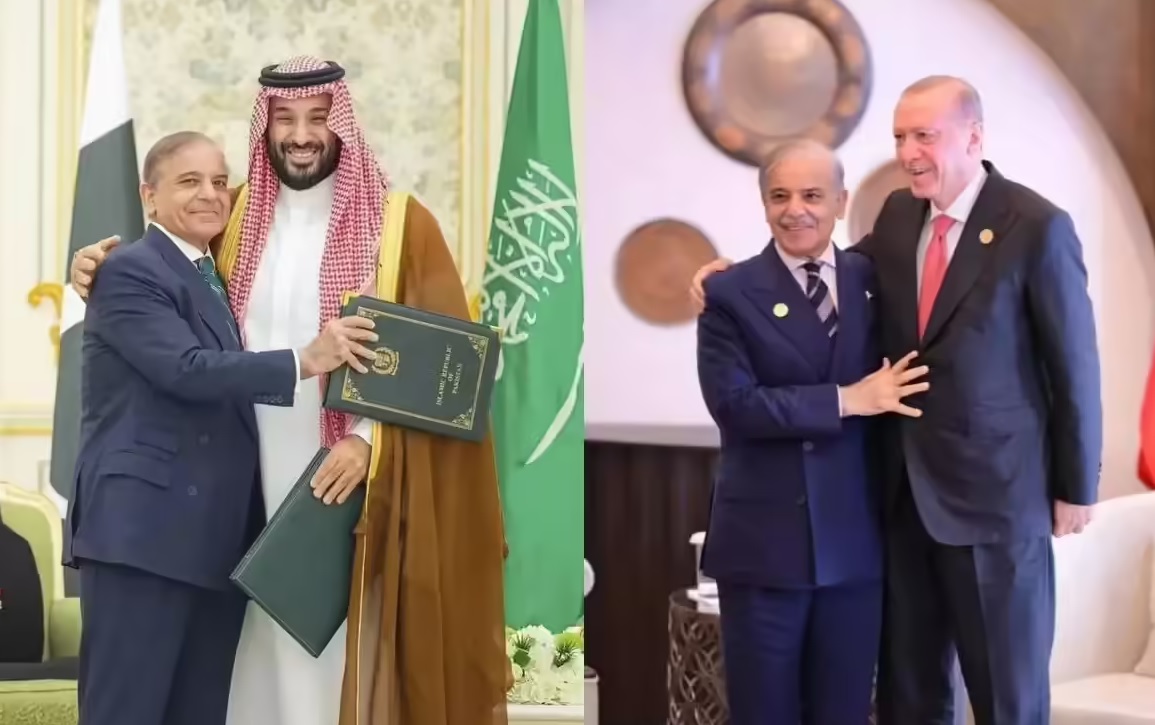
Ashgabat, Turkmenistan — Pakistan has lodged a formal diplomatic protest with Russia after Prime Minister Shehbaz Sharif was left waiting more than 40 minutes for a scheduled meeting with Russian President Vladimir Putin, only to discover that Putin was holding a separate private session with Turkish President Recep Tayyip Erdogan. The incident, visibly caught on cameras at an international summit in Turkmenistan, has sparked broader questions about diplomatic priorities, regional alliances, and Pakistan’s shrinking leverage on the world stage.
The episode occurred during the International Conference marking 30 years of Turkmenistan’s policy of permanent neutrality, a forum attended by several global leaders. Pakistani officials say the Sharif–Putin meeting had been officially scheduled, and Islamabad fully expected bilateral talks. But as the Pakistani delegation, including Foreign Minister Ishaq Dar, waited in an adjacent room, no Russian official arrived to escort them or offer an explanation for the delay.
After more than forty minutes, and with no update from Moscow’s protocol staff, Sharif walked into a nearby room where Putin and Erdogan were already holding a bilateral conversation. Video footage shows Sharif entering, offering greetings, and then exiting approximately ten minutes later without any substantial interaction. The Putin–Erdogan meeting continued undisturbed, underscoring the absence of any planned engagement with the Pakistani leader.
Why this happened is now at the center of intense scrutiny. Analysts say the snub reflects Pakistan’s diminished diplomatic weight at a time when Moscow’s strategic priorities are shifting firmly toward countries with stronger economic, military, and geopolitical relevance. Russia’s close, decades-long partnership with India—reinforced just days earlier by Putin’s warmly received trip to New Delhi—stands in stark contrast to the uncertainty and inconsistency that have marked Russia–Pakistan ties in recent years.
The footage has gone viral, prompting commentators to describe it as one of the most visible diplomatic setbacks for Islamabad in recent memory. In Pakistan, opposition leaders have labeled the episode an “international embarrassment”, accusing the Sharif government of poor planning and inadequate diplomatic preparation. The Foreign Office, meanwhile, confirmed that it had demanded an explanation from Moscow, insisting that the treatment amounted to a “serious breach of diplomatic protocol.”
A senior Pakistani official, speaking privately, said the government viewed the incident as a violation of protocol norms. “No head of government, especially one representing a nuclear-armed state, should be subjected to such disregard,” the official said, adding that the message conveyed to Moscow was one of disappointment and concern.
Russian officials have yet to issue a formal statement. Those close to the Kremlin suggested Putin’s schedule was “tight and fluid”, with multiple bilateral meetings competing for time. But Pakistan has rejected any suggestion that the delay was routine, arguing that its delegation was given no notification of changes and that the circumstances pointed to more than just scheduling pressure.
The diplomatic fallout is deepened by timing. Days before the incident, Putin completed a highly publicized visit to India, where he reaffirmed Moscow’s strategic partnership with Prime Minister Narendra Modi. The elaborate welcome in New Delhi—including military honors, official banquets, and extended talks—has been cited by analysts as a stark comparison to the treatment of Pakistan’s prime minister.
Historically, Pakistan and Russia have shared a cautious, often uneasy relationship, influenced by Cold War alignments and Moscow’s long-standing defence and energy ties with India. Though Islamabad has recently attempted to strengthen cooperation—particularly in energy imports—its geopolitical value to Moscow remains limited compared to India’s vast market and strategic significance.
Diplomatic experts argue that the humiliation faced by Sharif in Ashgabat is not merely a protocol failure but an indicator of Pakistan’s shifting international relevance. Economic instability, political upheaval, and a lack of consistent foreign policy direction have weakened Islamabad’s standing with several major powers.
As Islamabad awaits an official explanation from Moscow, the images of Sharif waiting, walking into a private meeting uninvited, and quietly departing have become symbolic of the challenges Pakistan faces in asserting its diplomatic position. The episode underscores the shifting geopolitical dynamics of the region and the increasingly limited influence Pakistan holds in the foreign policy calculations of major powers like Russia.
About the Author
Aditya Kumar:
Defense & Geopolitics Analyst
Aditya Kumar tracks military developments in South Asia, specializing in Indian missile technology and naval strategy.