Pakistan Fooling Azerbaijan by Transferring Used JF-17 Block III Jets From PAF’s Own Fleet
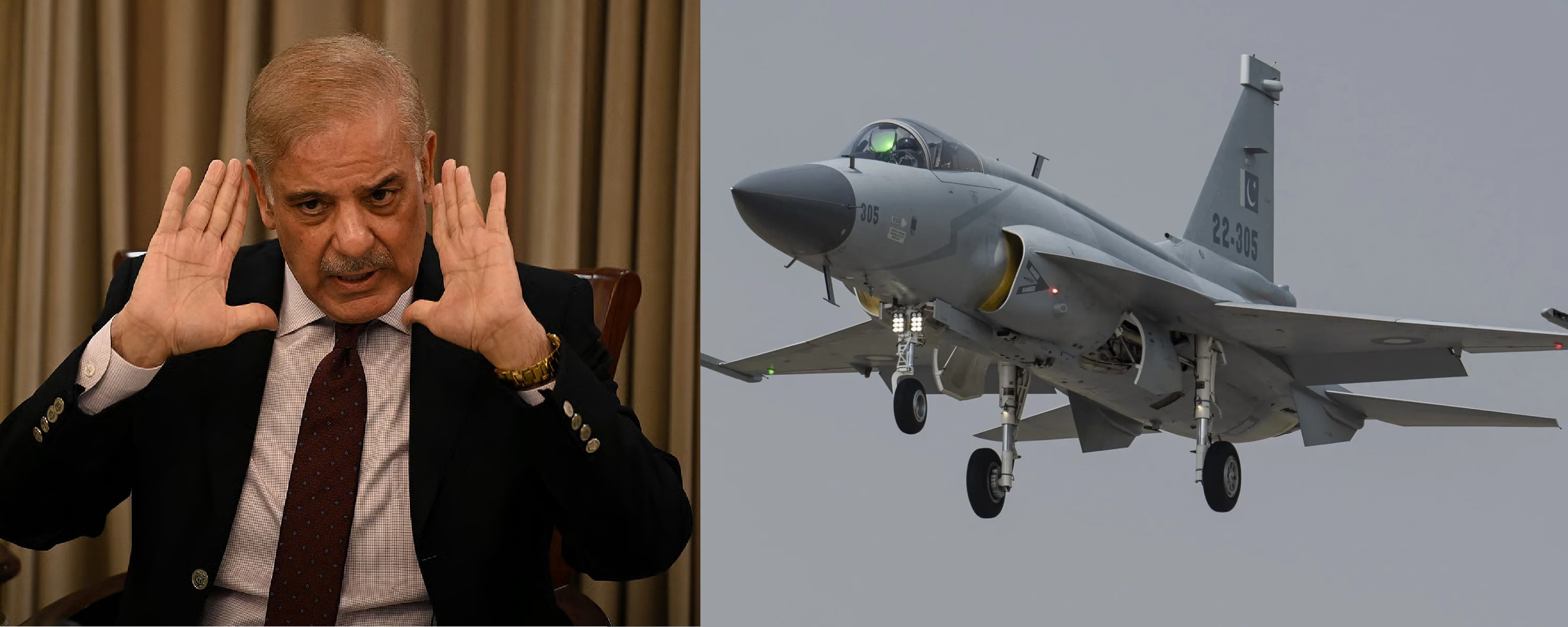
A serious blow has emerged for the Pakistan Air Force (PAF), as it has been compelled to divert several of its JF-17 Thunder Block III and twin-seat JF-17B jets from its own frontline squadrons to the Azerbaijan Air Force. The move, sources say, stems from slow production at the Pakistan Aeronautical Complex (PAC), engine performance issues with the Chinese-designed WS-13B, and tightening RD-93 engine supplies from Russia.
According to intelligence reports monitored by Jane’s, each Block III aircraft transferred to Azerbaijan came directly out of existing PAF squadrons—rather than being newly produced export variants. One aircraft has been identified as serial number 24-322. With these transfers, the PAF is reportedly left with barely 20 operational JF-17 Block III jets in service.
Production & Engine Troubles
The JF-17 programme—jointly developed by PAC and China’s Chengdu Aircraft Corporation (CAC)—has long been promoted as Pakistan’s affordable, lightweight fourth-generation fighter. However, the late rollout of the Block III version has been marred.
First, PAC has failed to meet its anticipated production output. Although earlier statements projected 20 or more airframes annually, PAC’s actual output remains constrained. Meanwhile, the WS-13B engine has under-performed in thrust and reliability, forcing continued reliance on the Russian RD-93. Secondly, Russia is reportedly restricting exports of RD-93 engines, worsening Pakistan’s delivery bottlenecks.
The combined effect: Pakistan finds itself unable to sustain domestic force strength and fulfill export commitments at the same time.
Azerbaijan Deal and Its Implications
In September 2024 Pakistan announced a contract for the sale of JF-17 Block III fighters to Azerbaijan. In November 2025 Azerbaijan publicly displayed five JF-17 Block III jets—four single-seat and one twin-seat—at its Victory Day parade in Baku. At least some of those jets were confirmed to have borne Pakistani serial numbers prior to marking removal.
Crucially, analysts say these aircraft did not come from fresh production lines, but directly from PAF inventory—thus diluting Pakistan’s frontline strength. Jane’s intelligence notes the diversion “straight from existing PAF squadrons.”
Strategic and Operational Impact
For Pakistan, the ramifications are two-fold. Operationally, a fleet of barely 20 Block III jets means thin margins for maintenance downtime, pilot training, and potential combat deployment. With engine issues and delayed production, PAF’s ability to project airpower—particularly along the eastern frontier with India—stands weakened.
Strategically, Pakistan’s export drive and defence diplomacy take a hit. Diverting frontline jets to Azerbaijan may boost Islamabad’s regional defence ties, but at the expense of its own national defence readiness.
Pakistan appears to be fooling Azerbaijan by offering jets that, while labelled as new export-specification aircraft, were actually taken straight from its own air force. Such shuffling raises questions about transparency, quality control, and Pakistan’s credibility as an arms exporter.
Moreover, Pakistan’s decision to prioritise export over national stock underscores procurement failures and weak supply-chain management. With slow PAC production, unreliable engines, and dependence on Russia, the PAF now appears operationally compromised as regional tensions remain high.
What Happens Now?
Unless Pakistan addresses the root issues rapidly, the PAF may face operational shortfalls in coming months. Potential remedial steps include accelerating production, resolving WS-13B engine problems, or sourcing alternatives.
For Azerbaijan, the acquisition is symbolically valuable, but whether the aircraft delivered are fully flight-ready or simply transferred second-hand remains a matter of scrutiny.
The diversion of JF-17 Block III fighters from the PAF to Azerbaijan represents a major setback for Pakistan’s flagship fighter programme. It highlights production bottlenecks, engine reliability issues, and strategic mis-prioritisation. By selling from its own squadrons, Pakistan risks weakening its own defence posture while undermining its credibility as an exporter.
About the Author
Aditya Kumar:
Defense & Geopolitics Analyst
Aditya Kumar tracks military developments in South Asia, specializing in Indian missile technology and naval strategy.