Pakistan Deploys JF-17 Block III Fighters to Azerbaijan for “Indus Shield Alpha”, Armenia Plans Counter with Indian-Built Su-30 Fighters
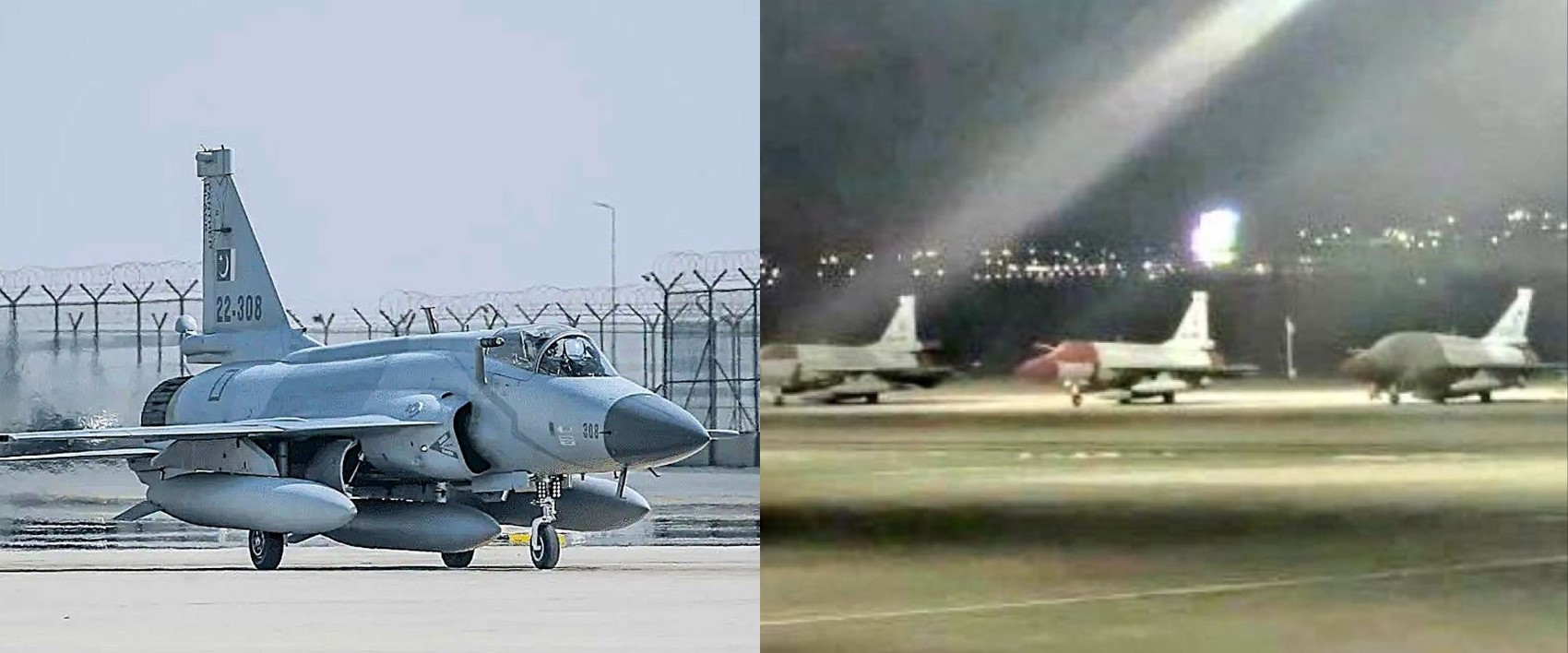
Pakistan has officially deployed its most advanced JF-17 Block III multirole fighters to Azerbaijan for the “Indus Shield Alpha” aerial combat exercise, marking a major step forward in the rapidly growing defense partnership between the two countries. The deployment, confirmed by the Pakistan Air Force (PAF) on its official X (Twitter) account, comes just months after Baku and Islamabad finalized a $4.6 billion deal for the purchase of 40 JF-17 Block III aircraft, supported by a $2 billion joint investment program in aerospace and defense industries.
Clarifying the Confusion: Exercise, Not Delivery
On October 19, 2025, images circulated online showing JF-17 Block III fighters stationed at an Azerbaijani airbase. Speculation quickly spread that Azerbaijan had begun receiving its first batch of jets from Pakistan. However, the PAF later clarified that the aircraft were deployed temporarily to participate in the bilateral Indus Shield Alpha exercise, a new chapter in operational collaboration between the two air forces.
The deployment demonstrated long-range operational capability — the jets flew non-stop from Pakistan, supported by in-flight refueling from a PAF IL-78 aerial tanker. This showcased the JF-17’s extended range and interoperability in real-world scenarios, strengthening Pakistan’s image as a mature aerospace exporter and regional power with credible air logistics capability.
Azerbaijan’s Fighter Recapitalization Drive
Azerbaijan has long sought to modernize its air combat fleet, which mainly comprises aging MiG-29s and Su-25s. Following its 2020 war with Armenia, Baku prioritized acquiring new-generation fighters capable of network-centric operations, electronic warfare, and precision strike missions.
The JF-17 Block III, jointly developed by Pakistan Aeronautical Complex (PAC) and China’s Chengdu Aircraft Corporation (CAC), offers a cost-effective solution featuring an AESA radar, integrated electronic warfare suite, advanced data link, and compatibility with beyond-visual-range (BVR) missiles like the PL-15.
The $4.6 billion package reportedly includes aircraft, training, ground systems, weapons integration, and maintenance support, with Pakistan expected to assist in establishing local assembly and sustainment infrastructure in Azerbaijan.
This makes Azerbaijan the first foreign operator of the JF-17 Block III, marking a milestone in Pakistan’s emergence as a global defense exporter.
Strategic Implications: The “Three Brothers” Alliance Strengthens
The growing military partnership underscores the strategic alignment among Pakistan, Azerbaijan, and Turkey — three nations united by shared regional interests and deep cultural ties. Branded the “Three Brothers Alliance,” the grouping has evolved from symbolic cooperation into a genuine military bloc involving joint exercises, drone technology transfers, and strategic coordination.
Pakistan’s JF-17 deployment, therefore, carries political symbolism beyond mere training — it signifies Islamabad’s expanding influence in the South Caucasus, a region traditionally shaped by Russian and Iranian power.
For Baku, cooperation with Pakistan provides affordable access to advanced airpower, diversifying its defense sources while strengthening its hand in the regional balance of power.
Armenia’s Likely Response
The deployment of JF-17 Block III fighters in Azerbaijan is a clear signal to Armenia, which now faces a widening airpower gap. To counter this shift, Armenia is reportedly planning to acquire additional 8 to 12 Su-30 fighters from India, leveraging Hindustan Aeronautics Limited’s (HAL) licensed production line for the Su-30MKI.
Armenia already operates a limited number of Su-30SM fighters sourced from Russia, but the Indian-built Su-30s offer a more advanced avionics suite and better upgrade potential. The deal, if finalized, would deepen the growing Armenia–India defense partnership, which already includes Pinaka rocket systems, radar technology, and anti-drone equipment. By turning to India, Armenia seeks not only to modernize its air fleet but also to balance the expanding Pakistan–Azerbaijan–Turkey defense axis.
Regional Impact and Future Outlook
The Indus Shield Alpha exercise represents a turning point — the first overseas deployment of the JF-17 Block III, demonstrating both Pakistan’s export maturity and Azerbaijan’s readiness to embrace new-generation platforms.
For Pakistan, the deployment is a diplomatic success, reinforcing its position as a defense technology provider in the Muslim world and beyond.
For Azerbaijan, it offers operational experience and visibility as it prepares to induct its new fleet.
For Armenia, it is a strategic warning — a sign that regional air superiority is evolving rapidly, and keeping pace will require urgent modernization and new alliances.
The JF-17 Block III’s arrival in Azerbaijan under the Indus Shield Alpha banner goes far beyond a joint exercise — it marks the emergence of a new power equation across South Asia and the Caucasus.
As Pakistan, Azerbaijan, and Turkey consolidate a triangular defense axis, Armenia is turning toward India for advanced fighters to safeguard its airspace and strategic balance.
The skies over the Caucasus are entering a new era — one defined by exported technology, shifting alliances, and rapid modernization.
Pakistan’s jets have landed in Azerbaijan, but their presence has already reshaped the region’s defense calculus.
About the Author
Aditya Kumar:
Defense & Geopolitics Analyst
Aditya Kumar tracks military developments in South Asia, specializing in Indian missile technology and naval strategy.