Pakistan Deadly Airstrikes on Afghanistan as U.S. Seeks Return to Bagram, Taliban Blames Islamabad for Escalation
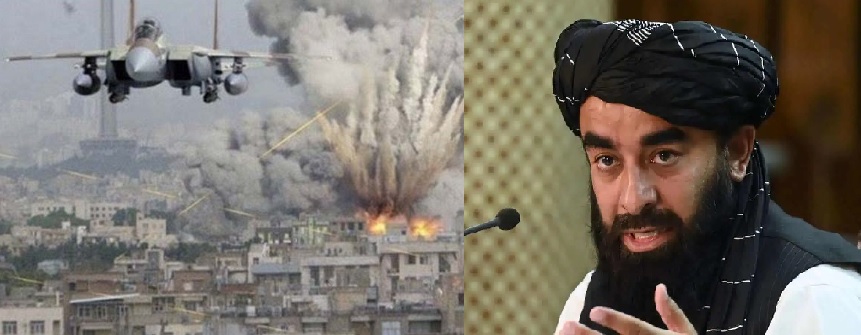
Tensions between Pakistan and Afghanistan surged overnight after the Taliban government accused the Pakistan Air Force (PAF) of conducting a series of airstrikes that killed nine children and one woman in eastern Afghanistan. The incident has ignited outrage in Kabul, intensified cross-border mistrust, and raised new questions about the geopolitical forces shaping the region’s fragile security environment.
According to Zabihullah Mujahid, spokesman for the Islamic Emirate of Afghanistan, a PAF aircraft bombed a civilian home in Khost Province, destroying the structure and killing ten members of a single family. Mujahid said additional PAF strikes hit Kunar and Paktika, injuring four more civilians. He condemned the attacks as “brutal aggression” and a “violation of Afghan sovereignty,” vowing that the Taliban government would “respond at a time of its choosing.”
Pakistan’s military, however, denied conducting any air operations, stating that no Pakistani aircraft or drones were active in the area at the time. Islamabad reiterated that it only targets militant networks responsible for attacking Pakistani forces, particularly Tehrik-e-Taliban Pakistan (TTP) fighters allegedly operating from Afghan soil.
Escalation Tied to Intensifying Pressure Over Bagram
Although Pakistan has framed recent cross-border actions as counter-terrorism responses, Afghan officials and regional analysts argue that a wider strategic agenda may be at play.
In recent months, the United States has reportedly pressured Islamabad to support American efforts to regain access to Bagram Air Base, the former U.S. hub vacated during the withdrawal. Washington is believed to be seeking logistical or intelligence facilities in the region, but the Taliban has firmly refused any proposal involving U.S. return.
Afghan sources claim the timing of Pakistan’s renewed aggression is “not accidental.” For years, Pakistan faced repeated deadly TTP attacks but rarely launched such deep strikes inside Afghan territory. Analysts note that Islamabad began intensifying operations only after Washington renewed interest in regional basing options, raising suspicions that Pakistan may be using force to pressure the Taliban into concessions.
Pakistan’s Air Advantage and Taliban Vulnerability
Military observers say Pakistan is unlikely to risk a ground confrontation with the Taliban, especially after past border clashes revealed high costs for both sides. Instead, the PAF has relied on airstrikes, exploiting Afghanistan’s limited air defence capability and minimal air force strength.
Afghan officials argue that Pakistan “knows Afghanistan cannot intercept or deter its aircraft,” enabling such operations with relative impunity. This perception is deepening resentment among Afghan citizens, who view the strikes as actions carried out with foreign backing.
Taliban leaders have also alleged that Pakistan is receiving financial and intelligence assistance from the United States, though Washington has not confirmed such involvement.
Civilian Deaths Deepen Crisis
The deaths of nine children have triggered shock across Afghanistan, where decades of foreign bombings have left deep psychological scars. Local residents in Khost described the strike as “the deadliest attack on a civilian home” since the Taliban regained control in 2021.
Humanitarian organisations warned that renewed cross-border operations could lead to mass displacement, especially in eastern provinces already grappling with poverty and insecurity.
Islamabad-Kabul Relations at Breaking Point
Relations between Pakistan and Afghanistan have steadily deteriorated since late 2024, culminating in border clashes in 2025 that left multiple soldiers dead on both sides. Despite a cease-fire agreement negotiated earlier this year, the latest airstrikes threaten to unravel diplomatic efforts.
Afghanistan’s Defence Ministry said the attacks “will not go unanswered,” raising fears of a retaliatory escalation. Meanwhile, Pakistan insists it is acting only against “terrorist sanctuaries” and continues to accuse Kabul of failing to curb TTP operations.
Regional Actors Brace for Fallout
The crisis now risks pulling in broader players:
-
The United States is monitoring developments closely, wary of renewed instability near its former bases.
-
Qatar and Turkey, both involved in past mediation efforts, are expected to press for de-escalation.
-
China, with major investments in Pakistan, will likely urge restraint but remains opposed to U.S. basing options in the region.
International agencies have begun calling for independent verification of the airstrikes and urging both sides to protect civilians.
A Dangerous Trajectory
The overnight attack marks one of the most serious escalations since the Taliban's return to power. With rising geopolitical pressure, unresolved militant threats, and collapsing trust between Islamabad and Kabul, analysts warn the region may be heading toward a new cycle of tit-for-tat attacks.
For now, the families in Khost are preparing ten small graves — a grim reminder that civilians continue to pay the highest price as regional powers maneuver for influence across the Afghan frontier.
About the Author
Aditya Kumar:
Defense & Geopolitics Analyst
Aditya Kumar tracks military developments in South Asia, specializing in Indian missile technology and naval strategy.