Norway Warns Thousands of Citizens Their Homes and Vehicles May Be Seized in Event of War With Russia
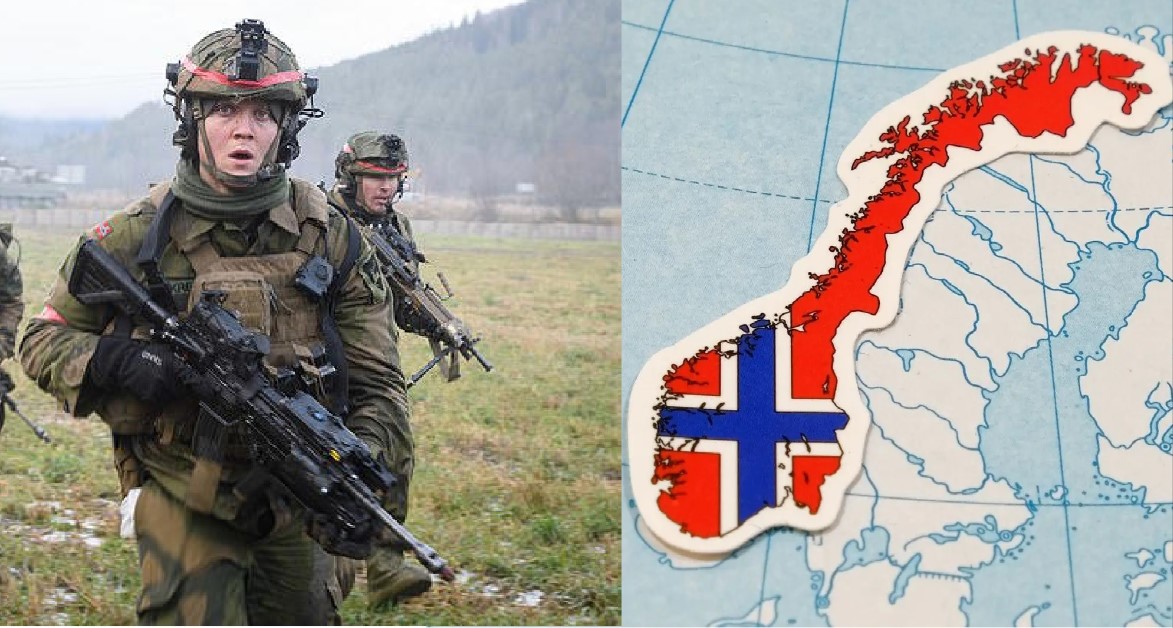
OSLO : Norway has taken one of its most far-reaching civil-military steps in decades, formally warning thousands of private citizens that their personal property could be seized by the armed forces if the country enters a conflict with Russia. The unprecedented move, announced quietly through official letters rather than public decree, reflects mounting anxiety in Oslo over the deteriorating security situation in Europe’s far north.
According to Norwegian defense officials, approximately 13,500 “preparatory requisition” notices have been sent to property owners across the country as part of a broad readiness drive led by the Norwegian Armed Forces Logistics Organization. The letters, first disclosed by The Daily Telegraph, inform recipients that specific assets—ranging from houses and hotels to trucks, cars and private boats—have been identified for potential military use in the event of mobilization or war.
While the notices do not authorize immediate confiscation, they establish a legal framework that allows the state to take control of designated civilian property during a national emergency. In peacetime, owners retain full rights, but the state’s claim would supersede private ownership once a crisis is formally declared.
A Security Shift Not Seen Since World War II
Norwegian defense authorities have framed the measure as a response to what they describe as the most serious security environment since 1945. Anders Jernberg, head of the logistics organization overseeing the program, said the letters are part of a comprehensive effort to ensure Norway can sustain military operations under extreme conditions.
Norway, he said, is engaged in a “large-scale strengthening of military and civilian readiness,” emphasizing that modern conflict would require far more than professional soldiers and advanced weapons. Housing, transport, maritime access and civilian infrastructure would all be essential for survival in a prolonged crisis.
The warning comes as relations between NATO and Russia remain deeply strained following Moscow’s war in Ukraine and intensified military activity across the Arctic. Norway shares a 198-kilometer land border with Russia and lies directly adjacent to the strategically critical Kola Peninsula, home to Russia’s Northern Fleet and a significant portion of its nuclear deterrent.
Return of the ‘Total Defense’ Doctrine
At the heart of the policy is Norway’s revival of its Cold War–era “Total Defense” concept, under which the entire society—government agencies, private industry and ordinary citizens—is integrated into national defense planning. The doctrine assumes that future wars would blur the line between civilian and military spheres, making civilian assets indispensable.
Under the requisition framework, residential buildings could be converted into barracks, headquarters or medical facilities. Vehicles and heavy machinery could be diverted to logistics and troop transport, while privately owned boats and ferries could support coastal patrols, supply runs and evacuation efforts in Norway’s rugged, fjord-lined geography.
Defense officials stress that compensation would be legally guaranteed if property were actually taken or damaged, but acknowledge that the notices are intentionally direct. By identifying assets in advance, the military hopes to avoid chaos and delays during a rapid mobilization.
Arctic Tensions and Russian Military Activity
The timing of the move underscores Oslo’s growing concern over Russian behavior in the High North. Norwegian intelligence and defense leaders have repeatedly warned that Moscow is refurbishing Soviet-era bases on the Kola Peninsula, expanding airfields, ports and radar installations close to Norwegian territory.
Norway’s defense minister, Tore O. Sandvik, has also pointed to Russia’s testing of hypersonic and nuclear-capable weapons in the Arctic region as evidence that the area is becoming a central theater in great-power competition. As a founding member of NATO, Norway plays a critical role in monitoring Russian naval movements and securing the alliance’s northern flank.
Western military planners increasingly view the Arctic not as a remote frontier but as a potential flashpoint, where control of sea lanes, undersea cables and missile trajectories could prove decisive in a broader conflict.
Public Reaction: Shock, Acceptance, and Unease
Reaction among recipients of the letters has been mixed. Some citizens expressed surprise at the explicit nature of the warning, saying it brought the reality of war uncomfortably close to home. Others viewed the move as a sober and necessary precaution in a world that has grown demonstrably less stable.
The scale of the initiative—targeting individual homeowners and small asset owners rather than only major corporations—has drawn particular attention. Analysts say it signals that Norwegian authorities are planning not for a limited contingency but for a scenario requiring nationwide mobilization and long-term resilience.
A Message Beyond Norway
Although the letters are domestic in nature, their implications extend far beyond Norway’s borders. They serve as a stark indicator of how seriously NATO’s northern members are reassessing their preparedness and how deeply the shadow of potential conflict with Russia now stretches across Europe.
For a country long associated with stability, diplomacy and peace, the notices represent a sobering acknowledgment: in the Arctic’s new strategic reality, even private homes and fishing boats are being quietly counted as instruments of national defense.
About the Author
Aditya Kumar:
Defense & Geopolitics Analyst
Aditya Kumar tracks military developments in South Asia, specializing in Indian missile technology and naval strategy.