Norway Reject Germany’s EuroPULS From Long-Range Rocket Competition, Competition in HIMARS and Chunmoo
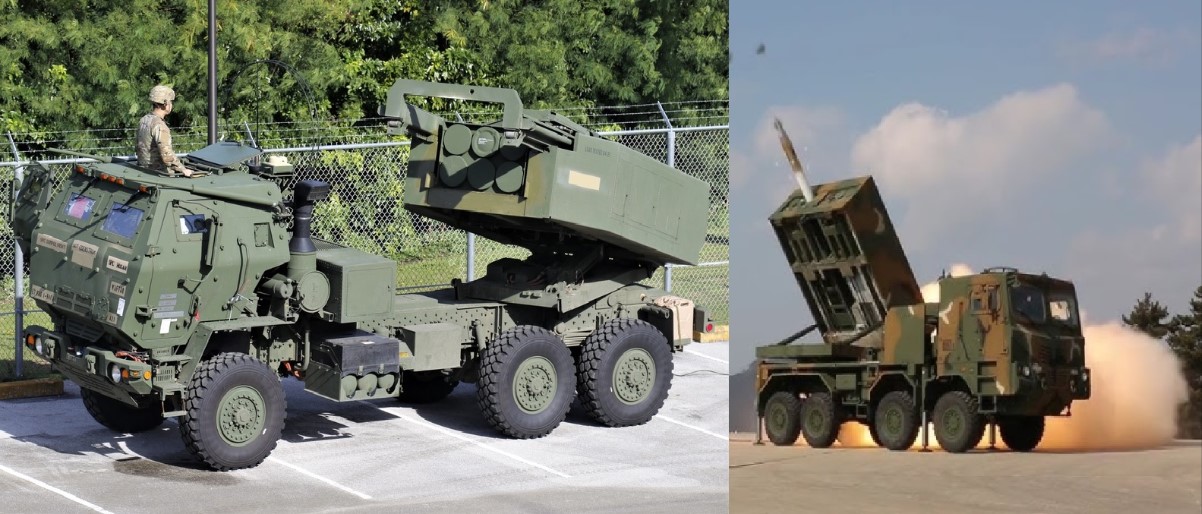
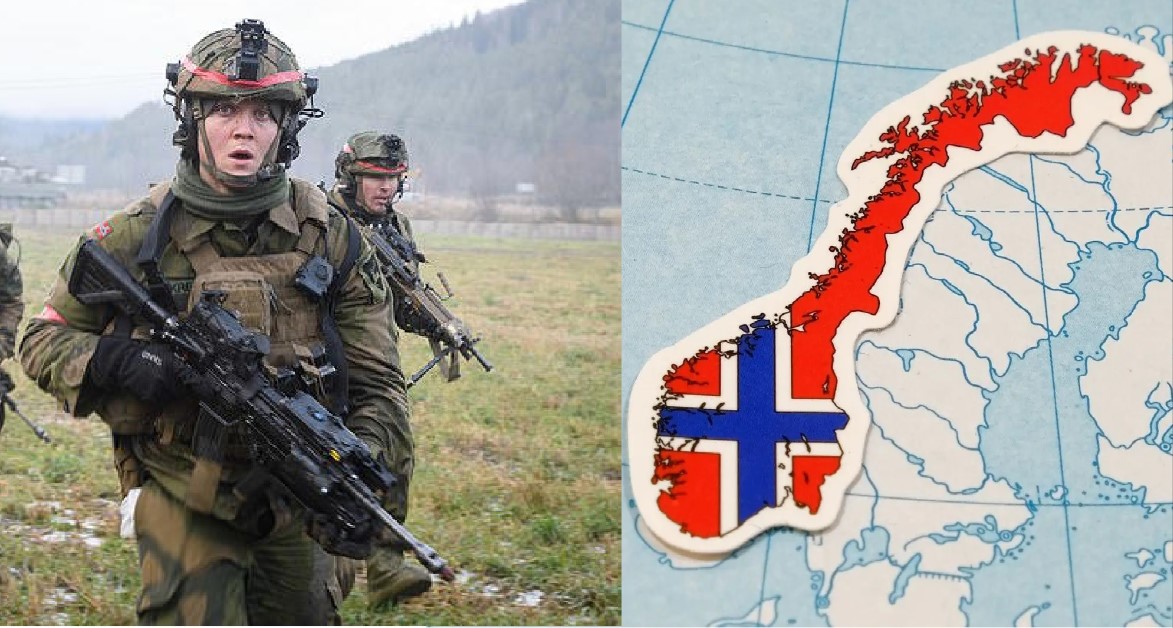
In a significant shake-up to Europe’s emerging deep-fires landscape, Norway has officially eliminated KNDS Deutschland’s EuroPULS from its Long Range Precision Firing Systems (LRPFS) competition, narrowing the contest to just two contenders: the U.S.-built HIMARS and South Korea’s K239 Chunmoo.
The decision, first reported by the German defense outlet Hartpunkt on 21 November 2025, has sent ripples through NATO capitals and injected new tension into what had been a deepening German-Norwegian defense partnership.
A Strategic Partnership Meets an Unexpected Fracture
Norway’s move comes at an awkward diplomatic moment. Berlin and Oslo have spent the past two years expanding joint industrial programs, including:
-
212CD submarines, currently under construction
-
The joint acquisition of Leopard 2A8 main battle tanks, with the first units handed over this week at KNDS facilities in Munich
-
Long-term plans for shared maintenance, ammunition pipelines, and land warfare integration
EuroPULS was widely expected to serve as a cornerstone of a future European deep-fires architecture, offering a continent-wide alternative to U.S. systems. Instead, Norway’s decision to cut it from the competition has become a high-visibility stress point in the partnership.
According to defense officials in Oslo, the decision was based on operational performance requirements, delivery timelines, and the need for combat-proven systems—an area where EuroPULS still lags behind its competitors.
What Norway Wants: Range, Readiness, and Integration With Allies
Norway’s approach to modernizing its artillery forces reveals a very clear mindset: Oslo is not looking for promises—it wants capabilities it can deploy right now. The LRPFS program is shaped by a sense of urgency driven by Russia’s growing militarization in the High North, and Norway’s decisions reflect a hard-nosed focus on practicality over political symbolism.
1. Immediate Combat Readiness
For Norway, readiness is not negotiable. The country wants a system that is already rolling off production lines, not one still undergoing development cycles. It wants launchers and munitions with a proven combat record, supported by a mature logistical ecosystem that can be sustained for decades. When these criteria are applied, it becomes obvious why HIMARS and Chunmoo immediately stand out, given their deployment history in Ukraine, the Middle East, and the Korean Peninsula. EuroPULS, still evolving and reliant on munitions under development, simply cannot compete with that level of maturity.
2. Full NATO Interoperability
Another decisive factor is Norway’s insistence on seamless integration with NATO fire-control and command networks. With the U.S., UK, Poland, and the Baltic states standardizing around HIMARS, it has effectively become the backbone of NATO’s modern deep-fires structure. For Norway, aligning with that ecosystem is not just sensible—it is strategically imperative. Any system that complicates data links, software integration, or joint operations becomes a liability, not an asset.
3. Long-Range Strike Options
Norway also wants true long-range strike capability, not theoretical range projections. Oslo is aiming for strike envelopes extending beyond 150 km, with an ideal threshold approaching 300 km or more. Here again, HIMARS has an immediate advantage with ATACMS and soon the even more advanced PrSM, already demonstrating long-range precision in test flights. Chunmoo also fits neatly into this expectation, offering scalable long-range munitions depending on the missiles selected. EuroPULS, by contrast, is still working toward fielding such ranges.
Why Norway Rejected EuroPULS
Interviews with Norwegian and German defense insiders outline several factors behind the rejection:
• Immature ammunition portfolio
EuroPULS relies on a launcher designed by Israel’s IMI (Lynx) combined with a European-developed guided munition family still in early development.
Norway reportedly concluded that:
-
No long-range rocket (200–300 km class) is yet operational
-
Full integration of new European rockets is still several years away
-
The system relies heavily on future promises rather than existing capability
• Integration uncertainties
EuroPULS would require:
-
New NATO data-links
-
New digital fire control interfaces
-
Unique maintenance infrastructure
Norway judged that this would slow deployment and complicate interoperability with allies already using HIMARS.
• Delivery timelines too slow
Norway wants first units by 2027–28. Germany reportedly could not guarantee industrial timelines inside that window due to ongoing capacity pressure from Leopard tank and artillery production.
• High strategic risk
EuroPULS was meant to be a pan-European alternative to U.S. dependence. But Oslo’s position is that its national readiness cannot rely on a system still under construction.
A Norwegian defense official, speaking off-record, summarized the decision:
“We do not have the luxury of waiting for a European launcher to mature while our region militarizes.”
How EuroPULS Compares to HIMARS and Chunmoo
EuroPULS (Germany/KNDS)
-
Based on Israeli Lynx launcher
-
Modular pod system
-
Compatible with multiple rocket types
-
European long-range guided rockets still in development
-
No combat service in NATO
-
Uncertain 200+ km capability timeline
-
Strength: high modularity
-
Weakness: system maturity, munitions availability, delivery risk
HIMARS (United States)
-
Combat-proven in Iraq, Syria, and Ukraine
-
Fires: GMLRS (80+ km), ER-GMLRS (150+ km), ATACMS (300 km)
-
Future PrSM (500 km class) already in test phase
-
Fully NATO-integrated
-
Massive global supply chain
-
Seen as the gold standard for long-range precision fires
Chunmoo (South Korea)
-
Highly modular like EuroPULS but already fielded
-
Fires:
-
130 mm rockets (36-pack)
-
230 mm guided rockets (80+ km)
-
290 mm tactical missile (~290 km)
-
-
Poland has already integrated Chunmoo onto HIMARS logistics systems, proving interoperability
-
Fast delivery timelines, cost-effective procurement
For Norway, Chunmoo offers HIMARS-like range with more munition flexibility and shorter delivery schedules.
A Blow to Europe’s Artillery Ambitions
EuroPULS was meant to symbolize Europe’s long-awaited push for independence in deep-fire capabilities, but Norway’s decision to drop it has cast serious doubt over that vision. It raises uncomfortable questions for Europe: Can the continent actually build a sovereign rocket artillery system quickly enough to matter? Will countries like the Netherlands, Denmark, or Italy now quietly shift toward HIMARS, rather than rely on a developing European platform? And perhaps most crucially, does this rejection reflect a deeper loss of confidence in Germany’s ability to deliver major defense programs on time?
Across NATO, criticism toward Germany’s slow procurement cycles and delayed defense programs is getting louder. Norway’s move reinforces the perception that Europe still struggles to match the speed and readiness offered by non-European suppliers, especially the United States and South Korea.
What Happens Next
From this point onward, Norway will focus on two final contenders: HIMARS and Chunmoo, with a contract decision expected around mid-2026. Many defense analysts see HIMARS as the frontrunner due to its deep integration within NATO and proven combat record. Yet Chunmoo remains a surprisingly strong challenger, especially after Poland successfully integrated it into a mixed HIMARS–Chunmoo launcher fleet, proving its flexibility and fast delivery potential.
Norway’s final decision will not only shape its own artillery modernization but will also signal where European militaries believe the most reliable and rapidly deployable firepower truly lies.
A Decision That Resonates Across NATO
Norway’s rejection of EuroPULS is far more than a procurement update—it reflects a deeper shift in NATO thinking. It shows how urgently frontline states now prioritise real, deployable capability over long-term industrial promises. It demonstrates a clear preference for battle-tested systems rather than politically symbolic European projects still in development. And it underscores how rapidly Europe is turning toward U.S. and South Korean defense technology for next-generation artillery.
The decision reveals a growing concern over Europe’s ability to field advanced deep-fires at the speed today’s security environment demands. In this context, Germany’s ambition to lead a European artillery renaissance has taken a major hit. EuroPULS falling out of the Norwegian competition highlights a widening capability gap—one that, for now, only proven systems like HIMARS and Chunmoo seem capable of filling.
About the Author
Aditya Kumar:
Defense & Geopolitics Analyst
Aditya Kumar tracks military developments in South Asia, specializing in Indian missile technology and naval strategy.