Northrop Grumman Targets Key Role in America Golden Dome Missile Defense Program

U.S. defence giant Northrop Grumman is setting its sights on a central role in the Pentagon’s ambitious “Golden Dome for America” program — a major homeland missile defense effort inspired by Israel’s Iron Dome.
The plan aims to build a layered defense system that protects the continental United States from a wide range of aerial and missile threats, including drones, cruise missiles, ballistic missiles, and potentially hypersonic weapons. With the U.S. administration pushing for initial capability in the next few years, Northrop Grumman says it’s ready to move fast.
During the company’s second-quarter earnings call, CEO Kathy Warden said the firm is already working across the full architecture of the program — blending current systems with new technologies, including space-based interceptors that are now under development.
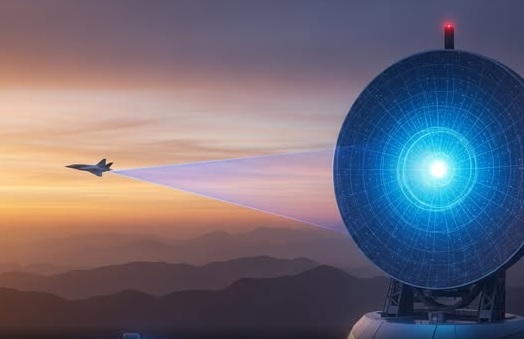
At the heart of Northrop Grumman’s offering is the Integrated Battle Command System (IBCS). This system acts as a nerve center that connects various radars, sensors, and missile interceptors into a unified network. In simple terms, it allows the military to detect and engage incoming threats faster and more accurately, using information from multiple sources simultaneously. Already fielded by the U.S. Army and adopted by international partners, IBCS could form the backbone of the Golden Dome system.
Another key technology is the G/ATOR radar, a multi-mission radar capable of spotting drones, cruise missiles, and artillery. It works in tandem with other surveillance tools like the MQ-4C Triton, a high-altitude drone that offers long-range surveillance across vast areas — crucial for early detection.
Northrop Grumman also highlighted its experience in systems integration — not just building hardware, but combining interceptors, sensors, software, and communications into seamless defense solutions. This is especially critical in a complex shield like Golden Dome, which will rely on quick coordination between ground, air, and space assets.
A major component under development is space-based interceptors, designed to strike enemy missiles in mid-flight — particularly useful against hypersonic weapons that travel too fast for traditional ground-based systems to handle. These interceptors could become a new layer of missile defense, complementing land-based systems and extending the U.S.'s protective reach.
As global interest in missile defense rises, Northrop Grumman is seeing strong international demand. In Q2 2025 alone, it reported an 18% jump in international sales, especially in Europe and the Middle East, where nations are racing to upgrade their air defenses. The company has signed partnership deals with countries like the UK, South Korea, and Lithuania, aiming to co-produce systems and support local defense industries — a move that helps secure long-term contracts and access to foreign markets.
Domestically, Northrop Grumman is investing heavily. It’s spending $1 billion to expand its solid rocket motor production — key components used in both missile interceptors and tactical rockets. With upgrades at facilities in West Virginia and Maryland, the company plans to nearly double production from 13,000 motors in 2024 to 25,000 by 2029.
The firm is already seeing rewards from this ramp-up. Recently, the U.S. Navy selected Northrop Grumman to supply second-stage rocket motors for its extended-range missile program. The company developed and tested the new motor in under a year — proof, Warden said, of its agility and technical depth.
Golden Dome fits into a wider U.S. defense policy shift, which emphasizes faster acquisition cycles and closer public-private cooperation. The FY2026 budget reflects a 22% increase in procurement and R&D spending, creating a more favorable environment for defense contractors like Northrop Grumman. Warden noted that this environment has already benefited major programs like Sentinel and the B-21 stealth bomber, and she expects Golden Dome to follow suit.
While no official contracts for Golden Dome have been awarded yet, analysts believe Northrop Grumman’s capabilities, technologies, and integration experience make it a top contender. Warden also pointed to the company’s space segment as a major beneficiary of the program, especially as space-based sensors and interceptors become more integrated into defense strategies.
Financially, Northrop Grumman remains strong. It reported $10.4 billion in sales in Q2 2025, a 9% increase over Q1, with 28% growth in earnings per share and gains across all business units.
As the Pentagon advances its homeland missile defense plans, Northrop Grumman appears ready to lead — combining battlefield-tested systems with new technologies to help shield the U.S. from tomorrow’s most dangerous threats.
✍️ This article is written by the team of The Defense News.