North Korea Expands Missile Plant Amid Rising Global Tensions, Satellite Imagery Reveals
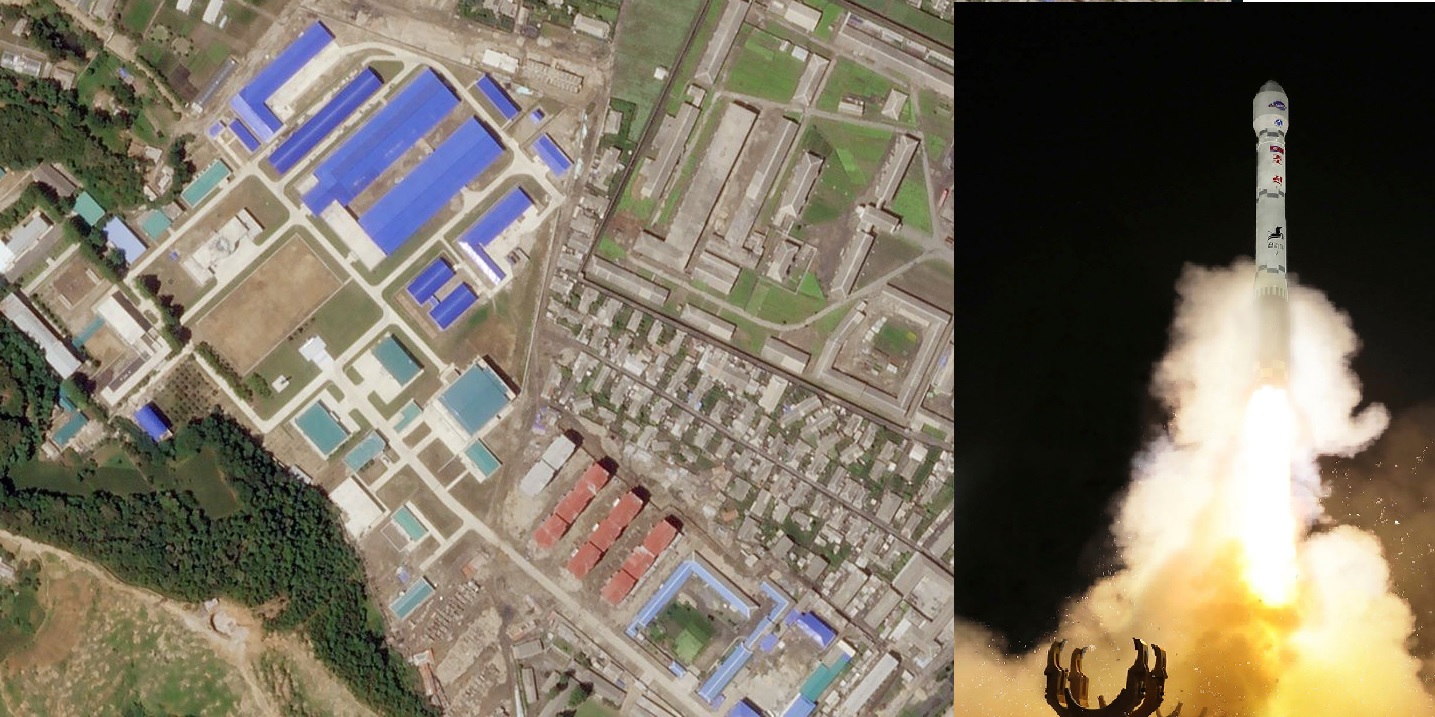
Satellite imagery has uncovered significant developments at North Korea’s February 11 plant, a critical facility for the production of short-range ballistic missiles. Situated within the Ryongsong Machine Complex in Hamhung, North Korea’s second-largest city, this plant has drawn attention from international researchers for its role in producing the Hwasong-11 class of solid-fuel missiles, known in the West as the KN-23. These missiles, reportedly utilized by Russian forces in Ukraine, highlight Pyongyang’s growing military ambitions and deepening ties with Moscow.
Evidence of Rapid Expansion
Recent satellite images, captured by Planet Labs and analyzed by the James Martin Center for Nonproliferation Studies (CNS), reveal ongoing construction at the plant. The facility now features a new assembly building, estimated to be 60-70% the size of the existing one, and a housing facility likely intended for workers. Additionally, the removal of an obstructive bridge crane near a tunnel entrance suggests an emphasis on enhancing the plant's operational efficiency.
The upgrades coincide with North Korea’s public acknowledgment of modernization efforts at the Ryongsong Machine Complex. State media reports describe efforts to rebuild production facilities and install new equipment, underscoring Pyongyang’s intent to bolster its missile manufacturing capabilities.
Strategic Implications
The KN-23, first tested in 2019, is designed to fly on a depressed trajectory, evading traditional missile defenses. This capability has made it a valuable asset for Russia as it seeks to maintain pressure on Ukraine’s air defenses amidst its protracted conflict. Although both Moscow and Pyongyang have denied the transfer of weapons for use in Ukraine, analysts suggest that North Korea’s expanding missile production could ease the strain on Russia’s defense industry.
Michael Duitsman of CNS speculated that the new construction might include a storage facility, though he emphasized the likelihood of a new assembly line. Meanwhile, Joseph Dempsey of the International Institute for Strategic Studies noted that the expansion is likely motivated by Pyongyang’s desire to enhance its own arsenal, with potential additional capacity to meet Russia’s needs.
Broader Military Developments
The February 11 plant is not the only site experiencing upgrades. Nearby, the February 8 Vinalon Complex is believed to be expanding its production of missile propellants. Reports suggest this facility could be ramping up production of solid propellants or unsymmetrical dimethylhydrazine (UDMH), a critical liquid rocket fuel.
Adding to the complexity of the situation, reports from South Korea indicate that over 10,000 North Korean troops have been deployed to Russia’s Kursk region, allegedly to support Russia’s military operations in Ukraine. This development, combined with the missile production expansion, signals a concerning alignment of military interests between Moscow and Pyongyang.
Geopolitical Fallout
The potential use of North Korean missiles in Ukraine has alarmed policymakers in Seoul and Washington, breaking a longstanding U.N. Security Council consensus on limiting Pyongyang’s ballistic missile development. The rapid construction at North Korean missile facilities suggests a broader strategic recalibration, as Pyongyang leverages its military-industrial capabilities to strengthen ties with Moscow while enhancing its own defense posture.
As international scrutiny intensifies, the satellite imagery serves as a stark reminder of the global implications of North Korea’s military ambitions. From Hamhung’s missile factories to the battlefields of Ukraine, Pyongyang’s actions continue to ripple far beyond its borders, reshaping the dynamics of international security.
✍️ This article is written by the team of The Defense News.