Netanyahu Warns Turkey and Qatar Over Gaza, Issues Stark Warning to Iran
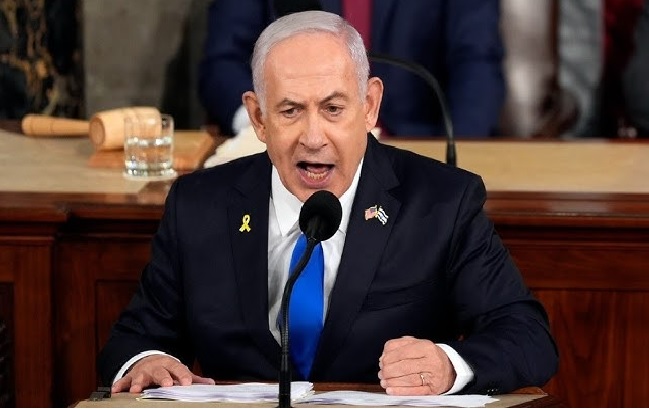
JERUSALEM : Israeli Prime Minister Benjamin Netanyahu delivered one of his most uncompromising speeches in months on Monday, drawing what he described as “clear red lines” on Gaza’s future, the fate of Hamas, and Israel’s posture toward Iran. Speaking before the full plenum of the Knesset, Netanyahu signaled that Israel is prepared to confront not only its enemies but also its allies if core security demands are not met.
The address came as diplomatic efforts intensify around a U.S.-backed, phased framework for post-war Gaza governance and as regional tensions remain elevated across multiple fronts. Netanyahu used the moment to publicly assert Israel’s non-negotiable positions, framing them as matters of national survival rather than policy preference.
Gaza Governance: A Firm Rejection of Foreign Troops
At the center of the speech was Israel’s opposition to any foreign military presence in Gaza, particularly involving countries it considers sympathetic to Hamas. Netanyahu explicitly ruled out Turkish or Qatari troops, despite both nations’ roles as mediators in hostage negotiations.
“Turkish or Qatari soldiers will not set foot in Gaza,” Netanyahu said, underscoring that Israel alone will determine the security architecture of the enclave.
While leaving open the possibility of limited civilian or advisory roles for regional actors, Netanyahu stressed that security control would remain exclusively in Israeli hands. He acknowledged differences with Washington over the proposed structure of a post-war governing mechanism, but emphasized that those disagreements would not dilute Israel’s core demands. Israel, he said, would preserve its alliance with the United States while refusing to compromise on matters it views as existential.
Phase Two: Disarmament or Renewed War
Netanyahu framed the next stage of the conflict in stark, binary terms. Referring to what he called “Phase Two” of the campaign, he stated that the objective is the full disarmament of Hamas and the permanent demilitarization of Gaza.
According to Netanyahu, Israeli forces currently control roughly half of the Gaza Strip, a position he described as providing strategic leverage. From that vantage point, he offered Hamas a clear choice: surrender its weapons through diplomatic arrangements or face renewed and intensified military action.
“The goals are clear, and they will be achieved — either the easy way or the hard way,” he said, a formulation widely interpreted as a warning that large-scale combat operations could resume if negotiations fail.
The statement reinforced Israel’s longstanding position that Hamas cannot play any role in Gaza’s future political or military structures, regardless of international pressure to seek interim compromises.
A Stark Warning to Tehran
Turning to Iran, Netanyahu issued one of his most severe public threats to date, warning that any direct Iranian attack on Israel would provoke a response of unprecedented magnitude.
“If Iran attacks Israel, Israel will respond with a force it has never known,” he told lawmakers, adding that such a confrontation could fundamentally alter Iran’s future. “Iran will not return to what it once was.”
The warning follows renewed concerns in Israel and allied capitals about Iranian military activity and nuclear capabilities, as well as continued friction between Iran and Israel across proxy theaters in the region.
Hostages and Domestic Politics
Netanyahu concluded his address by reaffirming that the return of remaining hostages remains a top national priority. He specifically mentioned Master Sgt. Ran Gvili, whose body is still believed to be held in Gaza, describing ongoing efforts to secure his return as sensitive and best handled away from public scrutiny.
The speech immediately drew sharp reactions across Israel’s political spectrum. Opposition lawmakers accused Netanyahu of using hardline rhetoric to bolster his standing ahead of looming political battles, while coalition allies praised the address as a necessary assertion of sovereignty amid growing international pressure.
As the Knesset session adjourned, Netanyahu’s message was unmistakable: Israel intends to shape the post-war order in Gaza on its own terms, confront Iran without hesitation, and pursue its military objectives regardless of diplomatic friction. Whether those red lines harden into policy or trigger new clashes — on the battlefield or with allies — now looms as one of the central questions facing the region.
About the Author
Aditya Kumar:
Defense & Geopolitics Analyst
Aditya Kumar tracks military developments in South Asia, specializing in Indian missile technology and naval strategy.