Netanyahu Rejects Permanent Ceasefire with Hamas, Citing Need for Group's Destruction

Israeli PM Netanyahu rejects a permanent ceasefire with Hamas, contradicting a proposed truce by U.S. President Biden.
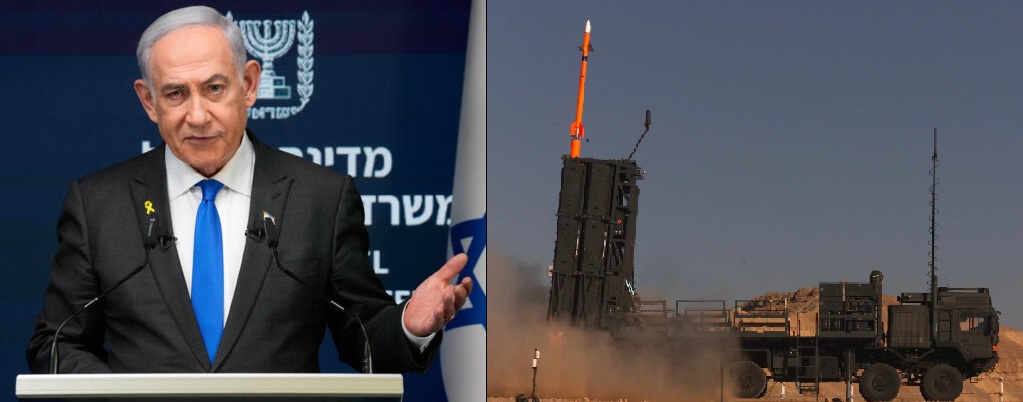
Israeli Prime Minister Benjamin Netanyahu declared on Saturday that there could be no permanent ceasefire in Gaza until Hamas was completely destroyed. This statement casts doubt on a truce proposal that U.S. President Joe Biden mentioned, which Israel reportedly suggested.
President Biden revealed on Friday that Israel had proposed a deal that involved a six-week truce, a partial Israeli military withdrawal, and the release of some hostages, while both sides worked towards a permanent end to hostilities. However, Netanyahu emphasized that Israel would not agree to a permanent ceasefire before eliminating Hamas' military and governing capabilities, describing any such notion as a "non-starter."
Peace negotiations have been stagnant for months. Israel insists on the release of all hostages and the destruction of Hamas, while Hamas demands a permanent ceasefire, the withdrawal of Israeli forces, and the release of numerous Palestinian prisoners. On Friday, Hamas expressed readiness to engage positively but clarified through senior official Mahmoud Mardawi that no agreement could be reached until the Israeli army withdrew and a ceasefire was implemented. Hamas remains committed to the destruction of Israel.
The conflict began on October 7, when Hamas fighters launched a deadly attack on southern Israel from Gaza, killing over 1,200 people, primarily civilians, and taking more than 250 hostages, according to Israeli reports. Israel's subsequent ground and air campaign in Gaza has resulted in significant devastation, widespread starvation, and over 36,000 deaths, as reported by Palestinian health authorities, who claim the majority of the victims are civilians.
Recently, Netanyahu ignored international calls to cease military operations by sending Israeli troops into Rafah, the last major stronghold of Hamas in Gaza, displacing over a million Palestinians sheltering there. Israel asserts that entering Rafah is crucial to their campaign against Hamas.
On Wednesday, Israel’s National Security Adviser Tzachi Hanegbi indicated that the war in Gaza is expected to continue throughout 2024. Meanwhile, in the United States, President Biden faces mounting pressure to halt the war due to the severe humanitarian crisis in Gaza. Biden, seeking re-election in November, urged for an end to the conflict, stressing that "It's time for this war to end and for the day after to begin."
Within Israel, there is widespread support for the war following the October 7 attack. Nonetheless, there is also significant pressure on the government to secure the release of hostages. Opposition leader Yair Lapid urged Netanyahu to accept a hostages and ceasefire deal, assuring support from his party even if right-wing factions in the coalition opposed it. Lapid stated that the Israeli government should heed President Biden's consequential speech and agree to the deal on the table.
Mediators have struggled to find a mutually acceptable language to end hostilities. Israel insists a permanent ceasefire is impossible against a group intent on its destruction and responsible for the October 7 attack, while Hamas refuses any deal that allows the Israeli military campaign in Gaza to continue.
✍️ This article is written by the team of The Defense News.