NATO Chief Warns India, Brazil and China of Harsh Secondary Sanctions Over Russia Trade
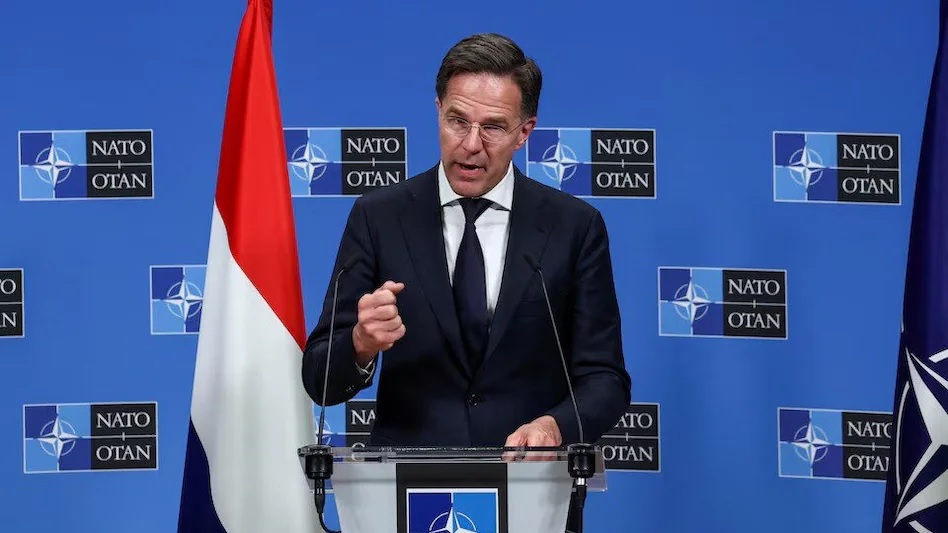
In a strong warning with potentially far-reaching global consequences, NATO Secretary General Mark Rutte has cautioned major economies like India, China, and Brazil that they could face severe secondary sanctions—including 100% tariffs—if they continue their economic ties with Russia. The message came as NATO aligned with a new U.S. initiative spearheaded by former President Donald Trump, who is pressuring for a peace deal in Ukraine within 50 days or else introducing punitive trade penalties on nations dealing with Russia.
Speaking to U.S. lawmakers on Capitol Hill on Wednesday, Rutte made it clear that while NATO doesn’t directly enforce sanctions, it supports collective pressure to isolate Moscow. "If you live now in Beijing, or in Delhi, or you are the president of Brazil, you might want to take a look into this, because this might hit you very hard," he said bluntly.
The secondary sanctions being discussed would involve 100% tariffs on goods imported from countries doing business with sanctioned Russian entities. Such measures, if enacted, could seriously impact the export-driven economies of China and India, especially in sectors like energy, defense, fertilizers, and manufacturing components—all of which maintain active trade ties with Russia.
Rutte urged these countries to take diplomatic steps, even suggesting they "make the phone call to Vladimir Putin" to push for peace. The former Dutch Prime Minister said NATO is aligned with the U.S. on ensuring maximum pressure on Russia, while also massively stepping up military support to Ukraine, including weapons systems, ammunition, and air defense capabilities.
Do All NATO Leaders Agree?
While Rutte made his remarks in Washington alongside U.S. leaders, the consensus among major NATO powers like the UK, France, and Germany appears broad but nuanced.
-
The United Kingdom, under the Conservative government, has been one of the most vocal and steadfast supporters of Ukraine. London would likely support stronger sanctions, including secondary ones, especially if coordinated with Washington and Brussels. However, UK officials have yet to publicly endorse the 100% tariff measure.
-
France has shown strong support for Ukraine militarily and diplomatically but traditionally favors multilateralism and diplomatic off-ramps. French President Emmanuel Macron may be more cautious about secondary sanctions that could strain ties with India and Brazil—two important global players in Paris’s foreign policy outreach.
-
Germany, Europe’s largest economy, remains a key pillar of NATO and Ukraine support. Berlin has significantly increased its military aid but often walks a pragmatic line, balancing support with concerns about energy security and global economic fallout. While German leaders are unlikely to oppose sanctions outright, they may seek a more calibrated approach to avoid antagonizing non-NATO partners like India.
Technical Impact on India and China
India, in particular, has deep strategic and economic ties with Russia:
-
It continues to import Russian crude oil at discounted rates, a move that has helped stabilize domestic fuel prices but has drawn scrutiny from Western capitals.
-
India is also a major defense partner of Russia, with a significant portion of its military hardware and spare parts still dependent on Russian supply chains.
-
Furthermore, Indian companies operate in fertilizer, energy, and heavy engineering sectors where Russian partnerships are active.
China, meanwhile, remains Russia’s largest trading partner, especially in energy, raw materials, and technology components. Beijing has already been under U.S. scrutiny for alleged support to Russia’s wartime economy and could be the primary target of any sweeping secondary sanctions regime.
Blowback Risk: Sanctioning India, China, and Brazil Could Hurt NATO Economies Too
Imposing such harsh penalties on India, China, and Brazil—three of the world’s largest and most dynamic economies—could have unintended negative consequences for the very NATO countries pushing for these sanctions. Here's how:
-
India is a major pharmaceutical, software, and manufacturing partner for countries like the UK, France, and Germany. Sanctioning India could disrupt supply chains, defense cooperation (like jet engines, semiconductors), and trade in critical goods including generic medicines and tech services.
-
China, despite being seen as a strategic competitor, remains deeply embedded in global supply chains. Germany, for instance, is heavily reliant on Chinese components and raw materials for its automotive and manufacturing industries. UK and French businesses also have major investments in China. Sanctions could boomerang, causing economic contraction or inflation in Europe.
-
Brazil is a top exporter of agricultural commodities like soybeans and meat to European countries. Disrupting trade with Brazil could increase food prices and create political tensions in Latin America, where NATO already has limited influence.
-
On top of this, all three countries are members of the BRICS economic bloc, which has already been actively working on alternate trade systems, including de-dollarization, reducing reliance on Western financial networks.
A Ticking Clock
The urgency is compounded by the 50-day countdown announced by Trump, who warned of “biting” measures unless a peace agreement is reached. While some lawmakers praised the plan for increasing pressure on Russia and its global enablers, others expressed concern that the delay might give Putin time to capture more ground or consolidate power before negotiations.
Republican Senator Thom Tillis said he feared the window could be used by Moscow to "murder and potentially collect more ground", rendering peace talks skewed in Russia's favor. Rutte responded by assuring NATO's commitment to fully equipping Ukraine to enter any negotiations from a position of strength.
“We are talking not just defensive weapons, but offensive capabilities too,” Rutte said. While long-range missiles are reportedly on the table, the final package is still being worked out by the Pentagon, NATO's Supreme Allied Commander in Europe, and the Ukrainian leadership.
This escalating situation presents a complex dilemma for India and other neutral nations: whether to continue their strategic balancing act or reconsider trade ties with Russia to avoid falling afoul of looming Western sanctions. The next 50 days could prove pivotal—not just for Ukraine, but for the future of global trade and geopolitics.
✍️ This article is written by the team of The Defense News.