NASM–MR Anti-Ship Missile Successfully Integrated on MiG-29K, Flight Trials Set for 2026
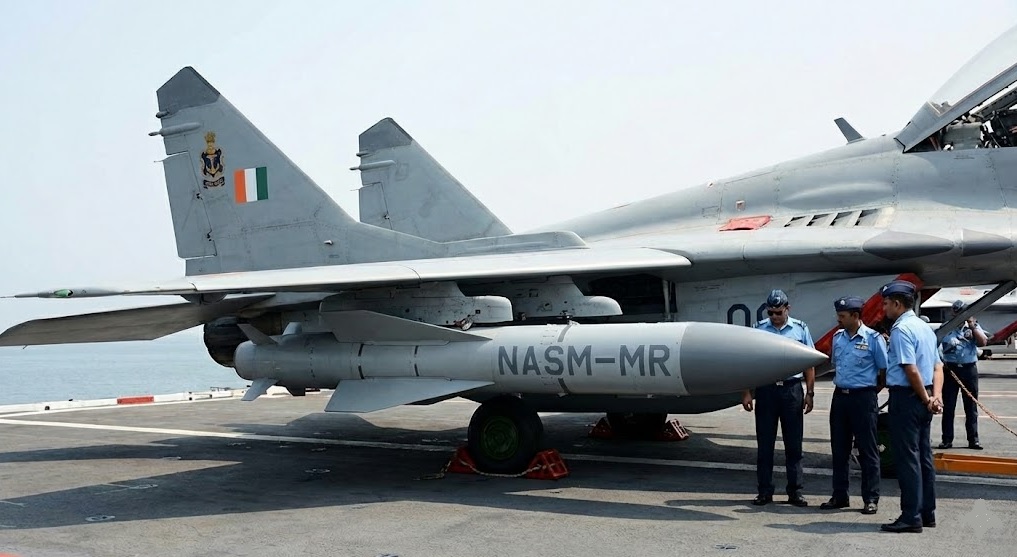
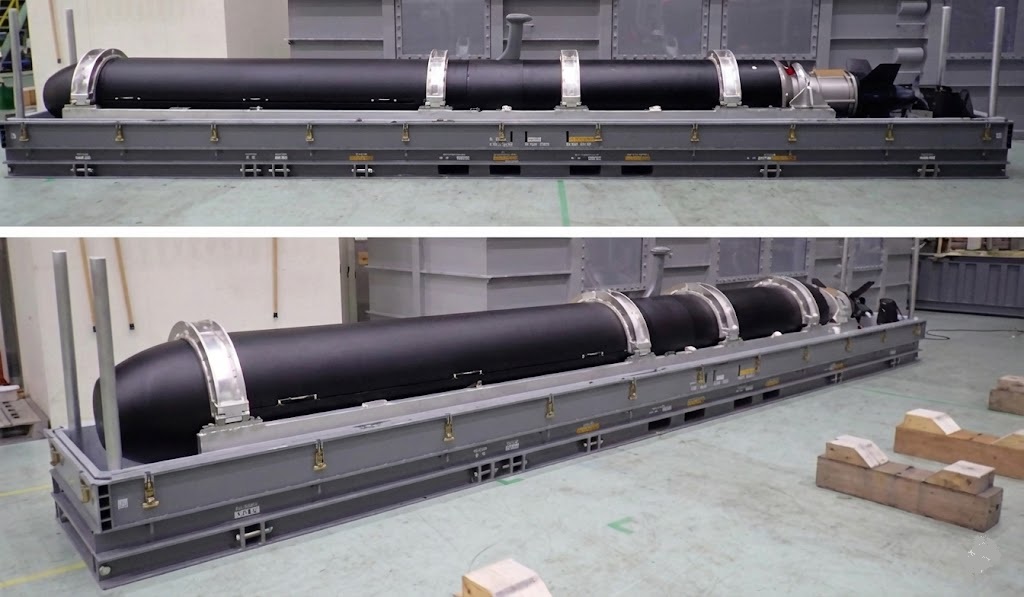
New Delhi : India has taken a significant step toward strengthening its maritime strike capability with the successful integration of the indigenously developed Medium Range Anti-Ship Missile (NASM–MR) on the Indian Navy’s MiG-29K fighter aircraft. Defence officials confirmed that the missile’s electrical and mechanical interfaces with the carrier-borne fighter have been fully validated, clearing the way for developmental flight trials expected in the first quarter of 2026.
The integration marks a major milestone in India’s drive to field a common, multi-platform anti-ship weapon across air, sea, sub-surface and coastal defence roles. Once operational, NASM–MR is expected to become a key element of the Navy’s long-range precision strike doctrine in the Indian Ocean Region.
Indigenous Missile for Multi-Domain Maritime Warfare
The NASM–MR has been designed as a modular missile family with multiple launch variants tailored for different operational environments. The air-launched variant, integrated with the MiG-29K fleet operating from India’s aircraft carriers, is expected to have a strike range of around 290 kilometres, enabling stand-off attacks against hostile surface combatants well beyond the reach of most ship-based air defence systems.
A ship-launched variant, intended for deployment aboard frontline Indian Navy surface combatants, is projected to have an extended range of approximately 350 kilometres, providing task groups with a potent long-range anti-ship capability. Officials also indicated the development of a submarine-launched variant, with an expected range of over 100 kilometres, designed for covert sea-denial missions from underwater platforms.
In addition, a coastal defence variant is planned, aimed at strengthening India’s shoreline security and anti-access/area-denial (A2/AD) posture in critical maritime zones.
Integration with Naval Aviation
The successful mating of NASM–MR with the MiG-29K — the Indian Navy’s primary carrier-borne fighter — involved extensive validation of avionics, weapon control systems, and aircraft-missile interfaces. Defence sources said the integration ensures seamless communication between the missile and the aircraft’s sensors, fire-control radar and mission computer, a prerequisite for precision targeting in complex maritime environments.
Developmental flight trials scheduled for early 2026 will focus on safe carriage, release characteristics, guidance performance, and end-game accuracy. These tests will be followed by user evaluation trials before the missile is formally inducted into service.
Advanced Guidance and Strike Capabilities
While detailed technical specifications remain classified, the NASM–MR is understood to feature an advanced guidance suite combining inertial navigation, mid-course updates, and an active seeker for terminal homing against moving naval targets. The missile is designed to operate in contested electronic warfare environments and to execute sea-skimming flight profiles to reduce detection and interception.
The weapon is also expected to be compatible with network-centric warfare concepts, allowing targeting data to be shared between aircraft, ships, submarines and maritime surveillance assets.
Strategic Significance
The induction of NASM–MR across multiple platforms is seen as a major force multiplier for the Indian Navy, significantly enhancing its ability to deter and, if necessary, neutralise hostile naval forces at long range. Defence analysts note that a common missile family reduces logistical complexity while improving operational flexibility across the fleet.
The programme also underscores India’s broader push for defence self-reliance, with indigenous missile systems increasingly replacing imported weapons in frontline roles. Once operational, NASM–MR is expected to complement existing Indian anti-ship missiles and form a central pillar of the Navy’s future maritime strike architecture.
As flight testing approaches, attention will focus on the missile’s performance during trials — a critical step toward its eventual deployment aboard India’s aircraft carriers, warships, submarines and coastal defence units.
About the Author
Aditya Kumar:
Defense & Geopolitics Analyst
Aditya Kumar tracks military developments in South Asia, specializing in Indian missile technology and naval strategy.