Morocco in Advanced Talks to Acquire Up to 400 K2 Black Panther Tanks from South Korea
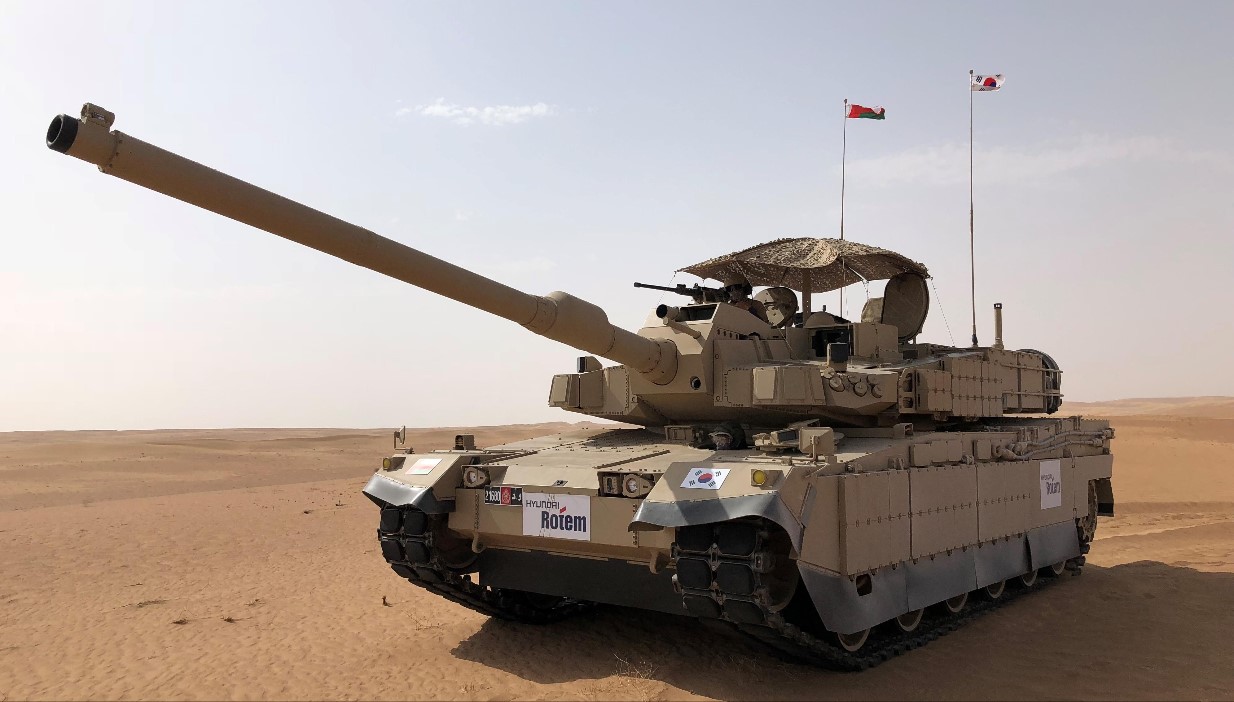
RABAT : In one of the most consequential defense deliberations in its modern history, Morocco is actively evaluating the acquisition of up to 400 K2 Black Panther main battle tanks from South Korea, a move that would dramatically reorient the kingdom’s military supply chains and reshape the balance of power in North Africa.
Defense officials familiar with the talks describe the prospective agreement as far more than a tank purchase. Instead, it is being framed in Rabat as a strategic realignment—designed to reduce long-standing dependence on U.S. and Russian platforms while accelerating the modernization of Morocco’s armed forces amid rising regional competition.
A Strategic Break from Traditional Suppliers
For decades, Morocco’s armored corps has relied primarily on American and, to a lesser extent, Soviet-era and Chinese equipment. That model is now under strain. Global demand driven by the war in Ukraine has stretched U.S. delivery timelines, while sanctions and battlefield losses have rendered Russian support increasingly unreliable.
Against this backdrop, South Korea has emerged as a preferred alternative supplier, offering advanced systems, predictable delivery schedules, and flexible industrial cooperation. The K2 Black Panther—already exported to Europe and the Middle East—is seen in Rabat as a technologically mature platform capable of entering service rapidly.
Defense planners say the potential acquisition would allow Morocco to begin phasing out aging M60 Patton tanks and other legacy platforms that are costly to maintain and increasingly vulnerable on a modern battlefield.
Part of a Broader Korean Defense Package
Negotiations, according to multiple defense sources in both Rabat and Seoul, extend well beyond main battle tanks. Moroccan evaluators have also examined South Korea’s Cheongung-II (KM-SAM), a medium-range air defense system often compared to the U.S. Patriot for its role in intercepting aircraft and cruise missiles.
Artillery modernization is also under discussion, with additional K9 Thunder self-propelled howitzers reportedly being considered to enhance long-range firepower and mobility. At sea, exploratory talks have even touched on South Korea’s KSS-III diesel-electric submarines, reflecting Morocco’s ambition to strengthen its presence in both the Atlantic Ocean and the western Mediterranean.
Taken together, the talks point to a comprehensive modernization effort rather than a single procurement decision.
Regional Rivalry and Operational Urgency
The timing of the talks is significant. Morocco remains locked in a long-running strategic rivalry with neighboring Algeria, which has invested heavily in Russian-made armor, aircraft, and air defense systems. Military analysts note that the introduction of hundreds of advanced K2 tanks would give Morocco a qualitative edge in fire control, situational awareness, and battlefield mobility.
The urgency has been compounded by reports that Morocco quietly transferred a portion of its Soviet-era T-72 tanks to Ukraine in late 2024, freeing inventory space but also accelerating the need for replacements. The K2’s advanced sensors, autoloading system, and hunter-killer targeting capability are viewed as well-suited to Morocco’s diverse terrain, from open deserts to mountainous regions.
Industrial Cooperation and Local Ambitions
The groundwork for the current talks was laid in April 2025, when Morocco’s Minister of Industry, Ryad Mezzour, led a high-level delegation to Seoul to explore defense industrial cooperation. Inspired by Poland’s large-scale partnership with South Korea, Rabat is reportedly pushing for technology transfer, local maintenance capabilities, and potential assembly of a customized “K2ME” variant adapted for Middle Eastern and North African conditions.
Such provisions would mark a significant step toward building indigenous defense capacity, reducing long-term costs, and creating skilled industrial jobs inside Morocco.
A First for Africa
If finalized, the deal would make Morocco the first African nation to operate the K2 Black Panther, cementing its role as a regional military leader and underscoring South Korea’s rapid rise as a global arms exporter. While no contract has yet been signed, officials describe the talks as serious and advanced, with decisions expected once technical evaluations and financial terms are finalized.
For Rabat, the message is clear: in an era of supply shocks and shifting alliances, diversification is no longer optional—it is a strategic necessity.
About the Author
Aditya Kumar:
Defense & Geopolitics Analyst
Aditya Kumar tracks military developments in South Asia, specializing in Indian missile technology and naval strategy.