Massive Blast Near Red Fort Metro Station Suspected as Terror Attack, Many Death
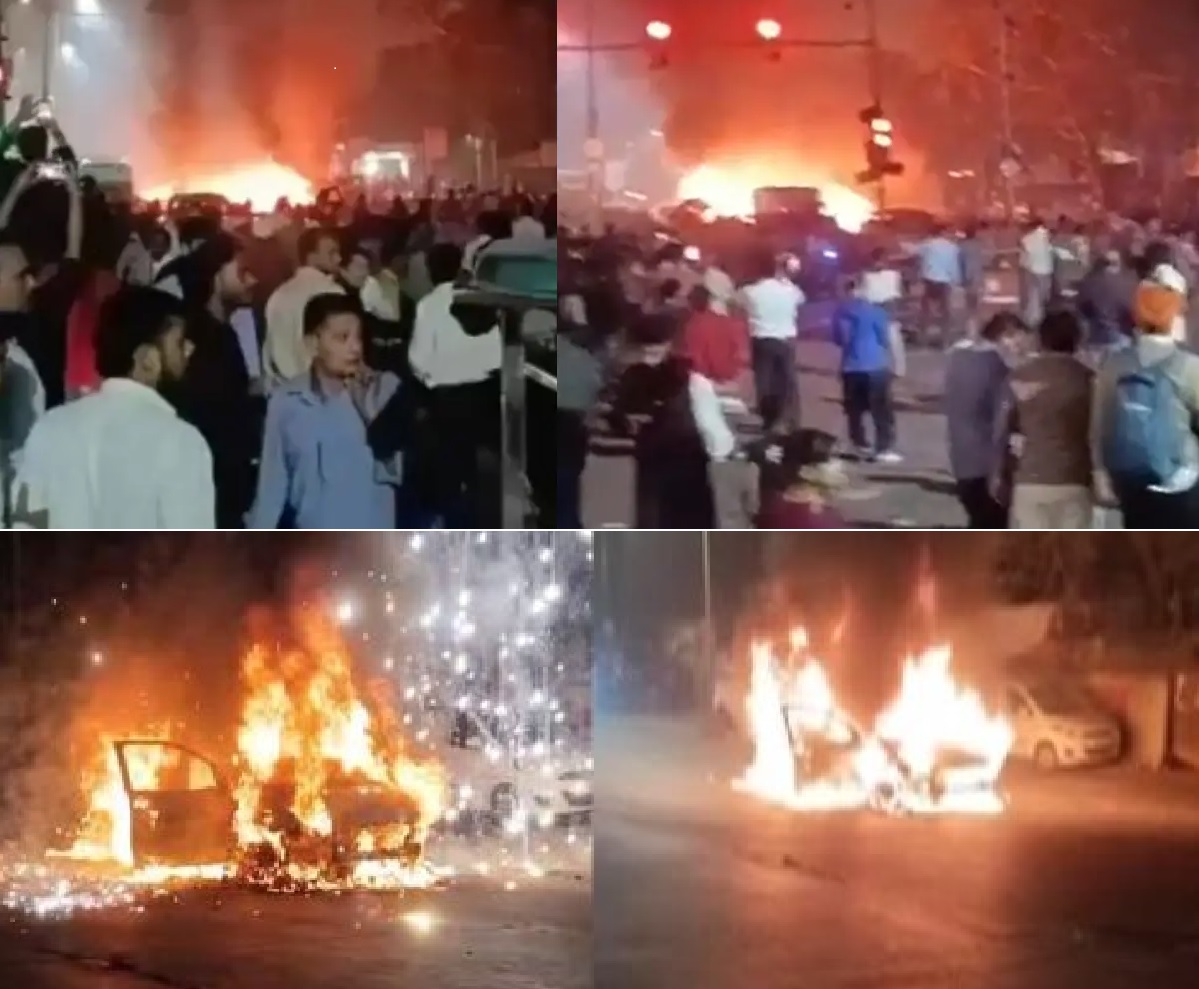
A powerful explosion near Gate No. 1 of Delhi’s Red Fort Metro Station on Monday evening sent shockwaves across the capital, killing and injuring several people. While local media reports claim at least 9 deaths, independent sources and eyewitnesses suggest that the casualty count could be higher. The blast, which occurred around 6:50 PM, originated from a parked car and set off a fire that rapidly engulfed nearby vehicles and shattered glass panels at the metro entry gate.
The incident took place in the heart of Old Delhi’s Lal Quila–Chandni Chowk area — one of the city’s busiest market zones. Thick black smoke could be seen rising above the Red Fort complex as panic-stricken crowds fled the scene, fearing more explosions.
The Incident
According to initial reports, the explosion began in an illegally parked vehicle outside Gate No. 1 of the Red Fort Metro Station. The car erupted into flames following a massive detonation that echoed across the heritage zone. The fire spread to three other vehicles, causing secondary explosions as fuel tanks burst.
Firefighters from the Delhi Fire Service rushed to the scene with seven fire tenders, battling flames for nearly 40 minutes before bringing them under control. However, several vehicles were completely destroyed, and parts of the metro station façade sustained structural damage.
Eyewitnesses described scenes of chaos and confusion. “There was a huge blast. The entire area shook. I saw people running, screaming, some badly burnt,” said Mohammad Imran, a vendor near the metro gate. Another resident reported that metro station windows shattered, and debris was scattered across the road.
Conflicting Death Toll Figures
As of late Monday night, local Delhi media outlets have reported nine confirmed deaths and more than a dozen injured, some critically. However, independent sources, including rescue volunteers and hospital staff at LNJP Hospital and Aruna Asaf Ali Hospital, suggest that the fatality count could be significantly higher, possibly crossing a dozen victims once identification and recovery operations conclude.
Authorities have not yet released an official death toll, citing ongoing search operations among the burnt-out vehicles. Officials fear that some victims may have been trapped inside the cars that exploded during the fire.
Investigation and Security Response
The Delhi Police Special Cell and forensic teams have taken charge of the investigation. The area remains sealed off, with a 30-meter security perimeter established around the blast site. Senior officials have confirmed that the cause of the explosion is still under investigation, but they are examining whether it was a mechanical malfunction, an accidental fire, or a terrorist act.
CCTV footage from the surrounding market and metro premises is being reviewed to determine how the car was parked and if anyone was seen leaving it before the explosion. According to preliminary inputs, the car had been stationary for several hours, raising suspicions that it may have been deliberately planted.
Delhi Police Commissioner Sanjay Arora stated, “We are not ruling out any angle. Our teams are collecting forensic samples, and we will know more after the chemical and explosive tests.”
Possible Terror Connection Under Probe
The explosion comes amid heightened national security concerns following recent arrests of terror suspects linked to Islamic State Khorasan Province (ISKP). Earlier this week, Jammu and Kashmir Police recovered 300 kilograms of RDX, an AK-47 rifle, and ammunition from Faridabad following disclosures by Dr. Saiyed, a radicalized medical professional allegedly plotting multiple blasts across Delhi and NCR.
While officials have not confirmed any connection, security analysts are pointing to the similarity in timing and target selection — crowded public spaces with symbolic or historical significance. A senior intelligence source told reporters, “If the Red Fort blast is found to have any link to the Faridabad RDX module, it would confirm a larger network attempting coordinated attacks in the capital.”
India’s new counter-terror doctrine stipulates that any terror strike with foreign support — particularly from Pakistan-based networks — will be treated as an act of war, allowing for retaliatory action beyond domestic counterterrorism measures.
Delhi on High Alert
The entire capital has been placed on high alert, with additional security deployment around metro stations, shopping complexes, and government buildings. The National Security Guard (NSG) and National Investigation Agency (NIA) are assisting with the blast site analysis.
Traffic in Chandni Chowk, Daryaganj, and Jama Masjid areas has been halted, and market associations have voluntarily closed shops for the day. Metro services at Red Fort Station have been temporarily suspended, and the area remains heavily barricaded.
Authorities have urged residents to remain calm but vigilant, warning against spreading unverified information on social media.
Symbolism and Security Gaps
The Red Fort — a UNESCO World Heritage Site and a symbol of India’s sovereignty — has been the site of major national celebrations, including the Independence Day address by the Prime Minister. A blast in its vicinity carries not only physical but also psychological and symbolic weight.
Experts say the attack underscores Delhi’s vulnerability to soft-target assaults and the urgent need to tighten parking regulations, enforce vehicle screening, and install explosive detectors near sensitive sites.
As investigators work overnight to piece together the sequence of events, Delhi stands tense and grieving. The official death toll remains unclear, with local channels reporting nine deaths but unofficial accounts suggesting more. Whether this was an accident or a deliberate act of terror, it has once again exposed the fragile security framework surrounding India’s most iconic monuments.
Under flashing blue lights and amid the smell of smoke, the Red Fort area, once bustling with evening visitors, now lies silent — a chilling reminder of how quickly normalcy can turn into tragedy.
About the Author
Aditya Kumar:
Defense & Geopolitics Analyst
Aditya Kumar tracks military developments in South Asia, specializing in Indian missile technology and naval strategy.