Masood Azhar Audio Claims ‘Thousands’ of Suicide Bombers Ready to Strike India, Security Agencies on Alert
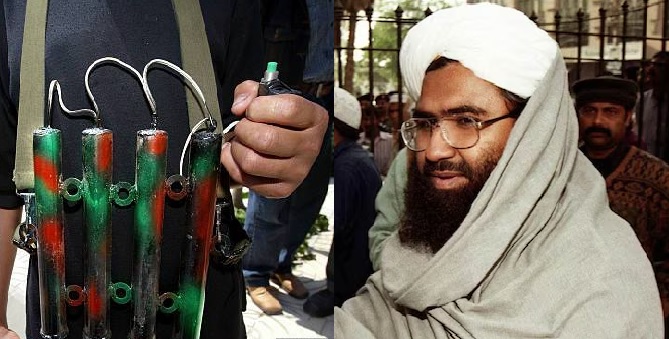
New Delhi / Islamabad — An audio recording allegedly featuring Masood Azhar, the chief of the Pakistan-based militant outfit Jaish-e-Mohammed (JeM), has surfaced on social media, prompting renewed security concerns in India and drawing close scrutiny from intelligence agencies. In the clip, Azhar purportedly claims that his organisation has “thousands” of suicide bombers ready to infiltrate India, describing them as ideologically driven and eager to attain “shahadat” (martyrdom).
The authenticity, timing and location of the audio remain unverified, and Indian authorities have not issued an official confirmation. Nevertheless, the recording has circulated widely across platforms such as Telegram and X, amplified by accounts believed to be aligned with pro-Pakistan intelligence networks.
Claims of “Thousands” and Rhetoric of Martyrdom
In the audio, Azhar is heard making sweeping assertions about JeM’s operational strength. “Not one, not two, not a hundred — not even one thousand,” the speaker says, implying that revealing the true number of suicide attackers would cause an international media storm. He stresses that the alleged recruits are not motivated by money, family pressure or material reward, but by religious conviction alone.
Counterterrorism experts caution that such language fits a long-standing pattern of militant propaganda. Analysts note that exaggeration of manpower and morale is a common tactic used by extremist leaders to project resilience, intimidate adversaries and boost recruitment, particularly after suffering operational setbacks.
Context of Indian Military Strikes
The audio’s emergence comes against the backdrop of recent Indian military strikes targeting JeM infrastructure inside Pakistan, including its long-time headquarters in Bahawalpur. According to security sources, these strikes were part of a broader retaliatory campaign launched after a deadly terror attack in Pahalgam on April 22, in which 26 civilians were killed.
Indian officials have said the pre-dawn operations dismantled multiple terror facilities, degrading training camps, logistical hubs and command centres. Reports indicate that around ten of Azhar’s relatives, including close family members, were killed during the strikes — a claim previously acknowledged indirectly by JeM itself.
In September last year, a senior JeM commander released a video conceding that members of Azhar’s family had died in Indian attacks, a rare public admission that underscored the impact of the operations.
Azhar’s Long Absence and Global Terror Designation
Masood Azhar has not been seen publicly since 2019, following a powerful explosion at his Bahawalpur hideout. Designated a UN-designated global terrorist, Azhar has been linked to some of India’s deadliest attacks in recent decades.
These include the 2016 Pathankot Air Force base attack and the 2019 Pulwama suicide bombing, which killed 44 Central Reserve Police Force (CRPF) personnel. Intelligence assessments suggest that Azhar may now be operating from locations farther away from Bahawalpur, possibly under enhanced protection.
Parallel Propaganda Signals
The audio clip also surfaced days after the arrest and public exposure of Saifullah Kasuri, the deputy chief of Lashkar-e-Taiba. Kasuri was reportedly filmed claiming that the Pakistan army had invited him to lead funeral prayers for soldiers following Operation Sindoor last May.
Security analysts view the near-simultaneous circulation of these audio and video messages as part of a coordinated information campaign aimed at rehabilitating militant groups that have suffered significant losses. By projecting defiance and continued strength, such groups seek to counter narratives of decline and internal damage.
Official Response and Ongoing Vigilance
Indian security agencies are currently analysing the audio for voice authentication, metadata clues and operational relevance. Officials stress that while the rhetoric is alarming, there is no immediate indication of an elevated threat level linked directly to the clip.
Nonetheless, authorities remain on high alert, particularly in sensitive regions and along infiltration routes, amid concerns that propaganda messaging could be used to inspire lone-wolf attacks or revive dormant networks.
As investigations continue, experts emphasise that distinguishing between psychological warfare and credible operational capability will be critical in assessing the real-world implications of the claims attributed to Masood Azhar.
About the Author
Aditya Kumar:
Defense & Geopolitics Analyst
Aditya Kumar tracks military developments in South Asia, specializing in Indian missile technology and naval strategy.