Magnet Defense Unveils M48: A $50 Million AI-Powered USV After 390 Days of Autonomous Sea Operations
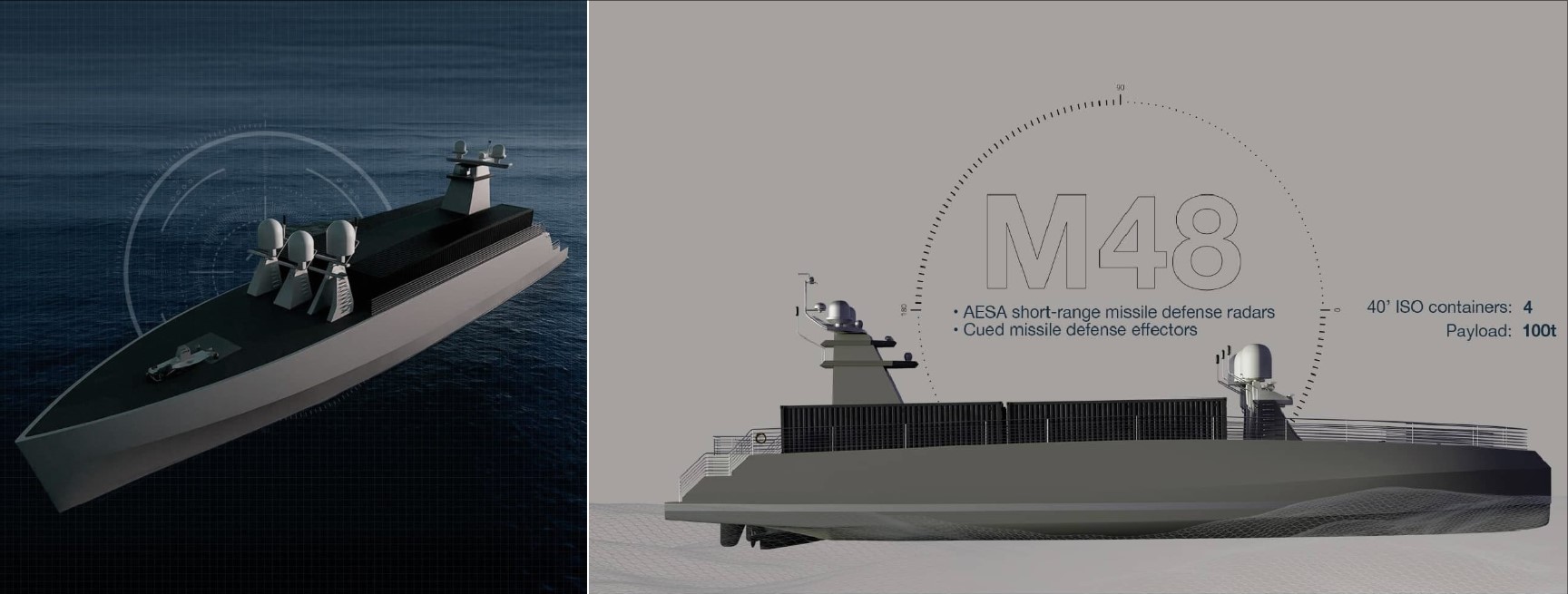
After more than two years of quiet development, Magnet Defense LLC has formally stepped into the spotlight today with the public unveiling of its first autonomous maritime platform: the 48-metre M48 Large Uncrewed Surface Vessel (LUSV). The company said it invested over US$50 million into the design, build and validation of M48 — which has already logged a striking 32,000 nautical miles and 390 total days at sea under AI-enabled autonomous operation.
Magnet Defense describes M48 as a flagship entry into a new generation of unmanned surface vessels (USVs), combining advanced autonomy, modular mission payloads and rugged seafaring endurance. The unveiling comes at a time when global strategic uncertainty is driving demand for unmanned maritime capabilities. According to the company, traditional manned multi-mission warships are increasingly seen as costly, limited in number, and too slow to scale for many modern defense needs — fueling a shift toward lower-cost, rapidly deployable autonomous platforms.
What M48 brings: Capabilities, Design and Performance
The M48 platform is designed to operate fully autonomously, even in high-risk or contested maritime zones. Magnet Defense says the vessel is configured to deliver a wide range of mission capabilities — from persistent intelligence, surveillance and reconnaissance (ISR), to missile defense, electronic warfare, anti-submarine warfare (ASW), logistics and other multi-domain tasks — all while minimizing risk to human personnel.
A key differentiator is M48’s modular payload architecture. The vessel features containerized mission modules, allowing operators to quickly reconfigure the USV for different tasks. Its stable hull geometry and efficient design have reportedly enabled it to operate continuously for long durations: 390 days at sea, with successful navigation over 32,000 nautical miles; operations included sustained periods in Sea State 7, and surviving multi-hour exposures in Sea State 9.
On the technological side, M48 leverages advanced machine learning, edge computing, and multi-sensor fusion to deliver rapid threat recognition, automated weapon pairing, and high-level autonomy — while still allowing for human-in-the-loop oversight when required. The system reportedly includes redundancies, failsafes, and design features enabling long unattended missions without maintenance.
Why M48 Matters Now
Unmanned surface vessels are not a new concept; over past decades, various navies and defence-industrial firms have experimented with USVs for surveillance, mine countermeasure, and reconnaissance missions.
But according to defence-industry analysts, the rising demand for scalable, automated, low-cost maritime assets is reshaping naval procurement strategy — especially as navies look to modernize without committing vast resources to traditional crews and warships.
In this environment, Magnet Defense aims to position M48 (and future USV variants) as a cost-effective yet highly capable alternative — one that can deliver long-endurance missions in contested or dangerous environments, reduce risk to human crews, and enable distributed maritime operations at scale.
Moreover, modular payload architectures align with global trends in open-architecture naval design, allowing navies to integrate ISR, ASW, or electronic-warfare packages depending on operational needs.
What’s Next
While Magnet Defense’s public announcement paints an ambitious picture, several questions remain. Observers may be keen to see independent verification of performance claims — particularly endurance under severe sea states, autonomy performance in real-world contested zones, and reliability over multiple mission cycles.
Moreover, the regulatory and geopolitical landscape for unmanned maritime systems is still evolving. As USVs scale up, navies may need to address issues such as command-and-control, rules of engagement, interoperability with manned fleets, and safety in international waters.
It is also unclear how soon Magnet Defense — or any potential customers — might move from sea trials to operational deployment. Market demand seems favorable: many nations are accelerating interest in unmanned maritime capabilities, especially for persistent surveillance, maritime domain awareness, and force-multiplying effects at lower cost.
With the unveiling of M48, Magnet Defense LLC has entered the growing arena of autonomous naval platforms. Backed by a substantial investment and a successful 390-day sea trial, M48 appears to represent a meaningful step toward full-scale adoption of AI-enabled unmanned maritime systems — combining long-range endurance, modular flexibility, and advanced autonomy.
As global maritime security dynamics evolve, vessels like M48 could reshape how navies deploy force at sea — potentially redefining the balance between traditional manned fleets and distributed autonomous naval assets.
About the Author
Aditya Kumar:
Defense & Geopolitics Analyst
Aditya Kumar tracks military developments in South Asia, specializing in Indian missile technology and naval strategy.