Macron Urges EU to Ready ‘Anti-coercion’ Trade Weapon After Trump Tariff Threat Over Greenland

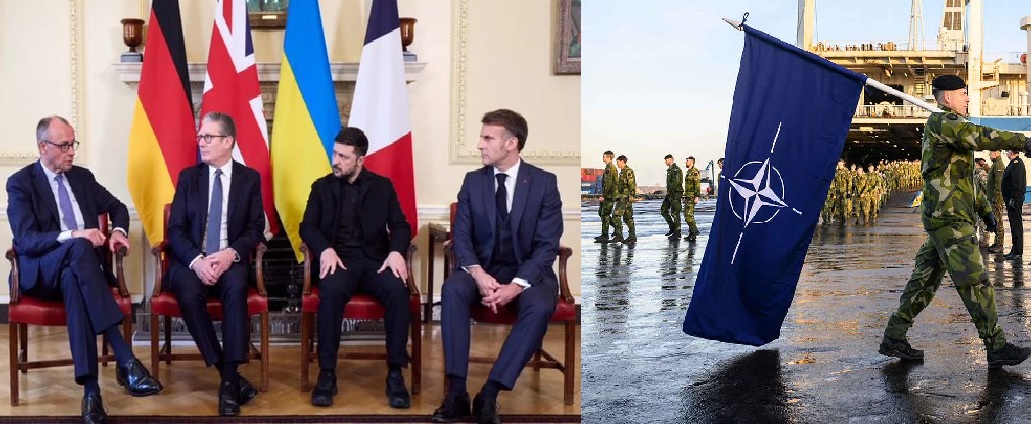
Brussels / Paris : French President Emmanuel Macron has called on the European Union to prepare the activation of its most powerful trade defence tool after U.S. President Donald Trump threatened new tariffs against Europe in a dispute linked to Greenland. The warning has pushed transatlantic relations into a new and potentially volatile phase, raising the prospect of the EU taking unprecedented economic action against its closest ally.
Speaking to European officials and diplomats, Macron argued that the EU must be ready to respond decisively if Washington follows through on its tariff threat. He specifically pointed to the bloc’s Anti-Coercion Instrument (ACI), a legal mechanism designed to counter economic pressure from third countries, describing it as a necessary deterrent in the face of what he called “unacceptable coercion.”
A Rare Escalation with Washington
The confrontation was triggered after President Trump warned that the United States could impose tariffs on European goods if its demands related to Greenland were not met. While details of the potential tariffs have not been officially published, European officials say the threat was broad enough to alarm several EU capitals and prompted urgent discussions in Brussels.
For decades, trade disputes between the EU and the U.S. have been managed through negotiations or the World Trade Organization. Macron’s call marks a significant escalation, signalling that Europe may now be willing to use far more forceful instruments if it believes its sovereignty or economic interests are being leveraged through pressure.
What the Anti-Coercion Instrument is
The Anti-Coercion Instrument, adopted by the EU in 2023, was created to give Brussels a legal framework to respond when a foreign power uses trade or investment measures to force political concessions. Until now, it has never been used.
Under the instrument, the European Commission can investigate whether coercion is taking place and, if dialogue fails, propose counter-measures. These could include restricting access to the EU market, limiting participation in public procurement, suspending regulatory approvals, or targeting specific companies and sectors.
If applied to the United States, officials and analysts say the measures could, in theory, affect U.S. banks’ access to EU procurement contracts or impose targeted restrictions on major American technology companies operating in Europe. Such steps would be legally complex and politically explosive, underlining why the instrument has remained dormant since its creation.
The Economic Stakes
The scale of transatlantic trade explains why the dispute is being treated with such urgency. The United States is the European Union’s largest single export destination.
In 2024, the EU exported goods worth approximately €530 billion to the U.S., while importing around €330 billion in American goods. This left Europe with a goods trade surplus of nearly €200 billion. When services such as finance, digital services, and transport are included, total EU-U.S. trade flows exceed €1.6 trillion annually, making the relationship one of the most economically integrated in the world.
Any disruption, even limited tariffs or targeted counter-measures, would therefore ripple across global supply chains, affecting industries ranging from aerospace and automobiles to pharmaceuticals, finance, and technology.
Divisions and Caution Inside Europe
While Macron has taken a hard line, not all EU member states are eager to move immediately toward confrontation. Several governments have urged caution, arguing that the Anti-Coercion Instrument should be used only as a last resort and that dialogue with Washington must continue.
European Commission officials have stressed that activating the instrument is a multi-stage process that begins with investigation and negotiation. They emphasise that its primary purpose is deterrence, not retaliation, and that any response must be proportionate and legally defensible.
A Test for Transatlantic Relations
Using the Anti-Coercion Instrument against the United States would be without precedent and could redefine how the EU conducts economic statecraft. Originally designed with pressure from authoritarian states in mind, its possible use against Washington highlights how trade and geopolitics have become increasingly intertwined — even among long-standing allies.
For now, Brussels is weighing its options, balancing the desire to avoid a trade war with the need to demonstrate resolve. As Macron made clear, Europe wants to prevent escalation. But, he warned, it must also be ready to act decisively if threats turn into reality.
About the Author
Aditya Kumar:
Defense & Geopolitics Analyst
Aditya Kumar tracks military developments in South Asia, specializing in Indian missile technology and naval strategy.