Macron Ends China Visit With Stability, But No Airbus Deal and No Shift on Ukraine
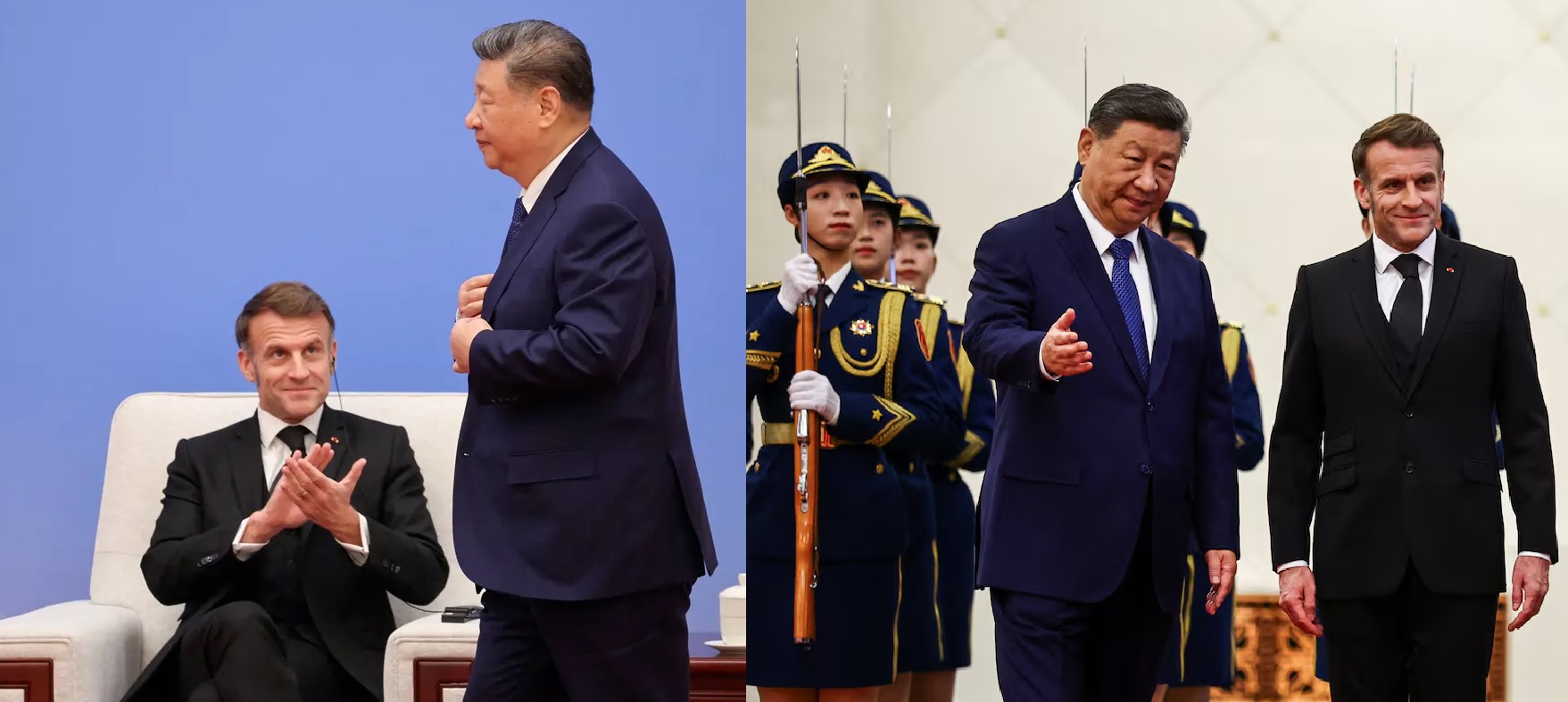
French President Emmanuel Macron has wrapped up a three-day state visit to China, held from November 4 to 6, 2025, that mixed cordial symbolism with hard geopolitical and economic realities.
Over meetings in Beijing and Chengdu with President Xi Jinping, Macron pressed for fairer trade, raised alarm about global instability, and again urged Beijing to use its leverage over Moscow to move toward peace in Ukraine. In return, he left with a package of 12 cooperation agreements and renewed “panda diplomacy” – but no major commercial breakthrough and no shift in China’s stance on the war.
The visit, Macron’s fourth to China as president, was widely seen in Paris and Brussels as a mission of stabilisation rather than a bid for spectacular announcements.
Trade: No Airbus Mega-Deal, and a Reminder of Europe’s Leverage Problem
French officials had hoped that the trip might unlock a major purchase of Airbus jets, with speculation ahead of the visit about a triple-digit aircraft order to echo China’s large Airbus deals in 2019 and 2023. Instead, no such contract was announced.
According to European and French officials, Beijing appears to be holding back large, high-profile purchases as political leverage while it faces a growing wall of EU trade defence measures – from anti-subsidy probes into Chinese electric vehicles and solar products to restrictions on critical technologies.
Macron used several public appearances to warn that trade imbalances and unchecked subsidies risk a “disintegration of the international order”, calling for “rebalancing” trade ties and more reciprocity in market access.
France’s trade deficit with China remains large, with French imports dominated by industrial and consumer goods, and exports centred on aircraft parts, cosmetics and spirits. At the same time, Beijing is angered by EU tariff moves, including probes that directly affect Chinese electric vehicle makers, while China has responded with its own anti-dumping investigations, such as into European brandy – a particular concern for French cognac producers.
In this context, the failure to seal a big aviation order underscored how closely commercial decisions are now tied to the evolving EU–China trade confrontation.
Twelve Agreements: Nuclear Safety, Ageing Societies and “Panda diplomacy”
Despite the absence of headline-grabbing industrial contracts, Paris and Beijing signed 12 cooperation agreements spanning nuclear energy, green technology, artificial intelligence, demographic ageing, biodiversity, and culture.
Key elements include:
-
Expanded cooperation between French energy group EDF and Chinese partners on nuclear safety and low-carbon power, building on earlier joint projects such as the Taishan EPR reactors.
-
New frameworks on biodiversity and environmental protection, reflecting a shared interest in climate diplomacy and conservation branding.
-
Agreements on ageing populations and health, including exchanges on care systems, pharmaceuticals and technologies for older citizens.
Symbolically, the two sides also agreed to extend and refresh “panda diplomacy”: China will prolong the loan of giant pandas to France and work with French zoos and researchers on conservation projects. Macron’s programme included a stop in Chengdu, the hub of China’s panda research and breeding efforts, underlining how cultural and emotional soft power is being used to cushion sharper disputes on trade and geopolitics.
For Paris, the agreements provide incremental economic and diplomatic gains, reassuring French companies that China remains open for some forms of cooperation. For Beijing, they showcase that, despite US pressure and trade rows with Europe, China can still conclude deals with a leading EU power.
Ukraine: Persistent Differences Behind Polite Language
On the central geopolitical issue of Russia’s war in Ukraine, Macron once again asked Xi to use China’s influence with Moscow to push toward a ceasefire and a negotiated peace that respects Ukraine’s sovereignty.
Xi reiterated Beijing’s established line: support for a political solution, opposition to attacks on civilians and nuclear threats, and backing for “peace efforts” in general – but no explicit commitment to pressure Russia or endorse any Western-backed plan.
French officials privately acknowledged that they did not expect a dramatic shift. Still, Macron’s team argues that sustaining high-level dialogue with China is essential to prevent deeper strategic alignment between Beijing and Moscow and to keep open channels on issues like nuclear risk reduction and grain exports.
The talks also touched on the war in Gaza. Xi used the visit to announce USD 100 million in additional aid for Palestinians, while Macron emphasised the need to protect civilians and avoid regional escalation.
Europe–China Friction: Dialogue in the Shadow of a Trade War
Beyond the bilateral agenda, Macron cast his trip as part of a broader effort to define a European line on China that is distinct from, but coordinated with, the United States. He argued for “strategic autonomy” – continuing engagement with Beijing while defending European interests on security, technology and industry.
For Brussels, the stakes are high. The EU is tightening controls on sensitive exports, screening Chinese investment, and investigating subsidies in sectors such as EVs, wind turbines and medical devices. China, in turn, sees many of these steps as protectionist and has launched counter-investigations into European goods, while warning of consequences for companies seen as backing EU measures.
Chinese state media portrayed Macron’s visit as proof that China and Europe remain partners, not rivals, highlighting calls to deepen cooperation and “oppose decoupling”. European analysts, however, note that Beijing often seeks to cultivate large EU member states bilaterally – especially France and Germany – in ways that can complicate EU unity on China policy.
Verdict: Stabilisation, Not Celebration
As Macron’s plane left Chengdu, the balance sheet of the trip looked clear:
-
No flagship Airbus order and no breakthrough on Ukraine.
-
A cluster of sectoral agreements that keep economic and scientific ties ticking over.
-
Warmer atmospherics – pandas, cultural symbolism, and talk of partnership – layered over an increasingly hard-edged dispute about trade, technology and geopolitics.
In Paris and Brussels, the visit is likely to be framed as a “visit of stabilisation”: enough progress to avoid open rupture, not enough to dispel the sense that Europe and China are sliding into a more contested, transactional relationship.
Both sides are still talking. But behind the handshakes and photo-ops, the friction over tariffs, technology, and geopolitics is very real – and increasingly shapes every deal that is signed, and every deal that is withheld.
About the Author
Aditya Kumar:
Defense & Geopolitics Analyst
Aditya Kumar tracks military developments in South Asia, specializing in Indian missile technology and naval strategy.