MDL and France’s Naval Group Extend Partnership for Integration of DRDO’s AIP System into Kalvari-Class Submarines
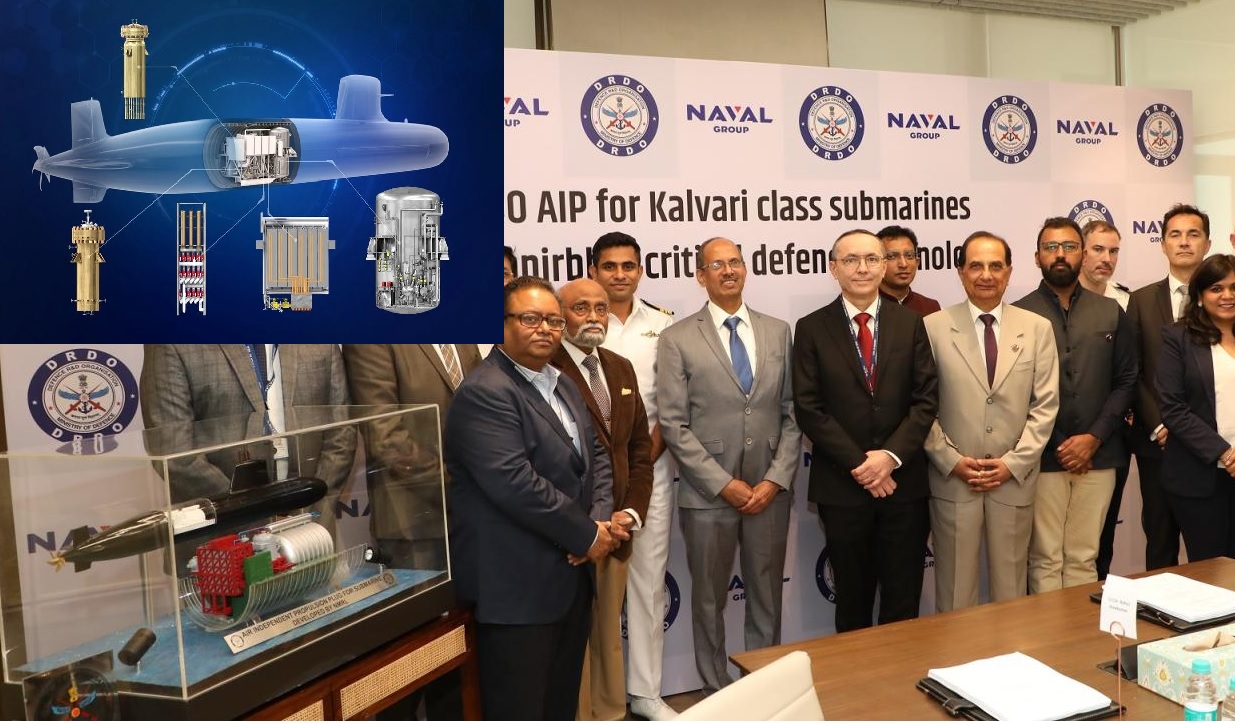
In a major step toward enhancing the endurance and stealth capabilities of India's submarine fleet, Mazagon Dock Shipbuilders Limited (MDL) and France’s Naval Group have extended their strategic collaboration to support the integration of the DRDO-developed Air Independent Propulsion (AIP) system into the Indian Navy’s Kalvari-class submarines.
This announcement signals a significant milestone in India's journey towards self-reliance in advanced underwater propulsion technologies and reaffirms France’s commitment to supporting India's indigenous defence manufacturing initiatives under the Make in India framework.
Focus on Indigenous AIP Integration
The core objective of the extended partnership is to retrofit the Kalvari-class (Scorpène-class) submarines—built by MDL in collaboration with Naval Group—with DRDO’s Fuel Cell-based AIP module during their scheduled mid-life upgrades (MLU). This AIP system, developed by DRDO's Naval Materials Research Laboratory (NMRL), is designed to significantly increase the underwater endurance of conventional diesel-electric submarines, allowing them to operate submerged for extended periods without surfacing.
The current agreement ensures a smooth technical roadmap for integration by leveraging the original design expertise of Naval Group and MDL’s industrial capacity.
Current Status of DRDO’s AIP System (2025)
-
Technology: The AIP system is based on a Phosphoric Acid Fuel Cell (PAFC) technology that converts hydrogen and oxygen into electricity.
-
Validation: DRDO’s AIP completed land-based prototype testing in early 2024 and passed all endurance, safety, and performance parameters.
-
Sea Trials: DRDO is currently preparing a marine-certified AIP prototype, with onboard trials expected in late 2025 or early 2026.
-
Integration Timeline: The first retrofit is planned on INS Kalvari when it enters dry dock for refit in the 2026–2027 timeframe.
-
Partnerships: L&T and Thermax are supporting production, while MDL will carry out physical integration during submarine upgrades.
Why AIP Matters
Air Independent Propulsion allows diesel-electric submarines to remain submerged for two to three weeks, as opposed to the current limitation of just 2–3 days without snorkeling. This stealth capability is critical in high-threat environments, particularly in contested regions like the Indian Ocean or near adversary coastlines, where detection by enemy assets must be avoided.
While Naval Group originally offered its own AIP system for the Scorpène-class, India insisted on indigenous integration as part of its long-term strategy to localize critical underwater technologies. The cooperation from Naval Group in facilitating DRDO's system into a French-designed platform reflects strong bilateral trust.
Statements from the Stakeholders
An MDL spokesperson said: “This collaboration ensures that Kalvari-class submarines will continue to evolve with advanced indigenous technologies, keeping them relevant and lethal well into the 2030s.”
Naval Group India’s CEO added: “We are proud to extend our support to India’s AIP ambitions and continue to work closely with MDL and DRDO to achieve seamless integration.”
Strategic Implications
With China expanding its submarine presence in the Indo-Pacific and Pakistan already operating AIP-equipped submarines, India’s move to retrofit its frontline Kalvari-class boats with DRDO's AIP is both timely and necessary. It also lays the groundwork for deploying the same system in future platforms, such as the upcoming Project-75I and potentially even SSK derivatives of India’s SSN program.
The extended MDL–Naval Group collaboration marks a key turning point in India’s underwater warfare modernization efforts. By pairing foreign design expertise with indigenous propulsion innovation, India is set to field a more survivable, silent, and longer-enduring submarine force—essential for maintaining maritime dominance in an increasingly contested Indo-Pacific region.
✍️ This article is written by the team of The Defense News.