Lockheed’s Mako Hypersonic Missile Now Compatible with Multiple U.S. Aircraft
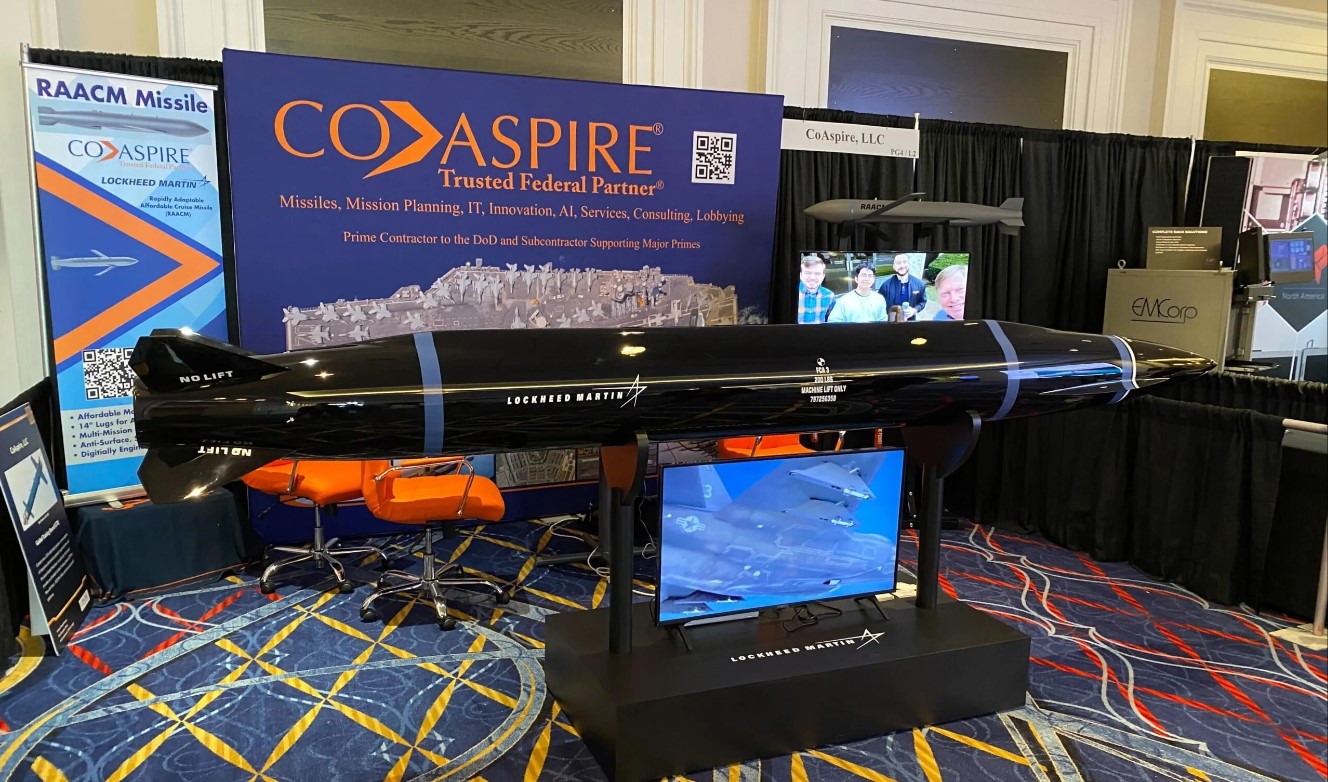
Lockheed is advancing the Mako hypersonic missile, a next-generation weapon designed to deliver rapid, precision strikes in the most heavily defended airspaces on the planet. Physical and virtual compatibility tests have confirmed that the Mako can be carried internally by stealth fighters like the F-22 Raptor and F-35A/C Lightning II, while also being deployable externally on a wide range of U.S. aircraft including the F-15E Strike Eagle, F-16C Fighting Falcon, F/A-18 Super Hornet, EA-18G Growler, and P-8A Poseidon.
Development of the Mako began in 2017 under the U.S. Air Force’s Stand In Attack Weapon (SiAW) program, which has received around $35 million in funding. The program’s main objective is to give the Air Force a weapon capable of swiftly neutralizing critical targets in anti-access/area denial (A2/AD) zones — a key focus as the U.S. faces rapidly evolving missile threats from China in the Asia-Pacific.
Measuring between 3.6 and 4 meters in length, with a diameter of 33 centimeters and a weight of roughly 590 kilograms, the Mako can carry interchangeable 60-kilogram warheads and integrate multiple guidance systems. Its open digital architecture is a standout feature, allowing for quick upgrades and reduced reliance on proprietary technology, which could help cut costs and speed up modernization.
The missile’s versatility extends beyond fighter jets. Virtual integration tests have confirmed that it can be carried internally by B-1B Lancer, B-52H Stratofortress, and the future B-21 Raider bombers. Thanks to its standard 30-inch lugs, it could be adapted for nearly the entire U.S. aerial fleet. In addition, Lockheed Martin has proposed fitting it with an auxiliary booster for launch from naval vertical launch systems—similar to the AGM-158C LRASM—which would expand its operational use to U.S. Navy warships.
This adaptability allows for innovative tactics. One proposed concept involves fifth-generation stealth fighters acting as forward scouts to detect and designate high-value targets. These would then pass targeting data to fourth-generation aircraft loaded with Mako missiles, which would carry out the strikes. This combined approach would maximize firepower while leveraging each platform’s strengths in contested airspace.
Powered by a solid-fuel rocket motor, the Mako can reach speeds of Mach 5 at high altitude while remaining maneuverable, dramatically cutting the reaction time for enemy defenses. Its modular design and additive manufacturing techniques for components like the seeker fairing and control surfaces accelerate production and allow rapid adaptation to emerging threats. Advanced digital engineering also enables extensive virtual testing before physical production, streamlining the development cycle.
The urgency for such capabilities is clear. China’s recent tests of the YJ-21 hypersonic missile in both naval and air-launched configurations have intensified the strategic race in the region. The Mako would provide the U.S. with a flexible, high-speed strike option to counter these advances. At the same time, defensive programs like the Glide Phase Interceptor (GPI) are being developed in parallel, underscoring the U.S. strategy to advance both offensive and defensive missile systems.
Lockheed Martin is also looking beyond U.S. borders. Plans are being discussed to establish an initial production facility in the United Kingdom, with eventual industrial activity shifting to the U.S. under the AUKUS security partnership. The UK Ministry of Defence is evaluating the Mako as part of its ambition to field a sovereign hypersonic capability by 2030, with potential collaboration involving British and Australian partners to share technology, reduce costs, and build industrial capacity.
While the Mako has yet to receive full-scale production funding from the U.S. Department of Defense, its inclusion in the U.S. Navy’s Other Transaction Authority (OTA) program allows for rapid funding approval if deemed urgent. Should it enter production, the Mako could become one of the most versatile and strategically important weapons in the U.S. and allied arsenals, offering speed, adaptability, and multi-platform compatibility for future conflicts.
✍️ This article is written by the team of The Defense News.