Lockheed Martin Successfully Tests New CMMT Missiles to Boost U.S. Air Force’s Future Strike Power

Lockheed Martin has successfully conducted flight tests of two new missile types—the CMMT-D and CMMT-X—designed under its next-generation Common Multi-Mission Truck (CMMT) program. These low-cost, modular cruise missiles are being developed to offer flexible, high-volume strike options for future missions.
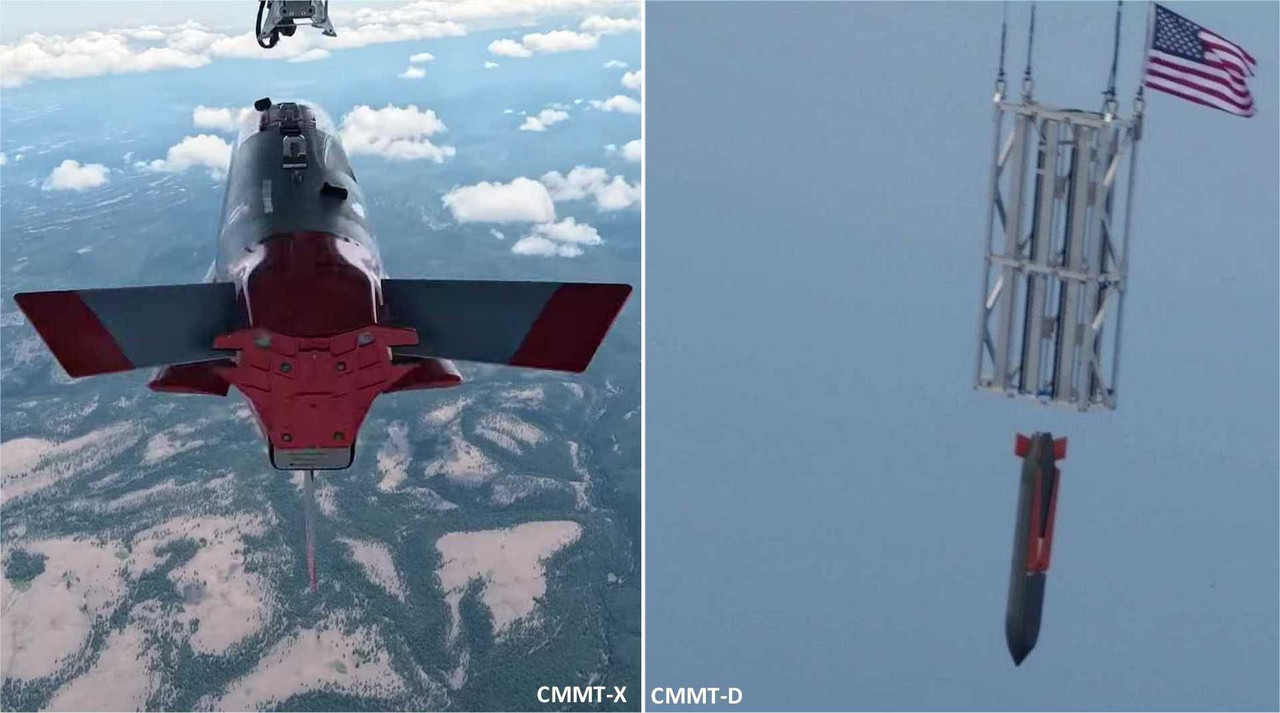
The flight tests took place in May and June 2025, marking a fast-paced development timeline for both variants. The CMMT-D, a glide missile, was dropped from a Rapid Dragon pallet at high altitude and successfully deployed its wings to simulate a real deployment without using engine power. A month later, the powered CMMT-X was launched from an aircraft pylon and initiated autonomous flight after unfolding its wings—making it the first powered missile in the CMMT family to take flight.
What Are CMMT Missiles?
The CMMT family, pronounced “comet,” includes:
-
CMMT-D: An unpowered glide missile intended for high-volume strikes. It can be launched from cargo aircraft, such as the C-130 or C-17, using Rapid Dragon pallets—turning transport planes into temporary missile platforms.
-
CMMT-X: A powered cruise missile launched from standard pylons under fighter or bomber jets. It offers greater range and is more flexible in mission planning.
These new systems are being developed under Lockheed Martin's Project Carrera, which uses digital engineering and modular design to reduce development time and cost. Both CMMT missiles were designed and flown in less than a year—a remarkable achievement in missile development.
Designed for Mass Deployment
The focus of CMMT is on affordability, scalability, and speed. While traditional long-range missiles like the JASSM or Tomahawk cost over $1.5 million each, CMMT units are expected to cost under $150,000. That makes them suitable for mass production and saturation attacks against enemy air defenses or medium-value targets.
-
A single C-130 cargo aircraft can carry up to 100 CMMT-D missiles via four Rapid Dragon pallets.
-
The CMMT-D has a range of about 800 km, and the CMMT-X can travel up to 650 km, both flying at subsonic speeds.
-
Though not stealthy, these missiles are small and numerous, which makes it harder for enemy systems to intercept all of them.
Lockheed Martin estimates a production capacity of up to 2,500 missiles per year, supporting the U.S. Air Force’s Family of Affordable Mass Missiles (FAMM) concept, even though the CMMT isn’t yet a formal part of that program.
Built for Modern Warfare
The missiles are designed with Weapon Open System Architecture (WOSA) standards, meaning they can easily be fitted with different sensors, warheads, and propulsion systems based on mission needs. Their design allows for final assembly near deployment zones, including overseas, offering logistical flexibility.
They can also be deployed not just from aircraft, but from rotary-wing platforms and even ground-based systems like HIMARS.
Origins and Future Role
The CMMT-X builds on Lockheed’s earlier Speed Racer drone program, and the CMMT-D is the first missile of its size proven compatible with Rapid Dragon pallets—a launch method previously used only for larger weapons. Both missiles were presented to the public at the Air and Space Force Association Warfare Symposium in early 2025 as part of the Air Force’s Franklin initiative, which seeks to add affordable strike options to the inventory.
While not yet officially selected by the U.S. Department of Defense for widespread deployment, the CMMT systems are seen as promising solutions for high-volume, low-cost air power in future conflicts, especially in areas like the Indo-Pacific, where long distances and large-scale strikes would be essential.
A Smarter, Faster Path to Production
CMMT’s rapid progress is made possible by Lockheed Martin’s 1LMX digital engineering platform, which cuts design timelines in half and allows faster upgrades. Components from other missile systems are reused, and the modular architecture lets Lockheed update CMMT without needing a complete redesign.
As traditional cruise missile inventories face growing pressure—highlighted during conflicts like Russia-Ukraine—programs like CMMT offer a sustainable and cost-effective way to maintain credible airpower and deterrence.
In short, Lockheed Martin’s successful tests of CMMT-D and CMMT-X mark a major advancement in how the U.S. Air Force might strike faster, cheaper, and in larger numbers in the battles of tomorrow.
✍️ This article is written by the team of The Defense News.