Lockheed Martin Selected to Build 18 Satellites For SDA’s Tranche-3 Tracking Layer
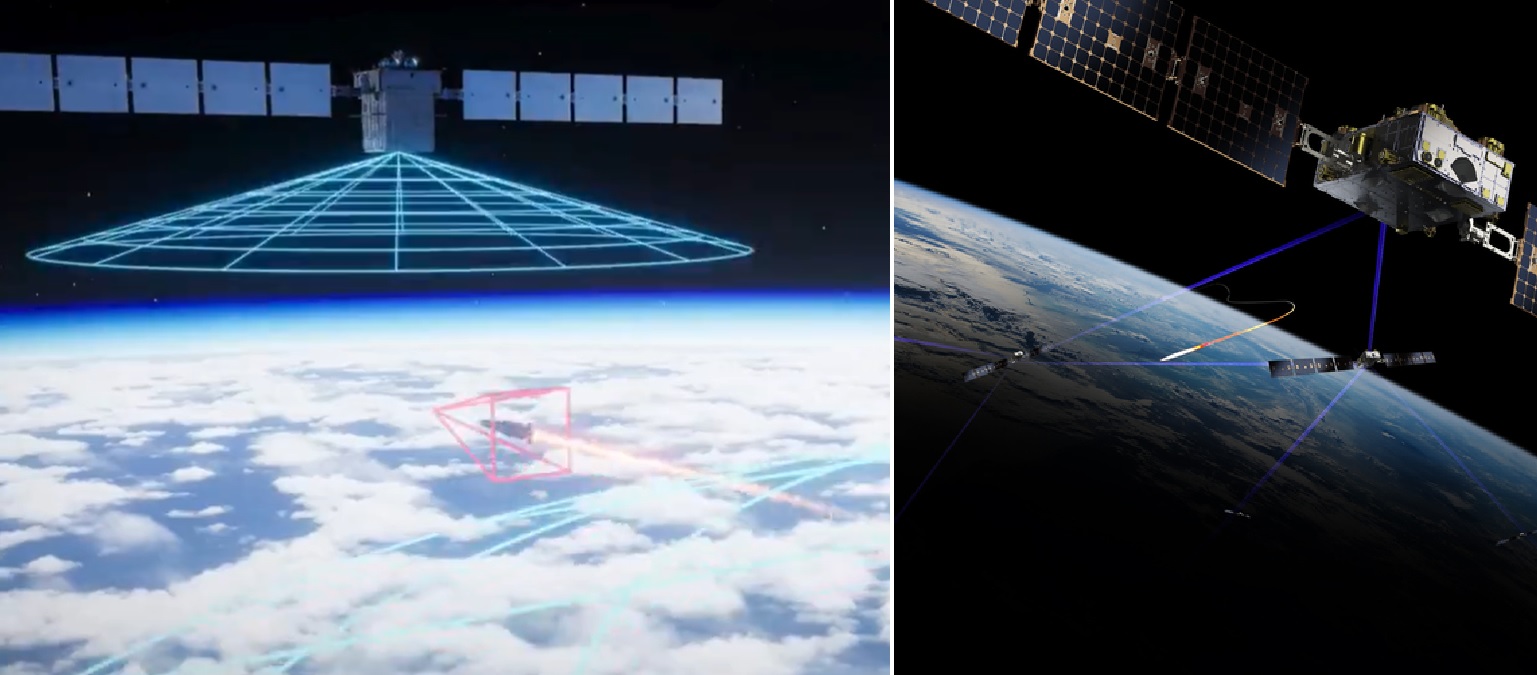
Lockheed Martin has been selected by the Space Development Agency (SDA) to deliver 18 space vehicles for the Tranche-3 (T3) Tracking Layer, strengthening the United States’ ability to detect, track and counter advanced missile threats from space. The satellites will form part of the SDA’s Proliferated Warfighting Space Architecture (PWSA), a rapidly expanding network of low-Earth-orbit (LEO) constellations designed to provide persistent, resilient support to U.S. and allied forces.
The award places Lockheed Martin among a select group of prime contractors chosen to supply the next generation of infrared missile-tracking satellites, as the SDA accelerates its shift from experimental constellations toward operational, warfighting-grade space systems.
Expanding the missile-tracking mission
The Tracking Layer is one of the most critical components of the PWSA. Its mission is to provide continuous global detection, tracking and targeting data for ballistic missiles, hypersonic glide vehicles and other advanced threats. By operating in low Earth orbit, rather than relying on a small number of satellites in higher orbits, the SDA aims to create a proliferated and resilient architecture that is harder to disrupt and faster to upgrade.
Tranche-3 represents a major capability jump. Compared with earlier tranches, T3 satellites are designed to deliver higher-fidelity infrared sensing and enhanced onboard data processing, enabling what the Department of Defense describes as “fire-control-quality” tracks. This level of accuracy allows data generated in space to be passed directly to missile defense systems, shortening response times and improving interception effectiveness.
Understanding T1, T2 and T3
The SDA’s Tracking Layer has been built in stages, known as tranches, each intended to add capability on a roughly two-year cycle.
Tranche-1 (T1) focused on demonstrating basic missile warning and tracking from LEO while validating the SDA’s rapid acquisition model. These satellites proved that a proliferated constellation could detect missile launches and provide initial tracking data to ground systems.
Tranche-2 (T2) expanded on that foundation by increasing satellite numbers and coverage, improving sensor performance and introducing early fire-control features. It marked the transition from demonstration to sustained operational use, while refining manufacturing at scale and constellation integration.
Tranche-3 (T3) builds directly on those lessons. The new satellites incorporate more capable infrared sensors, greater onboard processing power and tighter integration with other PWSA layers, including communications and battle-management networks. The objective is to move from warning and tracking to routine delivery of high-fidelity targeting data suitable for real-time missile defense operations.
Contract scope and industrial approach
Under the Tranche-3 Tracking Layer program, the SDA selected multiple companies, each tasked with delivering 18 satellites. Lockheed Martin’s allocation contributes to a total of 72 T3 Tracking Layer satellites, reflecting the agency’s strategy of multi-vendor production.
SDA officials have emphasized that using multiple suppliers reduces program risk, increases industrial resilience and encourages competition on cost and performance. All satellites must meet common standards and interfaces, ensuring they operate as one integrated constellation regardless of manufacturer.
Lockheed Martin said the satellites will draw on its experience in missile warning, space-sensor integration and resilient spacecraft design, while aligning with the SDA’s emphasis on fixed-price contracts and rapid delivery.
Strategic implications
The expansion of the Tracking Layer through Tranche-3 comes as concern grows over the spread of hypersonic and maneuverable missile systems. Traditional early-warning architectures were optimized for ballistic threats; the SDA’s approach seeks to close coverage and precision gaps by maintaining constant line-of-sight from dozens of LEO sensors.
By delivering fire-control-quality data from space, the T3 constellation is expected to play a direct role in missile defense, not merely early warning. Defense planners view this as a critical evolution in countering high-speed, highly maneuverable threats at global scale.
What comes next
With contracts awarded, attention turns to satellite production, sensor integration, ground-system testing and launch preparation. The SDA has reiterated its plan to refresh the PWSA by tranches, allowing new technologies to be incorporated regularly rather than waiting decades for wholesale replacements.
For Lockheed Martin, the Tranche-3 award reinforces its position in the growing market for proliferated defense space systems. For the SDA, it marks another step toward a fully operational, resilient, space-based missile tracking network designed to support warfighters in an increasingly contested space domain.
✍️ This article is written by the team of The Defense News.