Lockheed Martin Delivers 750th HIMARS Launcher
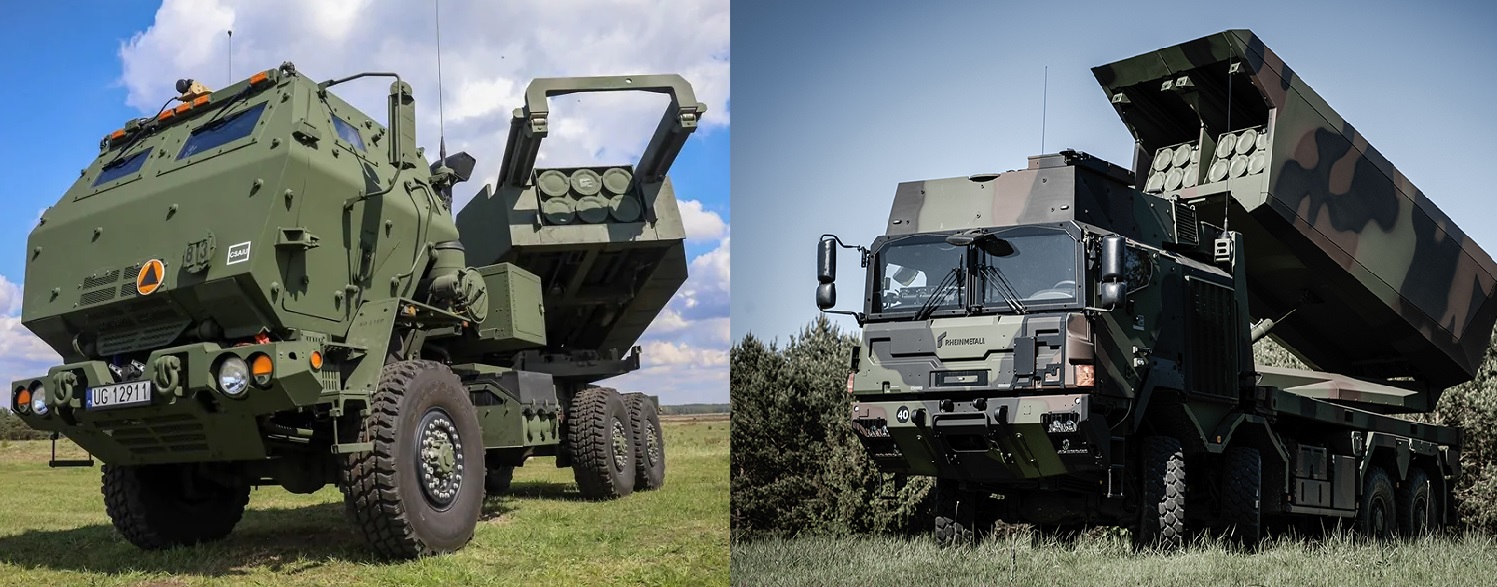
Lockheed Martin has announced the delivery of its 750th M142 High Mobility Artillery Rocket System (HIMARS) — a landmark achievement that underscores the system’s pivotal role in reshaping modern battlefield dynamics. The announcement, made on November 5, 2025, highlights both the pace of U.S. industrial expansion and the rising international appetite for long-range precision fires in an increasingly contested global environment.
A Symbol of Modern Firepower
The HIMARS launcher has become one of the defining symbols of modern precision warfare. Compact, wheeled, and deployable by aircraft, it provides the kind of “shoot-and-scoot” mobility that traditional artillery systems struggle to match. Developed by Lockheed Martin, HIMARS can fire a range of precision munitions, including the Guided Multiple Launch Rocket System (GMLRS), Extended Range GMLRS (ER GMLRS), and the Army Tactical Missile System (ATACMS). The launcher’s success lies in its adaptability — the same chassis and crew can deliver short, medium, or long-range effects depending on mission needs.
The Camden, Arkansas production line, where HIMARS is built, has become the nerve center of this industrial resurgence. Over the past few years, Lockheed Martin has significantly expanded the facility, increasing output capacity to meet the U.S. Army’s demand while accommodating the growing list of international buyers. This milestone aligns with the Army’s broader Long Range Precision Fires (LRPF) modernization strategy, designed to ensure America and its allies maintain overmatch in long-range engagements.
Evolving Munitions: From GMLRS to PrSM
The GMLRS family remains the core of the HIMARS arsenal. Its GPS-aided and INS-stabilized rockets deliver consistent accuracy out to 70 kilometers, with options for unitary warheads against hardened targets or alternative-warhead payloads that saturate wider areas. The Extended-Range GMLRS (ER GMLRS), now entering full-rate production, stretches that reach to approximately 150 kilometers. Despite its longer range, it maintains the same precision and lethality, giving commanders a cost-effective way to strike deep targets like air-defense radars, logistics depots, and command nodes—well beyond the reach of traditional artillery.
Complementing this is the new generation Precision Strike Missile (PrSM), which received Milestone C approval in July 2025, clearing it for production. PrSM replaces ATACMS as the U.S. Army’s primary theater-strike weapon, doubling launcher capacity to two missiles per pod and extending range beyond 400 kilometers. Built with a modular open-systems architecture, PrSM can be adapted for new seekers and targeting modes, including maritime and multi-domain strike options.
This modularity ensures that every HIMARS launcher delivered today is a forward-compatible platform, ready to integrate future weapons as they mature. The ability to employ a wide range of effectors from a single vehicle is central to the system’s enduring appeal.
Tactics and Mobility: The HIMARS Edge
HIMARS’s mobility continues to be its defining tactical advantage. U.S. and NATO forces have refined High Mobility Artillery Rocket Insertion (HIRAIN) tactics — a strategy that involves airlifting HIMARS units into forward areas using C-130 or C-17 aircraft, executing precision strikes, and rapidly exfiltrating before enemy counter-battery fire can respond. These tactics have been regularly demonstrated in Europe, where HIMARS serves both as a deterrent and as a proof of the Army’s ability to conduct distributed, time-sensitive operations.
The sealed pod system drastically shortens reload times, while advanced digital fire control integrates real-time data from drones, counter-fire radars, and joint sensors to generate firing solutions in seconds. In practice, this means a HIMARS battery can deliver a devastating salvo, blind enemy defenses, and disappear into the terrain — all before the adversary realizes where the attack came from.
A Growing Global Footprint
The HIMARS system’s reputation for reliability and precision has led to an unprecedented surge in international adoption. The system’s simplicity, interoperability, and scalability have made it a natural choice for countries seeking both deterrence and operational flexibility.
-
Australia has already received the first of its 42 ordered systems and is pursuing an additional 48 under the LAND 8113 program, aligning HIMARS and PrSM with a land-based maritime strike role.
-
Estonia, which took delivery of its first launchers earlier this year, has integrated HIMARS into a Baltic defense strategy emphasizing rapid fires and deception-based survivability.
-
Taiwan has fielded initial batteries and conducted live-fire drills as part of a cross-Strait deterrence strategy, forcing the PLA to consider distributed strike threats across multiple axes.
-
Poland continues to expand its Homar-A program, integrating HIMARS modules onto local Jelcz trucks and establishing domestic rocket production — a major step toward building Europe’s largest precision fires network.
Each of these acquisitions reflects a broader trend: Allied nations are buying range, precision, and tempo, not just equipment. HIMARS offers them a scalable, interoperable platform to integrate with NATO and U.S. targeting architectures.
Industrial Momentum and Strategic Impact
Lockheed Martin’s Camden facility now anchors a broader push to rebuild Western industrial capacity for munitions and precision fires. Since 2022, annual launcher output has surged as part of a multinational rearmament cycle to replenish inventories depleted by ongoing conflicts and exercises. Alongside launchers, the same site produces ER GMLRS and PrSM, ensuring synchronized growth of both platforms and payloads.
Every new launcher is not just a tactical tool—it’s a networked node in a global precision strike ecosystem. The modularity, connectivity, and sustained production pipeline ensure that HIMARS remains relevant for decades to come, capable of integrating AI-enhanced targeting, autonomous sensors, and future strike assets as warfare evolves.
About the Author
Aditya Kumar:
Defense & Geopolitics Analyst
Aditya Kumar tracks military developments in South Asia, specializing in Indian missile technology and naval strategy.