Leaked Files Reveal Russia Is Secretly Building 48 Su-35 Fighter Jets for Iran, Delivery by 2027
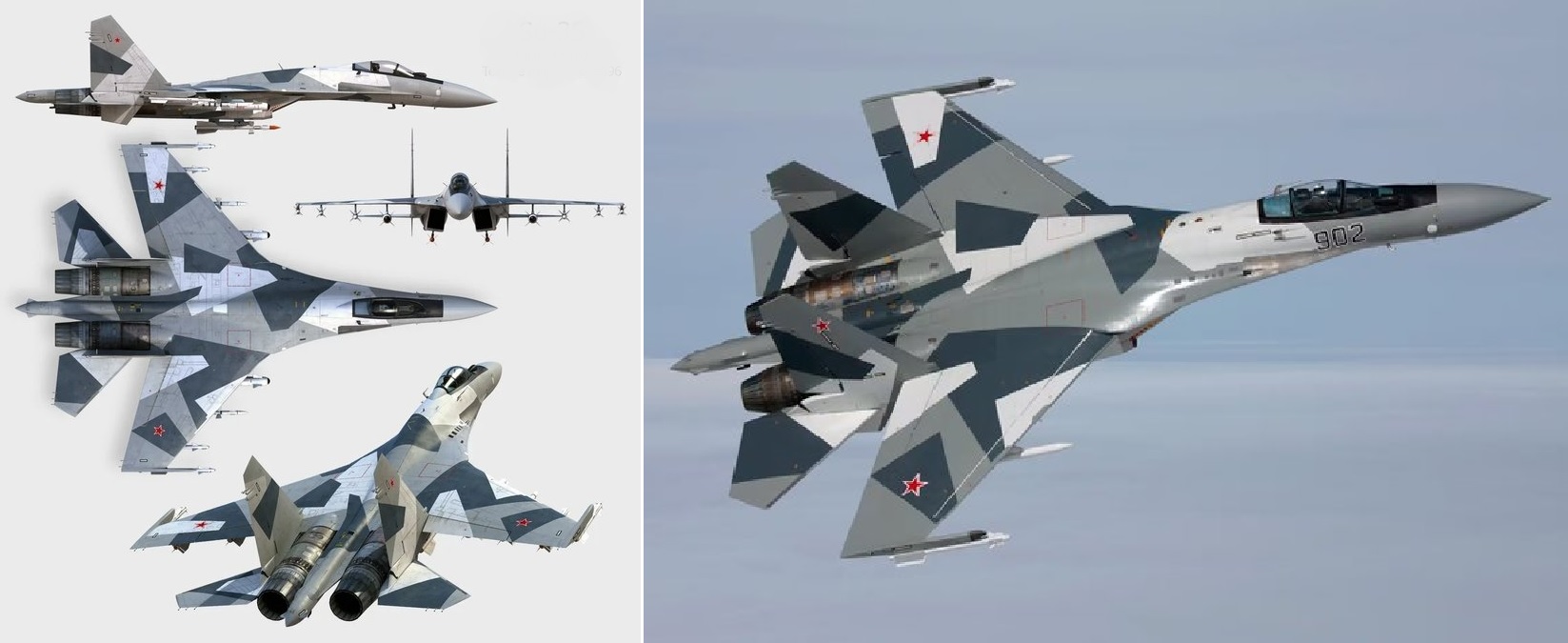
A newly surfaced set of Russian defence-industry documents has revealed that Moscow is secretly manufacturing advanced fighter jets for Iran — a covert programme that could dramatically reshape regional power balances across the Middle East. The leak, obtained by UNITED24 Media and cross-verified by multiple defence-tracking outlets, points to an extensive production effort involving Su-35 fighter jets and even preliminary work related to Russia’s fifth-generation Su-57.
Leaked Papers Indicate Large-Scale Su-35 Programme for Tehran
According to the documents, Russia is currently producing 16 Su-35 fighter jets for Iran under a November 2023 contract, with deliveries expected by 2027. These aircraft are reportedly under construction at several Russian defence plants coordinated directly by the country’s Ministry of Defence.
Sources familiar with the Islamic Republic of Iran Air Force (IRIAF) claim that six Su-35s are already being assembled and are slated for early delivery to Hamadan Airbase — flown in by Russian pilots.
Another leaked export table from Rostec shows a much larger scope:
Iran has placed an order for 48 Su-35s, marked by customer code 364, with deliveries scheduled for 2026–2028. A 15% advance payment has reportedly been made.
The package includes:
-
24 L-265M10-02 Khibiny-M electronic-warfare suites
-
Radar and avionics kits for Su-35 variants
-
Spares and support documentation
Defence analysts say part of the payment structure may involve Iran’s assistance in establishing Shahed-136 drone production lines inside Russia, a key capability Moscow has relied on during the Ukraine war.
Potential Su-57 Link Sparks Global Concern
While the Su-35 programme appears confirmed by multiple leaked files, the documents also reference export preparations for Su-57 components under the same customer code. No quantity or payment schedule was attached, but Iranian interest in Russia’s fifth-generation fighter has long been suspected.
If delivered, Su-57s would represent a major leap in Iran’s low-observable and networked-warfare capabilities — a scenario likely to alarm the United States, Israel, and Gulf states.
Why Iran Wants These Jets Now
Iran’s air force has struggled for decades with an outdated fleet of U.S.-built F-4s, F-5s, and F-14s, along with limited numbers of MiG-29s and Su-24s. Many suffer from age, limited upgrades, and chronic parts shortages.
The Su-35 would give Iran:
-
A modern long-range air-superiority fighter
-
The powerful Irbis-E radar capable of tracking stealthy targets
-
Advanced electronic warfare with the Khibiny-M suite
-
High-agility thrust-vectoring engines
-
Extended air-to-air engagement range
Such a fleet — especially if numbering 48 aircraft — would mark the most significant modernization of Iran’s air forces since the 1970s.
Regional and Global Security Impact
If fully delivered, analysts warn that the Su-35 deal could significantly alter the strategic balance in the Middle East. It is expected to shift the air-power equation against Israel and Gulf states while strengthening Iran’s ability to defend nuclear or other high-value strategic sites. The acquisition would also expand Iran’s capacity to project power beyond its borders, creating new complications for U.S. and Israeli operational planning. At the same time, the agreement would deepen Russia–Iran military dependency, tying both countries closer together in long-term security cooperation.
For Moscow, the deal offers a valuable revenue stream and crucial geopolitical leverage during a period of sanctions and wartime strain. For Tehran, the arrival of advanced fighters enhances national deterrence and confirms a deepening military alliance with Russia.
Uncertainties Remain
Despite the detailed contract data, neither Russia nor Iran has publicly confirmed the 48-aircraft deal. Russia’s defence-industrial capacity is stretched due to wartime demands, raising questions about whether the full order can be completed on schedule.
Moreover, integrating Su-35s into Iran’s infrastructure will require extensive Russian support, from pilot training to long-term maintenance.
The Su-57 references remain unverified, and no evidence suggests that deliveries have begun.
A Deal With Far-Reaching Consequences
The leaked documents paint a picture of a deepening Russia–Iran military partnership that goes beyond drones and battlefield cooperation. If Iran receives the full complement of Su-35s — and especially if future Su-57 transfers occur — the Middle East’s military landscape could change dramatically.
For now, the programme remains officially unacknowledged. But the evidence points to one of the most consequential covert arms deals of the decade — a development that could redefine strategic calculations far beyond Tehran and Moscow.
About the Author
Aditya Kumar:
Defense & Geopolitics Analyst
Aditya Kumar tracks military developments in South Asia, specializing in Indian missile technology and naval strategy.