Leaked Documents Reveal Russia Is Supplying Su-27 and Su-30 Fighter Jet Parts to China at Nearly 200% Loss
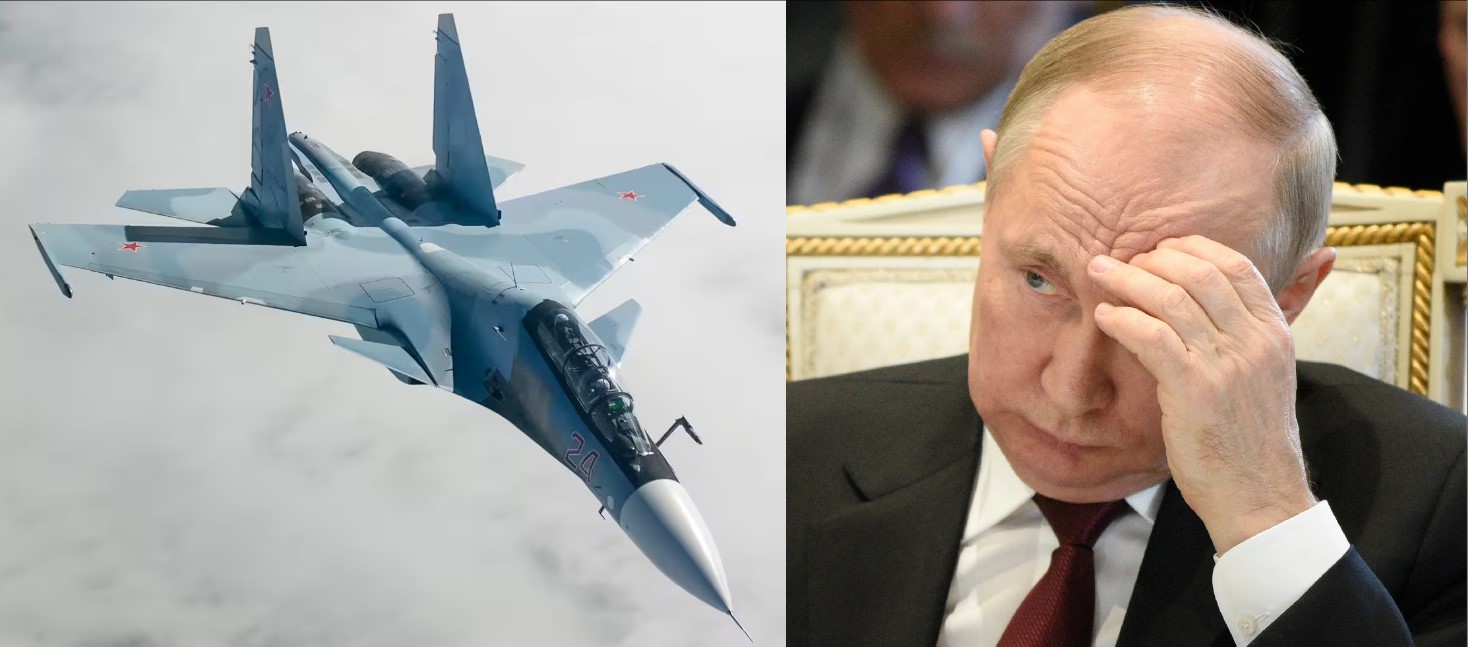
Moscow : A leaked internal letter from Russia’s aerospace sector has exposed the financial strain behind Moscow’s continued support for China’s fleet of Soviet-designed combat aircraft, revealing that Russian manufacturers are supplying critical components for Chinese Su-27 and Su-30 fighter jets at a significant loss in order to avoid damaging relations with Beijing and other long-standing defense partners.
The document, dated March 2025 and attributed to Russia’s state-run aviation holding United Aircraft Corporation (UAC), details how soaring production costs and rigid export pricing rules have left Russian firms absorbing sharp losses while fulfilling after-sales support contracts for Chinese-operated aircraft. According to the letter, the cost of certain components has risen by nearly 200 percent compared with 2022 levels, yet export prices have remained largely frozen due to political and contractual constraints.
Costs Surge, Prices Stay Frozen
At the center of the dispute are spare parts and assemblies produced by JSC “2 MPZ,” a Russian manufacturer supplying components used to maintain Su-27 and Su-30 aircraft operated abroad. The leaked correspondence shows that the release price of some items reached 452,302 rubles excluding VAT—an increase of roughly 193.6 percent over 2022 benchmarks and more than eight times the price specified in earlier contracts signed in 2014 and 2016.
Despite these increases, UAC officials warn that passing higher costs on to the foreign customer—identified in the document only as “Foreign Customer 156,” widely understood to be China—would almost certainly derail ongoing and future contracts. The letter states bluntly that the customer reacts “extremely negatively” to sharp price fluctuations and would interpret any unjustified increase as a lack of commitment to a long-term partnership.
Fear of Losing the Chinese Market
The documents underline how sensitive Moscow has become to Beijing’s reaction. Chinese operators rely heavily on Russian technical support to keep older Su-27 and Su-30 variants airworthy, even as China expands its domestic fighter programs. Russian officials argue that maintaining this support is essential not only for revenue continuity but also for preserving the global reputation of the Su family of aircraft on the international arms market.
UAC’s after-sales director warns that a unilateral refusal to supply parts, or an attempt to reprice them strictly according to rising domestic costs, could result in the collapse of established military-technical cooperation frameworks. Such an outcome would risk pushing China to accelerate full substitution of Russian components with domestically produced alternatives, permanently locking Russian firms out of a once-lucrative market.
State Controls and Contractual Constraints
Compounding the problem is Russia’s pricing regime for defense products. The letter references government regulations approved in December 2022 that tie military production prices closely to verified cost structures under state defense orders. While this system is designed to prevent profiteering, it leaves little flexibility when export contracts—often negotiated years earlier—fail to account for inflation, sanctions-driven supply disruptions, and rising labor and materials costs.
In this case, UAC notes that even with an 18 percent discount already granted to the foreign customer and a modest annual price escalation of three percent built into earlier agreements, current prices still fall well short of covering actual production expenses.
A Strategic Loss, Not a Commercial One
The leaked analysis makes clear that the losses are deliberate. Russian firms appear to be absorbing higher costs as a strategic trade-off. By continuing deliveries at below-cost prices, Moscow preserves political goodwill with Beijing, sustains interoperability between Russian and Chinese air forces, and keeps Russian aircraft relevant in China’s inventory for as long as possible.
Industry analysts say the episode highlights a broader shift in Russia’s defense exports since the start of the Ukraine war and the expansion of Western sanctions. With fewer markets available and China now its most important major customer, Moscow has less leverage to enforce strictly commercial terms.
Why Russia Sells at a Loss
The central question raised by the leaked letter—why Russia would knowingly sell military components at a loss—appears to have a clear answer. The documents suggest that the Kremlin and state-owned defense firms view the financial hit as the cost of maintaining a strategic partnership. Preserving access to the Chinese market, protecting long-term political ties, and avoiding reputational damage to Russia’s flagship combat aircraft programs now outweigh short-term profitability.
In effect, the losses reflect a calculated decision: Russia is paying to keep China close, even if that means subsidizing the maintenance of Chinese fighter jets with its own strained defense industry.
About the Author
Aditya Kumar:
Defense & Geopolitics Analyst
Aditya Kumar tracks military developments in South Asia, specializing in Indian missile technology and naval strategy.