Lashkar-E-Taiba Commander Admits To India's Strikes In Muridke, Vows To Build Bigger 'Mosque'
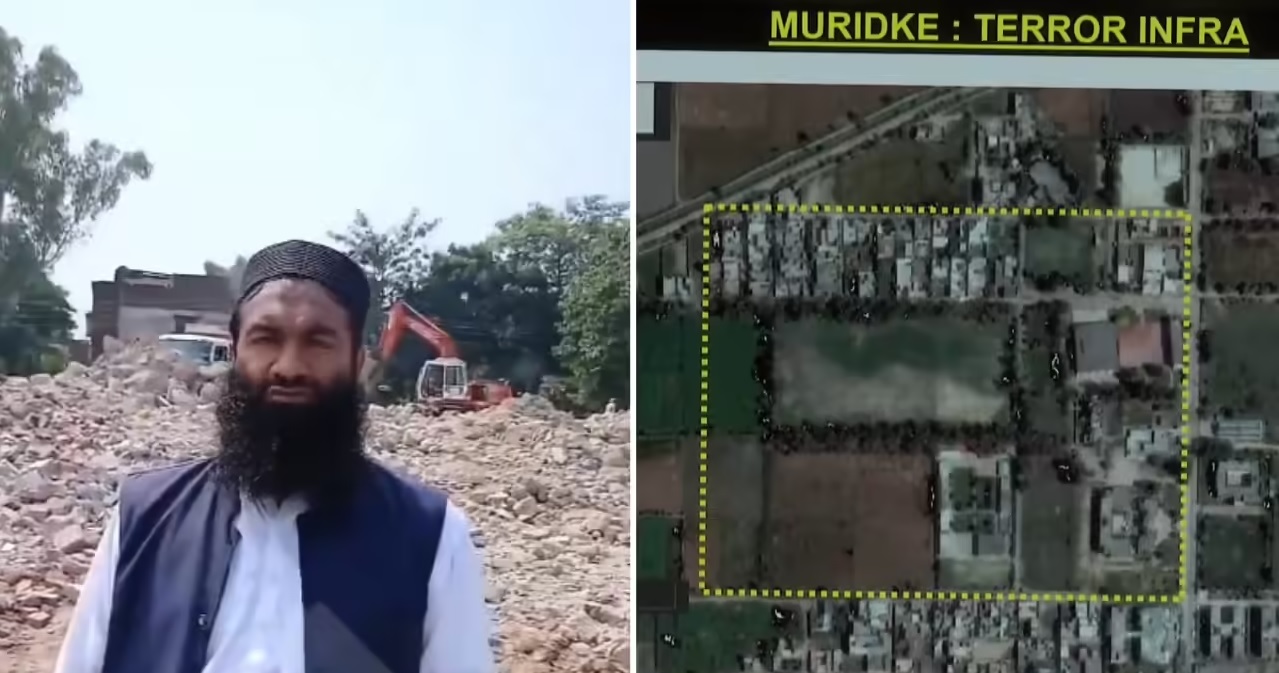
In a significant development, India's Operation Sindoor has been indirectly validated by admissions from both Lashkar-e-Taiba (LeT) and Jaish-e-Mohammed (JeM) commanders, undermining Pakistan's consistent denials of the May 7 precision strikes.
A viral video features LeT commander Qaasim acknowledging that the Indian Air Force destroyed the Markaz Taiba complex in Muridke, Pakistan's most notorious terror hub, while vowing to rebuild the camp "even bigger." Established in 2000, the Muridke Markaz functioned as the ideological and operational center of LeT, housing arms depots, physical training facilities, radical indoctrination programs, and dawa’h networks.
Though projected as a charitable and religious institution, the complex served as the alma mater for generations of LeT operatives and was directly connected to multiple high-profile attacks, including the 26/11 Mumbai terror strikes. By striking Muridke, India targeted not just a symbolic site but the core of LeT's recruitment and training pipeline that had links to global terror networks, including al-Qaeda.
Simultaneously, JeM commander Masood Ilyas Kashmiri admitted that India's strikes devastated the Markaz Subhan Allah headquarters in Bahawalpur, killing several family members of JeM chief Masood Azhar. Among the dead were Yusuf Azhar, a prime accused in the 1999 IC-814 hijacking and JeM's weapons trainer, and Hafiz Muhammed Jameel, another of Azhar's brothers-in-law who oversaw indoctrination and fundraising operations.
This facility, active since 2015, was central to JeM's training ecosystem and had direct involvement in planning and executing major attacks, including the 2019 Pulwama suicide bombing. Kashmiri's confession that Masood Azhar's family was "torn into pieces" corroborates Indian claims that Operation Sindoor eliminated high-value assets and degraded JeM's senior command structure in Bahawalpur.
The videos of Qaasim and Kashmiri also highlight the sectarian-terror proxies' strategy following their losses. Qaasim used his appearance at Muridke's ruins to rally new "Mujahideen and Talaba" through the Daura-e-Suffa training program, which fuses basic combat skills with ideological radicalisation.
This underscores LeT's intent to rapidly regenerate cadres despite the destruction of its nerve center. Meanwhile, JeM is reportedly turning towards innovative funding models, including large-scale fundraising disguised as mosque construction, coupled with the use of digital wallets linked to terror leaders' families to circumvent FATF scrutiny.
Operation Sindoor, launched after the April 22 Pahalgam massacre that killed 26 civilians, represents a watershed in India's cross-border counter-terror doctrine. By targeting headquarters of LeT at Muridke and JeM at Bahawalpur—long presumed untouchable assets shielded deep inside Pakistan's Punjab heartland—India struck at the operational core of its most persistent enemies.
The dual admissions now circulating online confirm the scale of devastation, the strategic precision of Indian strikes, and the cumulative blow dealt to both terror groups' infrastructure, leadership, and training capabilities while simultaneously exposing Islamabad's duplicity in shielding and funding UN-designated outfits.
This development adds international pressure on Pakistan to address terrorism on its soil and validates India's counter-terrorism operations across the border.
In conclusion, Operation Sindoor has not only disrupted the operational capabilities of LeT and JeM but has also exposed the underlying nexus between these groups and elements within Pakistan, challenging the international community to reassess the region's security dynamics.
✍️ This article is written by the team of The Defense News.