Largest U.S. Naval Deployment in Latin America in 20 Years Targets Maduro Regime
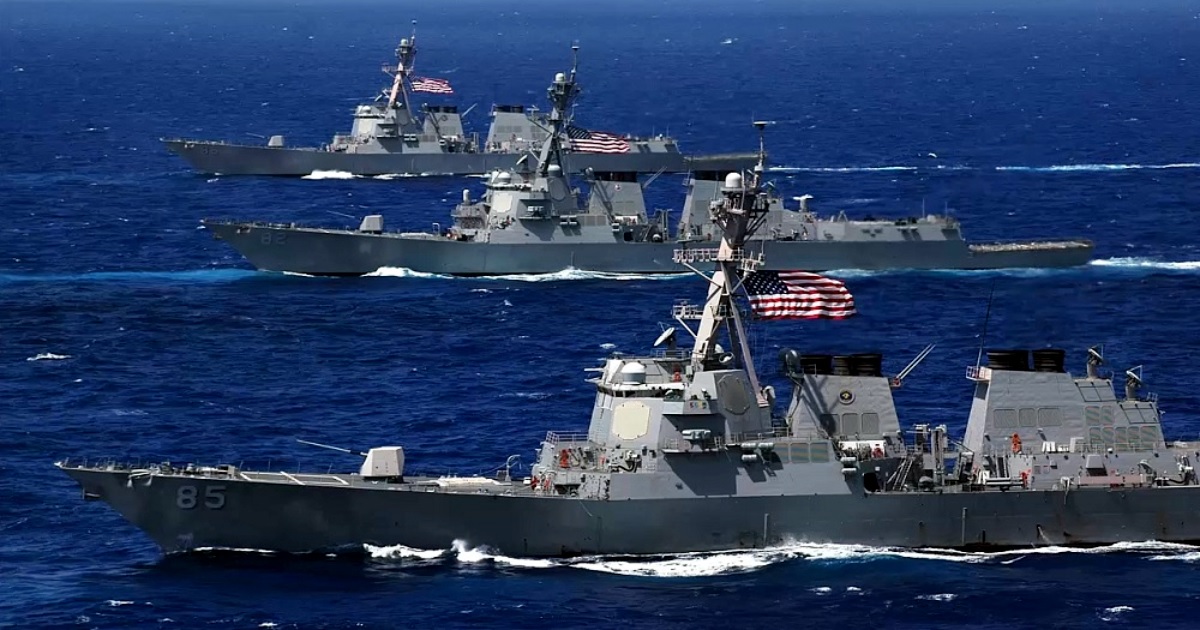
Caracas / Washington – August 31, 2025 : The United States has launched its most assertive naval deployment in the Western Hemisphere in more than 20 years, sending a powerful strike force close to Venezuelan territorial waters. The operation, officially described as a counter-narcotics mission, is widely viewed as a direct show of strength against President Nicolás Maduro’s government.
Expansive Naval Build-Up
At least eight U.S. warships are now patrolling the southern Caribbean. The force is led by the Ticonderoga-class cruiser USS Lake Erie, joined by Arleigh Burke-class destroyers including USS Gravely, USS Jason Dunham, and USS Sampson. Also deployed are amphibious assault ships USS Iwo Jima and USS San Antonio, a nuclear-powered fast attack submarine, and surveillance aircraft such as the P-8A Poseidon.
The amphibious group carries more than 4,000 U.S. Marines, giving Washington both striking power and rapid-response capability. Defense officials emphasize the ability to conduct a wide spectrum of missions ranging from humanitarian aid to precision strikes and embargo enforcement.
Washington’s Stated Goals
The U.S. administration frames the deployment as a response to narcotics trafficking, citing Venezuela’s alleged role in enabling criminal cartels and armed groups. The Maduro government has been directly linked by U.S. officials to narcoterrorism, fentanyl trafficking, and cooperation with foreign powers such as Russia, China, and Iran.
Analysts, however, note that the scale of the operation far exceeds what is typically required for counter-drug missions, suggesting a broader strategic intent. The show of force highlights Washington’s determination to project influence in its own hemisphere and to pressure Maduro amid concerns of growing foreign military and cyber activity in Venezuela.
Venezuela’s Military Response
In Caracas, President Maduro denounced the U.S. naval presence as “imperialist aggression” and ordered all branches of the armed forces to raise their readiness. Venezuela maintains around 123,000 active personnel, supported by more than 220,000 reserves and loyalist militias that the government claims number over four million members.
Venezuelan defenses are being repositioned along the coastline, including S-300VM long-range air defense systems, radar installations, and short-range missile batteries. The Venezuelan Navy has placed its submarines, fast missile boats, and coastal defense forces on heightened alert, with key bases at Puerto Cabello, La Guaira, and Punto Fijo mobilized for rapid response.
Regional Concerns
Neighboring countries and international observers warn of the risks of escalation. Incidents of GPS jamming, radar lock-ons, and electronic interference against U.S. aircraft in recent weeks have raised fears that even a small miscalculation could trigger armed confrontation.
Some Latin American governments cautiously support the U.S. mission as an anti-narcotics effort, while others criticize it as a return to interventionist policies. Security experts stress that the principal narcotics routes are in the Pacific, not the Caribbean, fueling suspicions that the deployment is as much about political coercion as it is about drug interdiction.
A Pivotal Test
This maritime standoff is rapidly becoming a decisive test of U.S. resolve in the hemisphere. With American strike-capable ships operating just beyond Venezuelan waters and Maduro mobilizing his armed forces, both sides now stand on high alert.
While a full-scale invasion remains unlikely, the deployment underlines Washington’s readiness to apply hard power in Latin America. Whether this leads to deterrence, confrontation, or negotiated de-escalation may define the region’s security landscape for years to come.
✍️ This article is written by the team of The Defense News.