L3Harris Selected to Develop Command and Control System for Autonomous Swarms
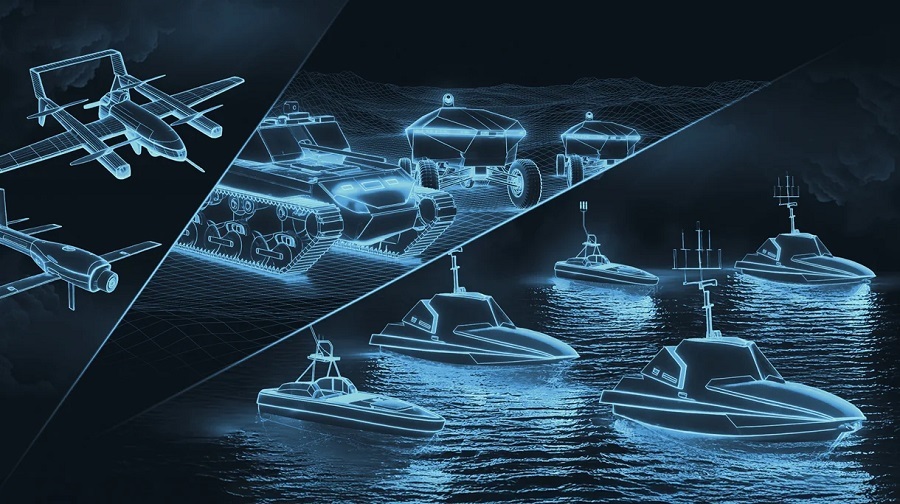
The Defense Innovation Unit (DIU) has selected L3Harris Technologies to lead the development of an advanced prototype command-and-control (C2) system designed to orchestrate large-scale autonomous swarms across land, air, and sea domains. This project is a cornerstone of the U.S. Department of Defense’s (DoD) ambitious Replicator program, which seeks to deploy cutting-edge autonomous capabilities to enhance military operations in contested environments.
At the heart of this initiative is the need for seamless collaboration between diverse uncrewed systems—ranging from drones and robotic vehicles to autonomous ships. L3Harris’ open-architecture solution will integrate commercial technologies, enabling dynamic and scalable autonomy to meet evolving battlefield challenges. According to Toby Magsig, Vice President and General Manager of Enterprise Autonomous Solutions at L3Harris, the company’s system is envisioned as a “multi-domain and multi-mission autonomous ecosystem” capable of tackling the complexities of modern warfare.
A Leap Towards Collaborative Autonomy
The C2 system will serve as the brain behind swarm operations, providing a robust user interface and real-time situational awareness for commanders. By leveraging L3Harris’ enterprise autonomy architecture, the system aims to:
- Facilitate rapid integration of third-party algorithms and models.
- Scale collaboration across hundreds or even thousands of autonomous platforms.
- Adapt to mission-specific needs, whether it’s reconnaissance, logistics, or direct engagement.
L3Harris’ approach underscores the importance of agility. The architecture supports plug-and-play adaptability, allowing new software updates, AI models, and sensors to be incorporated swiftly. This adaptability ensures that the system remains relevant as threats evolve and technological advancements emerge.
Partnership with Innovators
What sets this project apart is L3Harris’ collaboration with venture-backed startups and unconventional tech firms. By tapping into non-traditional sources of innovation, the company aims to accelerate advancements in autonomy while ensuring the system aligns with the military’s stringent operational requirements. This strategy also promotes cost-efficiency, as integrating proven commercial technologies reduces the need for ground-up development.
Beyond Experimentation
The DIU isn’t the only DoD organization to recognize the potential of L3Harris’ enterprise autonomy solutions. The system is already undergoing rigorous experimentation to refine its capabilities. These trials focus on scaling collaborative autonomy, ensuring that autonomous swarms can operate cohesively in contested environments where traditional communication systems may be disrupted.
Transforming Warfare
L3Harris’ involvement in the Replicator program reflects the company’s commitment to redefining the future of warfare. The autonomous C2 system is more than just a technological achievement—it’s a force multiplier designed to enhance decision-making, reduce risk to human personnel, and outpace adversaries in high-stakes scenarios.
This partnership also highlights the urgency surrounding autonomous innovation. “As the Trusted Disruptor, we are fully invested in delivering scalable and open capabilities to our warfighters,” Magsig emphasized.
Technical Highlights
Although specific technical details remain classified, the open-architecture nature of the system allows for integration with:
- Advanced AI-driven decision-making algorithms.
- Secure communication protocols resistant to electronic warfare.
- Multi-domain synchronization tools for seamless coordination between air, land, and maritime assets.
The Bigger Picture
As adversaries develop their own autonomous capabilities, systems like the one being developed by L3Harris will play a pivotal role in maintaining a technological edge. By merging commercial innovation with military-grade reliability, this C2 system could set a new benchmark for autonomous operations in defense.
✍️ This article is written by the team of The Defense News.