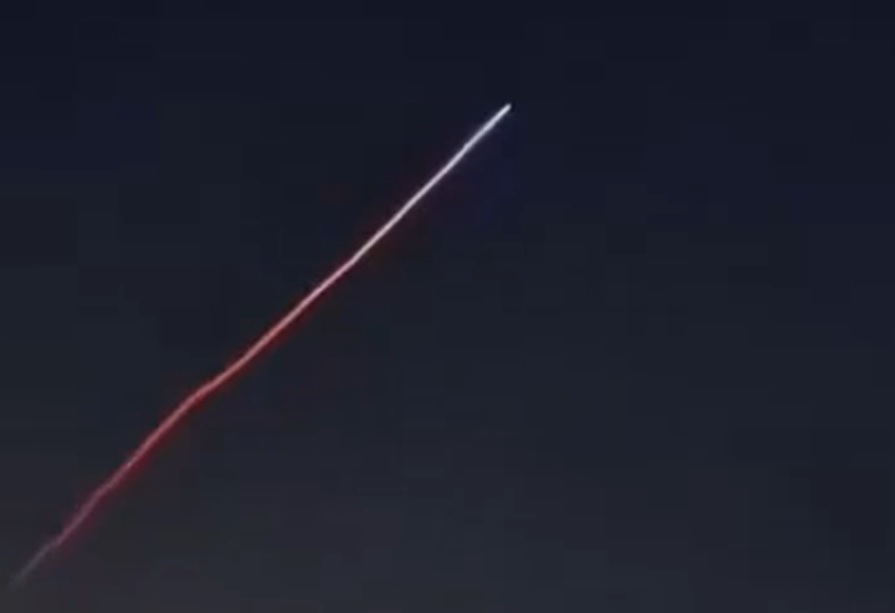
Kongsberg & Thales Validate StrikeMaster: NSM Live‑Fire in Norway Signals Low‑Risk Land‑Based Strike Option for Australia

Kongsberg Defence & Aerospace and Thales have taken a clear step toward delivering an Australian land‑based long‑range strike capability: the two companies today announced the successful live‑firing of a Naval Strike Missile (NSM) test munition from the StrikeMaster missile launch vehicle during trials in Norway. The firing used a blast test vehicle to replicate the launch environment and—critically—confirmed that Thales Australia’s Bushmaster Utility variant can act as a safe, reliable launch platform for the NSM without major modification. The strike validates StrikeMaster as a low‑risk, mobile solution that could meet Australia’s need for distributed, land‑based long-range fires.
Why this matters
For Canberra, the announcement matters for three reasons. First, a vehicle‑portable NSM launcher gives the Australian Defence Force (ADF) a highly mobile, survivable way to conduct anti‑ship and land‑attack missions from dispersed coastal and inland positions—an operational attribute the ADF has prioritized for the Indo‑Pacific. Second, using an already‑proven platform such as the Bushmaster Utility variant reduces programmatic and integration risk compared with building a bespoke launcher from scratch; the StrikeMaster concept therefore shortens the pathway from concept to fielding. Third, this live‑fire in Norway comes at a moment when Australia is investing in domestic guided‑weapons production in partnership with Kongsberg—moves intended to accelerate delivery and sovereign sustainment of long‑range strike systems.
What the NSM brings to the fight
The Naval Strike Missile (NSM) is a modern, fifth‑generation cruise missile built to penetrate layered defences and operate in complex littoral environments. Kongsberg describes the NSM as a high‑subsonic, stealth-shaped missile roughly 3.96 m in length and weighing about 407 kg with a range in excess of 300 km (depending on baseline and booster). It uses an imaging‑infrared seeker and an onboard target database that supports autonomous target recognition and discrimination; flight modes include sea‑skimming approaches and terminal manoeuvres to complicate interception. The warhead is a titanium‑cased multipurpose blast/fragmentation design optimized for both ship and land targets. Those performance and guidance characteristics make NSM suitable for both maritime strike and precision land attack against heavily defended targets.
Operational context and users
The NSM has seen growing international uptake—Kongsberg’s missile is already in service or selected by a number of countries and is being delivered to allies including Norway, the United States, the United Kingdom, Canada and Australia, among others. It is deployable from ships and, crucially for StrikeMaster, can be fielded from trucks as part of coastal‑defence or land‑based strike systems without requiring substantive modification to the missile itself—an interoperability and logistics advantage for export customers and for integrated allied operations. The U.S. Marine Corps and Poland, for example, are already operating land‑based NSM configurations.
Technical and programmatic takeaways
The live‑fire used a blast test vehicle to demonstrate safe separation, ignition and initial flight characteristics from a land‑mounted launcher—procedures that are among the most hazardous and technically demanding parts of launcher integration. That the test succeeded with Thales’ Bushmaster Utility variant speaks to the vehicle’s load‑carriage and electromagnetic/mechanical integration readiness, and it gives both defence planners and acquisition managers more confidence that StrikeMaster could be scaled for ADF use with manageable schedule and cost risk. The joint demonstrations by Kongsberg and Thales also dovetail with Australia’s earlier announcements on co‑manufacture and sovereign missile production, pointing toward a future where missiles might be produced locally while launch systems are integrated onto Australian vehicles.
Limits and next steps
A single live‑firing proves crucial integration points, but it’s not the end of development. Formal operational assessment will require repeated launches, testing across different environmental conditions, integrated sensor‑to‑shooter trials, and doctrine and logistics planning for sustained fielding. Export and industrial arrangements will also shape timelines: co‑production or local assembly programmes (and their associated licensing, training and sustainment packages) will determine how quickly StrikeMaster‑equipped NSMs could enter permanent ADF inventories.
The StrikeMaster live‑fire represents a practical, low‑risk pathway to give Australia a mobile, land‑based long‑range strike capability using a proven missile design. By demonstrating safe launch from the Thales Bushmaster Utility variant, Kongsberg and Thales have reduced a major integration unknown—an important step for Australia’s plans to deploy distributed long‑range fires in the Indo‑Pacific and for the broader coalition of NSM operators seeking flexible, truck‑mounted strike options.
About the Author
Aditya Kumar:
Defense & Geopolitics Analyst
Aditya Kumar tracks military developments in South Asia, specializing in Indian missile technology and naval strategy.