Keir Starmer's Labour Party: Shaping the Future of UK Foreign Policy
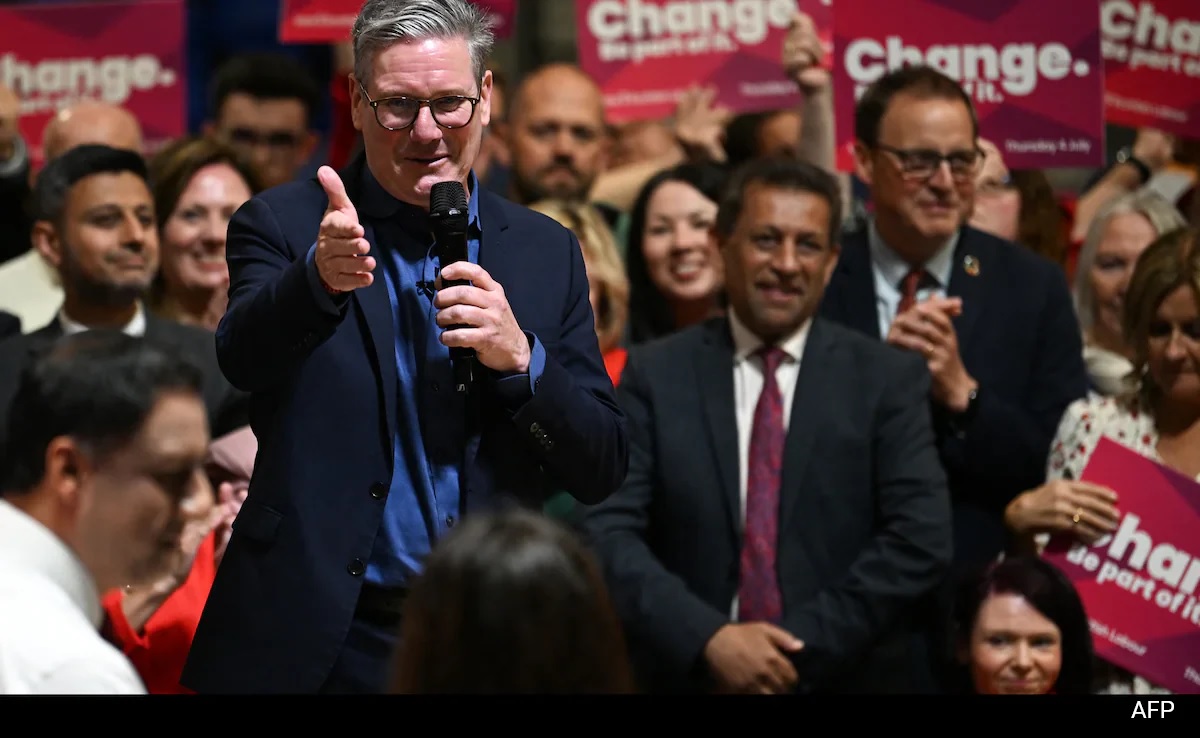
With Keir Starmer poised to take the helm of the UK government, the country is set to witness a transformative approach to foreign policy. The Labour Party, out of power since 2010, has crafted a vision for international relations that balances realism with progressive ideals. The first month of Starmer’s premiership promises a flurry of diplomatic activity, setting the stage for his global strategy.
Starmer’s introduction to the international arena will be marked by a series of high-profile meetings. Shortly after assuming office, he will meet with US President Joe Biden and European leaders, followed by his debut at the NATO 75th anniversary summit in Washington. This event, crucial for reaffirming the UK’s commitment to its allies, will be a litmus test for Starmer’s diplomatic skills.
Starmer will also host a significant gathering at Blenheim Palace on July 18, welcoming French President Emmanuel Macron and German Chancellor Olaf Scholz for a European Political Community meeting. This summit will underscore the importance of the UK’s role in European affairs, despite the lingering complexities of Brexit.
Labour’s foreign policy is anchored in what they term “progressive realism.” This approach, articulated by David Lammy, the anticipated foreign secretary, acknowledges the world’s volatility and aims to navigate it pragmatically. Central to this vision is making Brexit work, including seeking a robust security pact with the European Union. Starmer’s stance is clear: cooperation with Europe is essential, even if it involves engaging with parties across the political spectrum, including France’s far-right National Rally party.
On the issue of China, Starmer’s government plans a comprehensive audit of the UK’s relationship with the Asian giant. This review will set the direction for future policy, aiming to reduce dependence on China in areas such as trade and technology while maintaining collaboration on global challenges like climate change. The potential return of Donald Trump to the US presidency could complicate this balance, as increased pressure from Washington might necessitate a tougher stance against Beijing.
The Israeli-Palestinian conflict represents another critical area of Labour’s foreign policy. The party is committed to recognizing a Palestinian state as part of a renewed peace process aiming for a two-state solution. Immediate actions would include advocating for a ceasefire, securing the release of hostages, and increasing humanitarian aid to Gaza.
Labour’s approach to Europe also involves tackling the ongoing migrant crisis. Starmer has emphasized the importance of both bilateral agreements with France and broader EU cooperation to address this issue. Strengthening existing agreements and enhancing EU measures will be key to combating the smuggling gangs responsible for perilous Channel crossings.
Support for Ukraine remains steadfast under a Starmer-led government. The UK has been a staunch ally of Kyiv, providing substantial financial, military, and training support to counter Russia’s invasion. Starmer’s government would continue this unwavering support, with early meetings with Ukrainian President Volodymyr Zelensky to reinforce this commitment. In contrast, Starmer has ruled out engaging with Russian President Vladimir Putin, whom he labels the aggressor in the conflict.
Defence spending is another area slated for significant review. Labour plans to conduct a strategic defence review within its first year in power, with a goal to increase defence spending to 2.5 percent of GDP. This review will chart a course for enhancing the UK’s military capabilities in line with its strategic objectives.
As Starmer steps onto the world stage, his leadership will be defined by how effectively he navigates these complex international issues. His commitment to “progressive realism” aims to position the UK as a pragmatic yet principled player in global affairs, ready to face the challenges of a rapidly changing world.
✍️ This article is written by the team of The Defense News.