KNDS Unveils Leopard 2A-RC 3.0 PT02: Europe’s Next-Gen Battle Tank Takes Shape
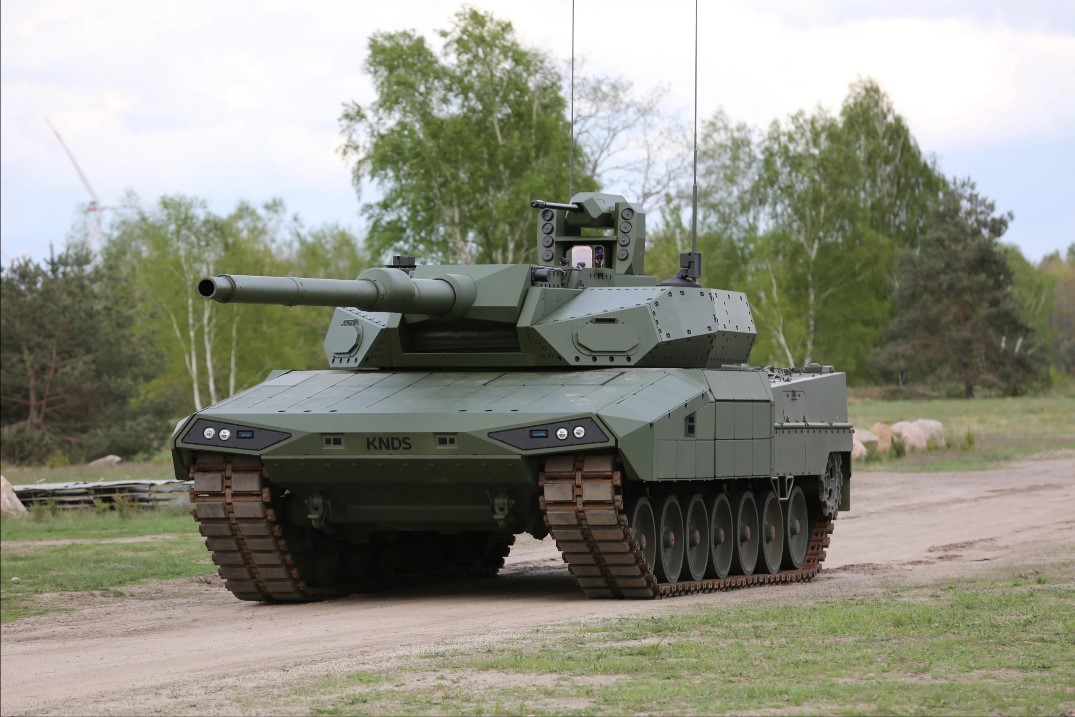
In a major step toward redefining European armored warfare, French-German defense giant KNDS has revealed the second prototype of its next-generation main battle tank, the Leopard 2A-RC 3.0 PT02, during live demonstrations at the Klietz military training area. The unveiling marks a significant leap in design and capability, aimed at countering the evolving threats of 21st-century battlefields.
The Leopard 2A-RC 3.0 is not just an incremental upgrade to the renowned Leopard 2 series—it represents a complete design shift built on lessons from recent armored conflicts, particularly in Ukraine. Modern battlefields, increasingly dominated by drones, precision munitions, and loitering weapons, have forced a rethink of how tanks survive, fight, and adapt. KNDS has embraced a philosophy that puts crew protection, modular adaptability, and long-range lethality at the forefront.
From Manned to Unmanned Turret – A Game Changer
One of the most striking innovations in the PT02 is its unmanned turret, housing a 120 mm smoothbore gun capable of firing up to 18 rounds per minute via an autoloader. The design is future-proofed, with the option to upgrade to 130 mm or even 140 mm calibers, ensuring the platform remains competitive for decades.
Complementing the main gun is a Spike LR anti-tank missile launcher, a 30 mm remote weapon station, and the Israeli Trophy active protection system—widely regarded as one of the most battle-proven APS suites in the world. This combination enables the tank to engage threats well beyond traditional engagement ranges, including fortified positions, light armor, and aerial threats like drones.
Mobility Meets Survivability
Weighing under 60 tons, the Leopard 2A-RC 3.0 is significantly lighter than many Western MBTs, giving it improved agility and a lower detection profile. Powered by a 1,500 hp engine, it can reach 65 km/h with a range of 460 km, making it ideal for rapid maneuver warfare. Inside, the crew operates from a protected cell deep within the hull, isolated from ammunition storage—dramatically improving survivability against direct hits.
Smarter Warfare with UAV Integration
The second prototype incorporates integrated UAV support, enabling the crew to deploy small reconnaissance drones directly from the tank. This gives real-time intelligence on enemy positions, allowing for precise, preemptive strikes and better coordination with other units. This level of situational awareness represents a shift toward networked warfare, where tanks operate as information hubs rather than isolated brawlers.
Global Comparisons and NATO Advantage
Analysts note that the Leopard 2A-RC 3.0 mirrors some design philosophies of Russia’s T-14 Armata with its unmanned turret, yet it adheres to NATO interoperability standards and boasts a more flexible armament suite. Compared to the U.S. Abrams X, it is lighter and arguably more adaptable for varied operational environments, from European plains to urban combat zones.
The modular design means that weapons, armor packages, and electronic suites can be swapped or upgraded rapidly. This makes the PT02 an appealing option for NATO allies looking to modernize fleets without locking into a single, fixed configuration.
Strategic Significance for Europe
With tensions high in Eastern Europe and the rapid modernization of armored forces in Asia and the Middle East, the Leopard 2A-RC 3.0 is a clear statement of intent: Europe is committed to retaining a world-class armored punch. Beyond domestic use, its export potential is significant, with interest likely from countries already operating Leopard 2 variants but seeking a next-generation leap.
As future battlefields demand tanks that can survive precision strikes, coordinate with drones, and deliver devastating firepower, the Leopard 2A-RC 3.0 PT02 stands as a flagship of Europe’s armored future—a blend of protection, mobility, and adaptability that could shape NATO’s armored doctrine for decades.
✍️ This article is written by the team of The Defense News.