Japan to Supply Key Components for Germany’s New SPY-6 Radar-Equipped F127 Frigates
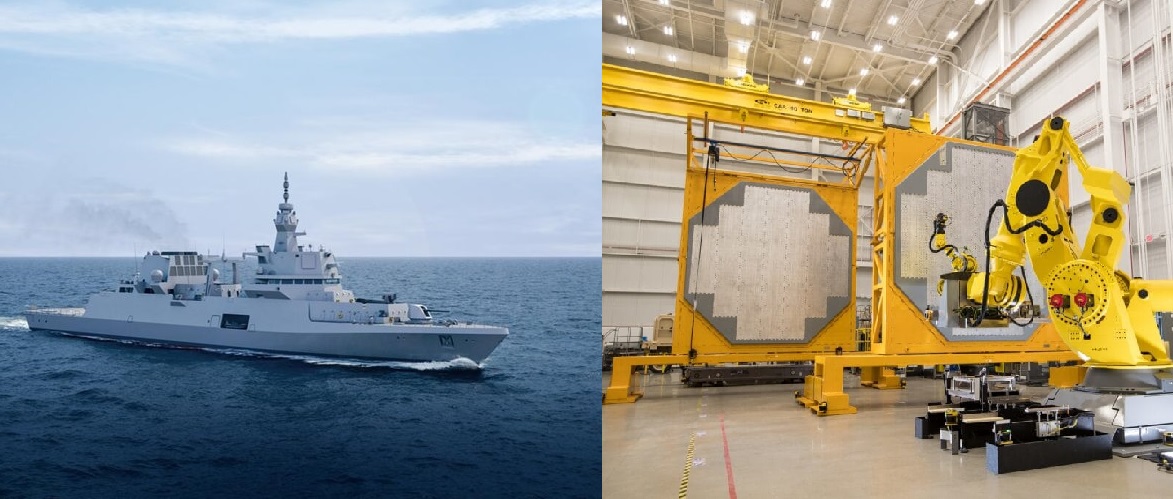
In a significant step for international defense cooperation, Raytheon has confirmed that Japanese-made components will be integrated into the AN/SPY-6 radar systems selected for the German Navy’s upcoming F127-class air-defense frigates. The confirmation marks the first time Japanese defense firms will contribute to a major global naval radar program, signaling a major shift in Japan’s traditionally domestic-focused defense industry.
The SPY-6 radar, developed for the U.S. Navy, is currently the most advanced shipborne air- and missile-defense radar in production. Built using modular 60-cm Radar Modular Assemblies, the system can be scaled to fit a wide range of warships—from Arleigh Burke–class destroyers to aircraft carriers. The U.S. Navy plans to install SPY-6 variants on more than 60 ships over the next decade.
Germany’s F127 Frigates Choose a Proven System
Germany selected SPY-6 in October 2025 for its next-generation F127 frigates, an eight-ship program designed to serve as Europe’s most capable air-defense surface combatants. Speaking to Naval News, Barbara Borgonovi, President of Naval Power at Raytheon, described five key reasons behind Germany’s choice:
-
The radar is the U.S. Navy’s program of record, ensuring high interoperability.
-
It offers a low-risk integration path due to its mature production line.
-
Two U.S. ships with SPY-6 have already been commissioned, with production ahead of schedule.
-
The radar is built from the ground up for maritime conditions, not adapted from land-based systems.
-
Raytheon provides an extensive training infrastructure, allowing crews to master the system quickly.
Germany aims to deploy the F127-class in the early 2030s, replacing the Sachsen-class frigates and strengthening NATO’s northern air-defense capabilities.
Japanese Companies Join a Global Radar Program
Raytheon’s announcement sheds new light on agreements signed in 2024 with two major Japanese manufacturers—Mitsubishi Electric (MELCO) and Sampa Kogyo. Both companies, long experienced in advanced radar electronics, will begin producing power-supply units and related subsystems for SPY-6 starting in 2026.
Until now, Japanese officials had only confirmed that the components would support U.S. Navy systems. But Raytheon’s Vice President for Naval System & Sustainment, Jennifer Gauthier, revealed that their work will extend to global customers as well.
“Sampa and MELCO will be producing components for SPY-6 in the United States, as well as the global fleet. Germany is the first case.”
The move represents a major step for Japan. For decades, its defense industry manufactured almost exclusively for the Japan Self-Defense Forces, limiting growth and profit potential. Participation in SPY-6 opens the door to long-term production, new facilities, and international defense exports—areas Japan has rarely entered.
A Capability Leap for the German Navy
The SPY-6 radar offers the F127 frigates a dramatic enhancement in detection and tracking capability. The system can:
-
Detect aircraft and missiles at far greater ranges than previous European radars
-
Track hundreds of targets simultaneously
-
Provide integrated defense against cruise missiles, ballistic missiles, drones, and hypersonic threats
-
Maintain stable performance in severe sea conditions
-
Scale and upgrade through modular RMAs for decades to come
Analysts say the radar will allow Germany to assume a stronger air-defense role within the NATO maritime force structure.
A Growing Strategic Link Across the Pacific and Atlantic
The integration of Japanese components into a U.S.-designed radar for German warships marks a rare three-way defense collaboration connecting Tokyo, Washington, and Berlin. The development comes as Japan expands its defense spending and seeks greater cooperation with both NATO and the U.S. in response to rising security challenges in the Indo-Pacific.
With SPY-6 production now shifting into a global phase, Japanese firms are positioned to support future customers as more navies look to acquire the radar.
About the Author
Aditya Kumar:
Defense & Geopolitics Analyst
Aditya Kumar tracks military developments in South Asia, specializing in Indian missile technology and naval strategy.