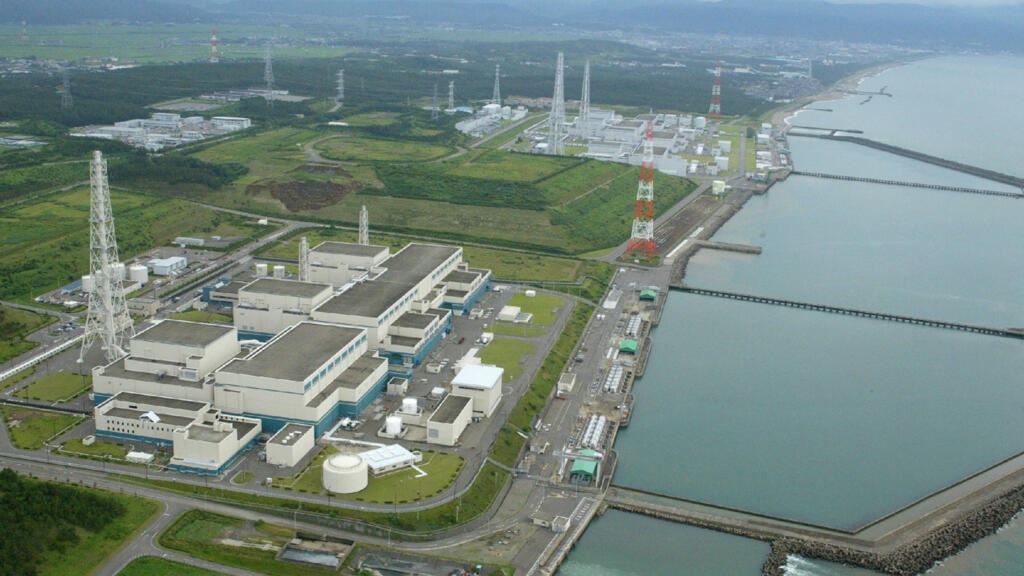
TOKYO : Japan on Tuesday marked a pivotal moment in its energy policy as Tokyo Electric Power Company (TEPCO) restarted Reactor No. 6 at the Kashiwazaki-Kariwa Nuclear Power Plant, the world’s largest nuclear facility by installed capacity. The restart ends nearly 15 years of dormancy for the reactor and underscores a decisive national shift away from the post-Fukushima nuclear freeze that reshaped Japan’s power system for more than a decade.
When fully operational, Kashiwazaki-Kariwa’s seven reactors can generate 8.2 gigawatts of electricity—enough to power millions of homes. The return of Unit 6, a 1.35-gigawatt advanced boiling water reactor, is being closely watched as a bellwether for Japan’s broader nuclear revival.
From Fukushima Shock to Nationwide Shutdown
Japan’s nuclear retreat began abruptly in March 2011, when a magnitude-9.0 earthquake and tsunami triggered meltdowns at the Fukushima Daiichi Nuclear Power Plant. The disaster shattered public confidence, exposed regulatory failures, and prompted the government to shut down all 54 reactors nationwide for safety reviews—the first time a major industrial economy had gone completely nuclear-free overnight.
In the years that followed, Japan overhauled its regulatory system, creating a more independent Nuclear Regulation Authority and imposing some of the world’s strictest safety standards, including higher tsunami defenses, hardened containment measures, and mandatory emergency response upgrades. These changes, combined with legal challenges and local opposition, meant restarts proceeded slowly and unevenly.
For Kashiwazaki-Kariwa in particular, the path back was longer still. Despite not being directly affected by the Fukushima accident, the plant faced repeated delays over safety compliance and governance failures at TEPCO, including revelations of inadequate security protocols that stalled approvals for years.
Why Japan Is Restarting Now
The calculus shifted sharply in the early 2020s. Rising global energy prices, heightened geopolitical risk, and Japan’s heavy dependence on imported fossil fuels—especially liquefied natural gas (LNG) and oil—exposed deep vulnerabilities in the country’s energy security. Carbon-reduction targets added further pressure, as utilities struggled to balance climate commitments with reliable baseload power.
Under former Prime Minister Fumio Kishida, Tokyo concluded that prolonged nuclear caution was no longer sustainable. In 2023, Kishida approved a sweeping policy pivot, calling for nuclear power to be used “to the maximum extent possible.” The new approach included extending reactor lifespans (potentially beyond 60 years), accelerating restarts of idled units, and preparing for next-generation reactor construction in the 2030s.
With Reactor No. 6 back online, Japan has now restarted 15 reactors since the post-Fukushima shutdown. Another 11 units are slated for revival over the coming years, pending regulatory and local approvals. The government’s stated goal is for nuclear energy to supply nearly 30% of national electricity demand—roughly in line with pre-2011 levels.
Germany’s Divergent Path
Japan’s reboot stands in stark contrast to developments in Germany, which completed its nuclear phase-out, known as the Atomausstieg, on April 15, 2023. On that date, Germany permanently shut down its last three reactors, ending more than six decades of nuclear power generation.
Technically, Germany still had a narrow window to reverse course. Several reactors could have remained operable until late 2024 or early 2025 before dismantling reached a point of no return. But successive governments pressed ahead with irreversible decommissioning, ensuring that no future pro-nuclear government could easily revive the plants.
The decision traces back to policies championed by former Chancellor Angela Merkel, who ordered an accelerated nuclear exit in the aftermath of Fukushima. Germany now relies heavily on renewable energy, supplemented by fossil fuels and imports, and nuclear power is expected to remain at 0% of the energy mix for decades.
Long-Term Consequences and Debate
Energy and political analysts say the diverging strategies of Japan and Germany will be studied for decades. Japan is betting that stringent regulation, technological upgrades, and institutional reform can reconcile nuclear power with public safety and climate goals. Germany, by contrast, has accepted higher energy costs, grid instability risks, and greater exposure to external energy shocks in exchange for permanently eliminating nuclear power.
Critics argue that Berlin’s decision has weakened Europe’s energy resilience and slowed emissions reductions, while supporters counter that it accelerated renewable deployment and eliminated the long-term risks associated with nuclear waste and accidents.
In Tokyo, officials acknowledge lingering public skepticism but insist that the lessons of Fukushima have been internalized. “The restart of Kashiwazaki-Kariwa Unit 6 is not a return to the past,” one government official said. “It represents a fundamentally different nuclear policy, built on tougher oversight and a changed global energy reality.”
As Reactor No. 6 ramps up generation, Japan’s energy reboot enters a decisive phase—highlighting how two advanced economies, confronted by the same nuclear disaster, ultimately chose sharply different futures.