Japan Reports Chinese J-15 Jets of ‘Dangerous’ Radar lock on F-15s Near Okinawa
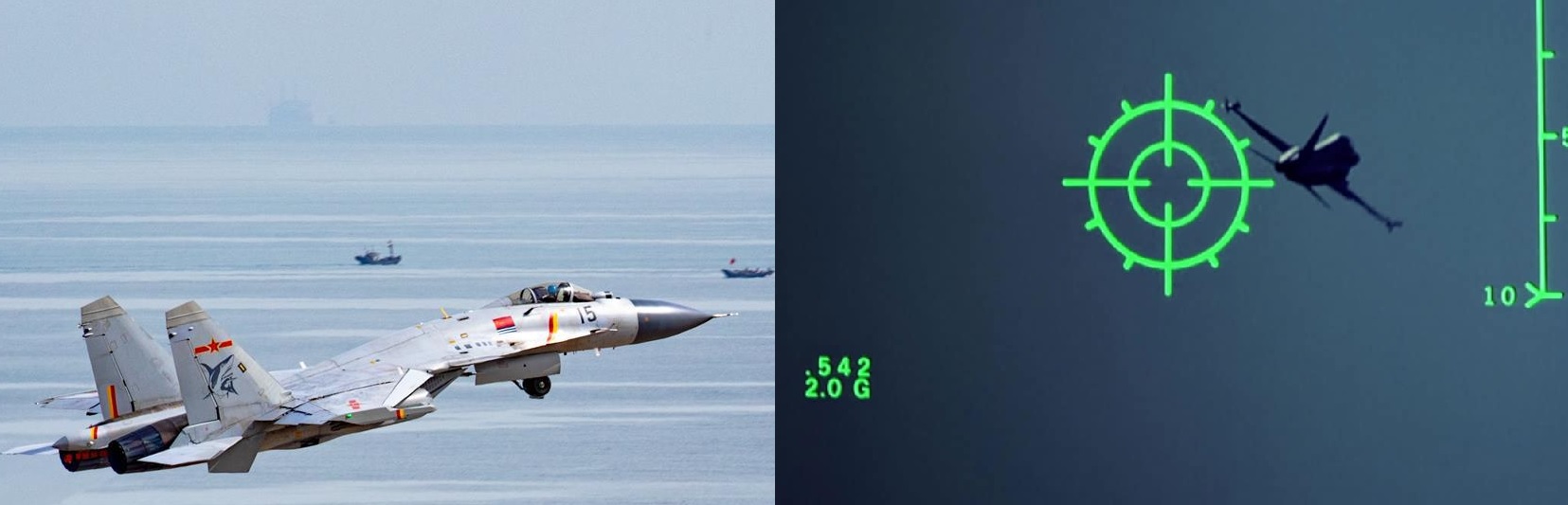
Japan has accused Chinese J-15 fighter jets of locking their fire-control radar onto Japanese Air Self-Defense Force (ASDF) aircraft in two separate incidents near the Okinawa island chain, escalating tensions between Asia’s two largest economies at a time of intensifying military activity in the region.
Defense Minister Shinjiro Koizumi confirmed the incidents on Sunday, stating that the radar lock-ons represented a serious safety concern and went “beyond what is necessary for the safe flight of aircraft.” He said Japan had filed a formal diplomatic protest with Beijing.
The encounters occurred on Saturday, when Japanese F-15s scrambled to monitor a Chinese carrier group operating in the western Pacific. According to Japan’s Defense Ministry, aircraft from the PLA Navy’s carrier Liaoning were conducting drills in international airspace southeast of Okinawa.
Two Radar Lock-Ons in One Day
According to Japan’s Defense Ministry, the confrontation unfolded as Japanese F-15 fighters scrambled to monitor Chinese aircraft operating from the PLA Navy aircraft carrier Liaoning as it conducted drills in the western Pacific. The Chinese jets involved were identified as J-15 carrier-based fighters.
The ministry says the first radar lock occurred just after 4:30 p.m. local time, when a J-15’s fire-control radar was trained on a Japanese F-15 for around three minutes. Roughly two hours later, another J-15 intermittently targeted a different F-15 for about 30 minutes, again over international waters and without any reported violation of Japanese airspace.
No weapons were fired and there were no reports of damage or injuries, but officials stressed that using fire-control radar – the system used to guide weapons to a target – is widely regarded as a hostile step, as it can signal preparation to launch missiles and may force the targeted aircraft to take evasive action.
Tokyo Issues Protest, Warns of Escalation Risks
Defense Minister Koizumi said Japan would respond “calmly but firmly”, warning that actions like these “could lead to unexpected situations.”
Prime Minister Sanae Takaichi, speaking during a bilateral security meeting with Australia, called the incidents “deeply worrying” and said Japan would continue close coordination with partners to ensure regional stability.
Japanese officials also linked the radar lock-ons to a broader rise in Chinese military activity around the Miyako Strait and Okinawa’s southwestern islands—areas through which the PLA Navy increasingly deploys ships and aircraft to access the Pacific.
China Denies the Accusation, Blames Japan
Beijing denied the Japanese account, stating that the Liaoning carrier group was conducting routine, lawful training and accusing Japan of approaching Chinese aircraft at close range in a manner that “endangered safety.”
A spokesperson for China’s Ministry of Defense said the Chinese pilots took “necessary and professional countermeasures” and called Japan’s protest “unfounded.”
Chinese state media also criticized Japan’s increasing security cooperation with the United States and recent statements concerning Taiwan, accusing Tokyo of “creating tension.”
A Region Already Under Pressure
The radar incidents come during an uptick in Chinese and Japanese military activity around contested ranges:
-
China frequently flies large formations through the Miyako Strait, a strategic gateway into the Pacific.
-
Japanese fighters scramble hundreds of times every year to intercept Chinese aircraft approaching Japan’s air defense identification zone (ADIZ).
-
Tensions remain high around the Senkaku/Diaoyu Islands, administered by Japan but claimed by China.
The last major radar-lock confrontation between the two countries occurred more than a decade ago, involving naval vessels in the East China Sea. Analysts say incidents like Saturday’s underscore how quickly routine military monitoring can turn into a dangerous encounter.
Strategic Signals From Both Sides
Japan is undergoing its most significant defense buildup in decades—acquiring long-range missiles, upgrading its F-15 fleet, and expanding the role of its F-35B-capable carriers.
China, meanwhile, is expanding its carrier operations and increasing presence around Taiwan and the western Pacific.
Saturday’s confrontation, though it ended without incident, shows how easily close-range interactions between armed aircraft could escalate. Both governments have said they do not seek conflict, but neither appears willing to reduce operations in contested areas.
About the Author
Aditya Kumar:
Defense & Geopolitics Analyst
Aditya Kumar tracks military developments in South Asia, specializing in Indian missile technology and naval strategy.