Japan Navy Inducts Domestically Built Unmanned Underwater Drone
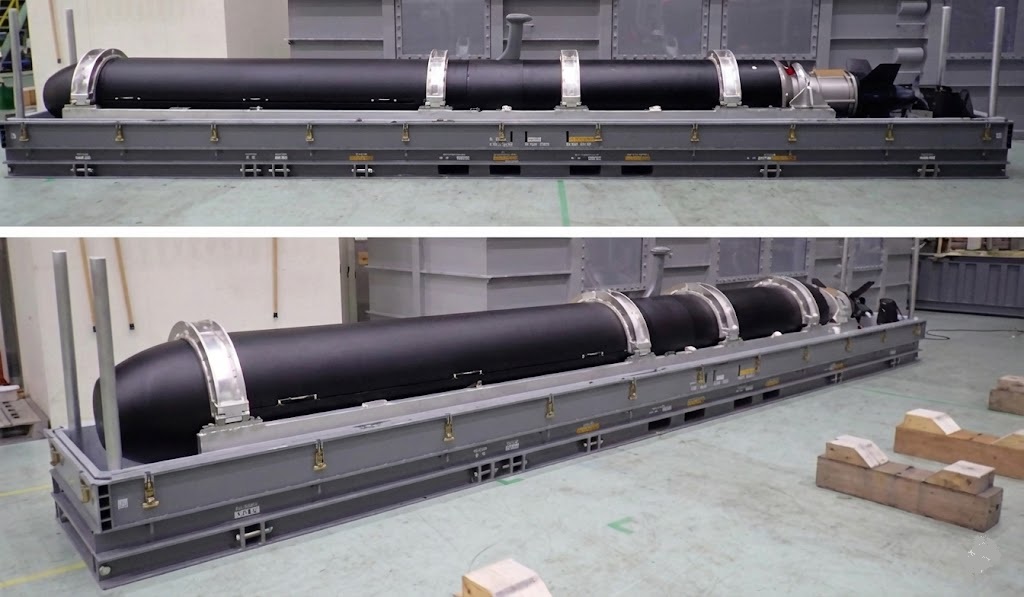
TOKYO : Japan’s Japan Maritime Self-Defense Force (JMSDF) has formally inducted a newly developed small unmanned underwater vehicle (UUV) into operational service, marking a significant step in the country’s effort to strengthen underwater surveillance and maritime defense capabilities.
The confirmation was issued on Tuesday by the JMSDF public affairs office under the Ministry of Defense, which said the domestically developed system has completed acceptance procedures and is now available for operational use. Officials described the vehicle as a purpose-built platform designed to enhance underwater defense missions, particularly in coastal and near-shore environments.
Expanding Japan’s Underwater Awareness
According to the JMSDF, the newly inducted unmanned underwater vehicle, or UUV, is intended to support a range of missions focused on monitoring and securing Japan’s surrounding waters. These include underwater reconnaissance, detection of subsurface threats, monitoring of sea lines of communication, and the protection of ports and critical maritime infrastructure.
While detailed technical specifications were not disclosed, defense officials indicated that the platform is optimized for operations in shallow and congested waters, where traditional crewed platforms face higher risks and operational limitations. The system is expected to operate autonomously or semi-autonomously, collecting underwater data and relaying it to command centers for analysis.
Shift From Testing to Operational Fielding
The delivery reflects a broader transition within the JMSDF from experimental trials of unmanned systems to their routine operational deployment. Over the past decade, Japan has tested several classes of UUVs, primarily focused on mine countermeasures and intelligence collection. The latest induction signals that unmanned underwater platforms are now becoming a permanent component of Japan’s maritime force structure.
In a statement accompanying the announcement, the JMSDF said it will “steadily advance defense capability development” that includes unmanned assets, emphasizing that such systems are essential for improving both deterrence and rapid response in an increasingly complex security environment.
Regional Security Context
The induction comes amid growing concern in Tokyo over intensified undersea activity across the Western Pacific. Regional actors have expanded the deployment of submarines, seabed sensors, and unmanned underwater platforms, increasing the strategic importance of persistent underwater surveillance.
Small UUVs are viewed by defense planners as a cost-effective way to broaden coverage without relying exclusively on crewed surface vessels, submarines, or maritime patrol aircraft. By operating continuously and at lower cost, such systems can fill critical gaps in situational awareness beneath the surface.
Role in Japan’s Indo-Pacific Strategy
Defense officials also linked the new capability to Japan’s broader “Free and Open Indo-Pacific” (FOIP) vision, which places a strong emphasis on maritime security, freedom of navigation, and stability along vital sea lanes. Underwater domain awareness is increasingly seen as a key pillar of that strategy, particularly in areas where surface and aerial surveillance provide limited visibility.
The Ministry of Defense has repeatedly highlighted unmanned systems as essential tools for addressing manpower constraints and the expanding scale of maritime monitoring requirements. UUVs, officials say, allow sustained operations in areas that are difficult or costly to patrol with conventional platforms, reducing risk to personnel while providing commanders with more persistent and detailed insight into the underwater battlespace.
With the induction of the new small UUV, Japan signals its intent to accelerate the integration of unmanned technologies into frontline maritime defense, reinforcing its ability to monitor, deter, and respond to evolving undersea challenges in the years ahead.
About the Author
Aditya Kumar:
Defense & Geopolitics Analyst
Aditya Kumar tracks military developments in South Asia, specializing in Indian missile technology and naval strategy.