Japan Gains Rare Access to Chinese PL-15 Missile Debris in India, Unlocks Seeker Algorithm and AESA Radar Secrets

In a quiet but strategic intelligence breakthrough, Japan has been granted rare access to the unexplode China's PL-15 air-to-air missile, recovered by Indian forces during recent aerial clashes with Pakistan. This unexplode missile , believed to be fire from missiles fired by Pakistan’s J-10C or JF-17 Block III jets, was recovered in northern India, including Hoshiarpur in Punjab, after intense cross-border air activity.
What makes this event extraordinary is that the PL-15 is China’s most advanced beyond-visual-range (BVR) missile, and its technology has so far remained one of Beijing’s most closely guarded secrets. Now, Japanese electronic warfare (EW) and radar specialists are being allowed by India to examine the missile remains—opening up a rare window into Chinese missile capability, particularly the AESA radar seeker, seeker algorithm, and encrypted datalink systems.
What Makes the PL-15 Special?
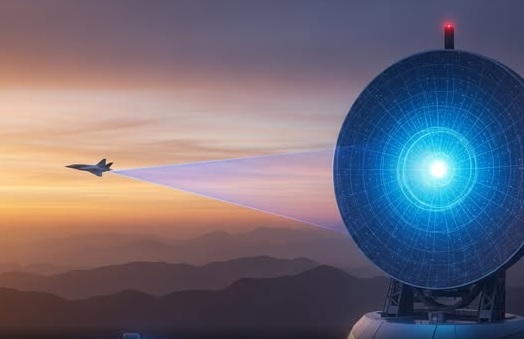
The PL-15, developed by China’s Airborne Missile Academy, is a long-range BVR air-to-air missile believed to have a range exceeding 200+ km. It is equipped with an Active Electronically Scanned Array (AESA) radar seeker, making it extremely hard to deceive with flares, chaff, or electronic countermeasures. The seeker algorithm—essentially the missile’s targeting brain—allows it to track and home in on targets even in electronic warfare-heavy environments.
The missile also features a military-grade encrypted datalink, allowing mid-course corrections from platforms like J-20, J-10C, and KJ-500 AWACS. This datalink is hardened with spread spectrum communication, frequency hopping, and ECCM (Electronic Counter-Countermeasure) technologies, making it resilient to jamming or spoofing but jammed by Indian Jets .
Why Japan Is Interested
Japan’s defense establishment is increasingly worried about China’s growing airpower, especially near Japanese and Taiwanese airspace, where PL-15-equipped J-10C and stealth J-20 fighters are routinely deployed. For Tokyo, analyzing this missile is not just about technology—it’s about preparing for future aerial conflicts.
Reports say that Japanese experts are examining the seeker logic, encryption mechanisms, and ECCM subsystems. Such data could help Japan enhance radar survivability, develop better countermeasures, and possibly influence the design of its sixth-generation F-X fighter.
Strategic Implications Across the Indo-Pacific
India’s decision to share PL-15 debris intelligence with Japan—and potentially other allies like France, the U.S., and Taiwan—highlights the growing multilateral security cooperation in the Indo-Pacific to counter China’s military rise.
Western intelligence agencies like the CIA, NSA, and Five Eyes alliance are also believed to be interested in forensic analysis of the debris. Their focus reportedly includes waveform behavior, datalink security, ECCM logic, and propulsion technologies.
There is also growing curiosity around whether China still depends on Russian components, such as radar processors or INS systems, in its missile design—something that could expose weak points or offer clues about Beijing’s defense self-sufficiency.
Lessons for Taiwan, NATO, and Indo-Pacific Allies
Taiwan, which frequently faces PLAAF incursions, has already requested access to the missile remains. For them, it’s about building tactics and missile defense systems capable of countering the PL-15 threat.
Meanwhile, NATO countries and Indo-Pacific allies—such as Australia, South Korea, and the Philippines—could benefit from the insights to upgrade fighter jets like the F-35, Rafale, and Eurofighter Typhoon. Raytheon, Lockheed Martin, and MBDA may also use the findings to develop new interceptors and EW suites specifically tailored to neutralize threats like the PL-15.
Pakistan's Use of PL-15E and India's Forensic Opportunity
The PL-15E, an export version of the missile, is currently fielded by Pakistan, the only confirmed foreign operator. During recent skirmishes, Pakistan reportedly used the PL-15E, claiming shootdowns of Rafale, Su-30MKI, MiG-29, and Mirage 2000 fighters—though All claims remain unverified.
Still, India’s recovery of multiple missile fragments, now under forensic examination, gives it and its allies a powerful opportunity to study China’s offensive airpower in detail. Notably, several PL-15 missiles were recovered unexploded, which have been neutralized mid-flight by the electronic warfare systems of Indian Air Force (IAF) jets. While not officially confirmed, this possibility highlights India’s growing electronic warfare prowess and offers an unprecedented chance to study the missile’s components largely intact. The findings could redefine future missile defense doctrines and reshape the region’s aerial warfare landscape.
✍️ This article is written by the team of The Defense News.