Israel's Mossad Uncovers Hamas’ Secret European Network, Raising Security Fears
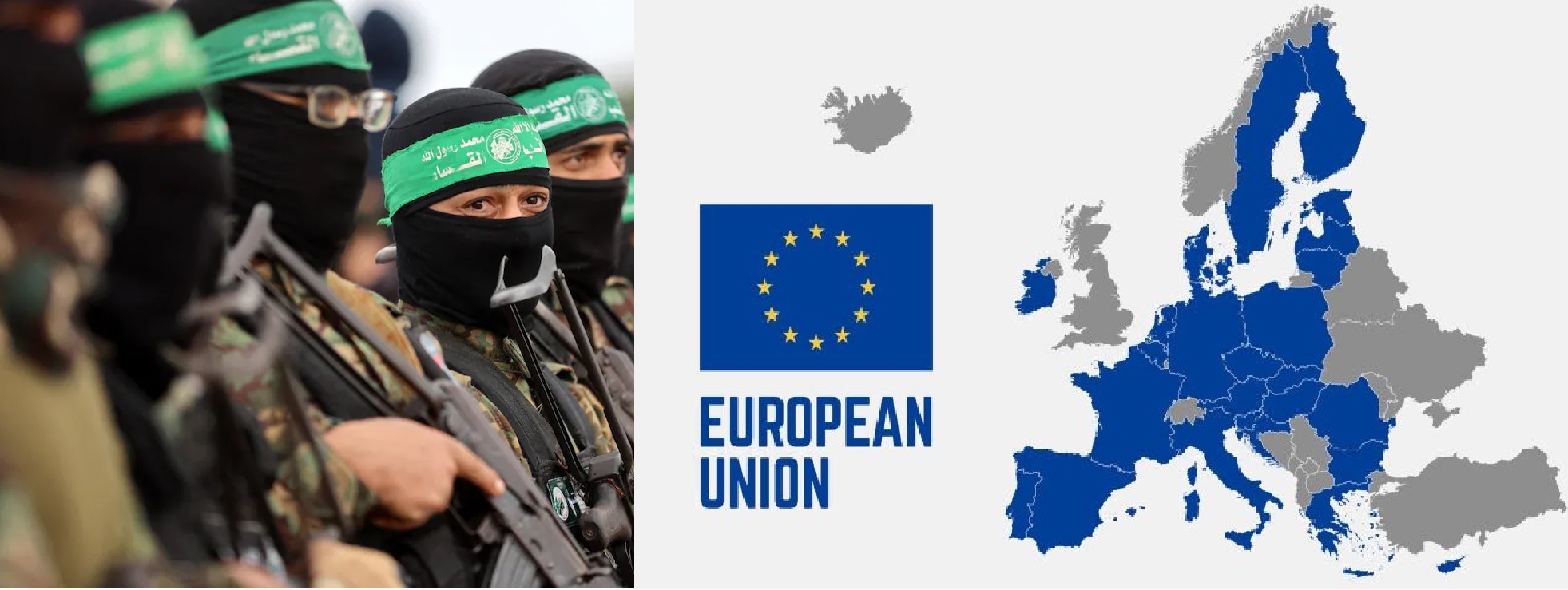
Israel’s Mossad intelligence service says it has helped uncover and disrupt what it describes as a “significant Hamas terrorist infrastructure” embedded across several European countries, reigniting debate over how Palestinian militant networks operate on the continent and what future security challenges Europe may face.
According to statements released via Israel’s Prime Minister’s Office and briefings to international media, Mossad worked with security and law-enforcement agencies in Germany, Austria and other European states to expose operational cells, seize weapons and arrest suspects allegedly preparing attacks against Israeli and Jewish targets in Europe.
Israeli officials say the network was designed to be activated “on command” by Hamas leadership abroad — a shift from the group’s historically local focus in Israel, the West Bank and Gaza to more structured plotting on European soil.
Weapons Caches and “Sleeper” Cells
Several recent cases underpin Mossad’s claims:
-
In Vienna, Austrian security services uncovered a weapons cache – including handguns and magazines – that investigators say was linked to Hamas and intended for possible attacks on Jewish or Israeli targets.
-
In Germany, four alleged Hamas members are on trial in Berlin, accused of helping locate old weapons depots and build new caches around Europe so that militants could access them quickly for attacks on Israeli or Jewish sites.
-
Earlier operations in Denmark, Germany and the Netherlands saw the arrest of several suspects accused of planning attacks on Jewish institutions across borders; German prosecutors said at least some of the detainees were believed to be long-standing Hamas members with links to the group’s armed wing.
Mossad officials have reportedly dubbed the network the “Hamas octopus” — a web of small, compartmentalised cells, weapons hideouts and logistics channels distributed across multiple states, designed to remain dormant for long periods and strike when ordered.
How Hamas Is Alleged to Operate Inside Europe
Counter-terror analysts say the picture emerging from recent investigations suggests a multi-layered system rather than a large, visible organisation.
-
Small, covert cells
Suspected operatives in Europe often live relatively low-profile lives, sometimes as students, asylum seekers, long-term residents or naturalised citizens. They may not be involved in overt violence but are allegedly tasked with scouting targets, storing weapons, or providing safe houses and logistics. -
External leadership and direction
Mossad claims the plots disrupted in recent months were planned or green-lit abroad, with operatives guided by senior Hamas figures based in Qatar and possibly Turkey, who coordinated funding and strategy. -
Use of pre-positioned arms and “emergency” depots
The Berlin trial centres on allegations that weapons were hidden years ago across Europe, with newer caches added more recently. Prosecutors say the goal was to ensure that, if Hamas decided to attack, weapons could be accessed quickly without crossing heavily monitored borders. -
Financing, charities and front organisations
Europol and national security agencies have long warned that parts of the Hamas network in Europe focus on fundraising and logistical support, sometimes via charities or informal money-transfer systems. Authorities allege that a portion of this money can feed both social-welfare projects tied to Hamas and its armed activities. -
Online propaganda and recruitment
European counter-terrorism reports describe a persistent online ecosystem that spreads Hamas-aligned narratives, glorifies attacks in Israel and Gaza, and may encourage radicalised individuals in Europe to support or assist the group, even if they never formally “join” it.
What Hamas Wants – and Why Europe Cares
The European Union, United States and several other governments designate Hamas as a terrorist organisation, citing its long record of suicide bombings, rocket attacks and the 7 October 2023 massacre in southern Israel. Hamas, which controls Gaza, rejects Israel’s legitimacy and seeks political power over Palestinian territories under its own leadership and ideology.
For European governments, the concern is twofold:
-
That Hamas external networks could be used to strike Jewish communities, Israeli targets or diplomatic facilities in Europe, either as retaliation in the Gaza war or as leverage in wider regional struggles.
-
That the group’s political goal of consolidating control over Palestinian territories under its rule may drive more aggressive operations abroad — especially if it sees pressure from regional rivals or internal Palestinian factions as a threat to its power base.
Mossad’s latest disclosures are framed by Israel as proof that Hamas is trying to extend its “axis of conflict” beyond the Middle East, while European officials are more cautious in public but have acknowledged a heightened risk to Jewish and Israeli sites since October 2023.
A Growing Security Challenge for Europe
Even before Mossad’s latest announcement, Europe’s counter-terrorism community had been warning of a more complex, crowded threat landscape.
-
Increased targeting of Jewish communities
Arrests in Germany, Denmark, the Netherlands and Austria all relate to plots allegedly aimed at synagogues, Jewish organisations or Israeli diplomatic premises. Authorities fear that these institutions will remain priority targets, forcing long-term investment in hard security, surveillance and community protection. -
Foreign intelligence and proxy conflicts on European soil
In parallel with Hamas-related cases, European services are investigating Iranian intelligence operations accused of scouting Jewish or Israeli targets — underlining concerns that Middle Eastern conflicts are increasingly projected into Europe via proxy networks. -
Digital radicalisation and lone-actor risks
Europol’s latest TE-SAT terrorism report notes that online propaganda can quickly inspire individuals who have no direct organisational link to groups like Hamas to commit violence in solidarity. This “lone actor” risk is difficult to detect early, because many of these individuals use encrypted apps and fringe platforms that are hard to monitor. -
Balancing civil liberties and surveillance
Expanding monitoring of diaspora communities, religious organisations and charities carries the risk of politicisation and community backlash. European governments face a delicate balancing act: stepping up intelligence cooperation and legal tools against terrorism while protecting lawful political activism and freedom of expression. -
Border control and weapons trafficking
The alleged use of long-term weapons caches in Austria and elsewhere highlights the challenge of tracking illicit arms flows across Europe’s open internal borders. Authorities say future policy will likely focus on better tracing of firearms, more intrusive checks on suspected smuggling routes, and deeper intelligence sharing between national police forces.
European and Israeli Responses
Across Europe, governments appear deeply unsettled by what Mossad has revealed, even if they continue to keep many operational details behind closed doors. German officials, for instance, openly acknowledge that Jewish communities across the country are facing “serious and ongoing threats,” prompting Berlin to pour more resources into securing synagogues, schools and cultural centres. Their message is unmistakable: the threat environment has shifted, and Germany is preparing for a prolonged challenge.
Elsewhere, countries like Denmark, the Netherlands and Austria emphasise that without close intelligence cooperation — both within the EU and directly with Israel — these alleged Hamas networks might never have been exposed. For them, the recent arrests highlight that Europe’s security now relies heavily on deep, strategically vital partnerships that extend far beyond the continent’s borders.
Israel, meanwhile, frames the entire operation as part of its broader and “uncompromising struggle” against Hamas. From Jerusalem’s viewpoint, preventing Hamas from establishing a new operational front in Europe is not just a defensive posture — it is an extension of the ongoing conflict in Gaza, now taking shape within European intelligence and diplomatic corridors.
Yet this more assertive approach has sparked debate. Human-rights organisations and several European lawmakers warn that intensifying counter-terrorism measures can unintentionally cast unfair suspicion on Muslim or Palestinian communities, the vast majority of whom reject extremism. They caution that while confronting terrorism is essential, governments must avoid deepening social divides or fuelling Islamophobia at a moment when many communities already feel vulnerable.
An Evolving Threat, Not a New One
Security experts note that Hamas has tried and failed to carry out attacks abroad in the past, with plots in Europe and elsewhere generally thwarted before execution. What is new, they argue, is the scale and visibility of recent crackdowns and the explicit public role Mossad is taking in describing the threat.
Whether the latest raids mark the dismantling of a major network or simply the exposure of one layer in a deeper infrastructure remains unclear. But for Europe’s security services, the message is blunt: as long as Hamas seeks to project power beyond Gaza and Israel, European soil will remain a potential arena — and defending it will demand years of patient intelligence work, political coordination and community resilience.
About the Author
Aditya Kumar:
Defense & Geopolitics Analyst
Aditya Kumar tracks military developments in South Asia, specializing in Indian missile technology and naval strategy.