Israel and U.S. Accelerate Arrow-4 Program as Global Race to Counter Russian and Chinese Upgraded Ballistic Missiles Intensifies
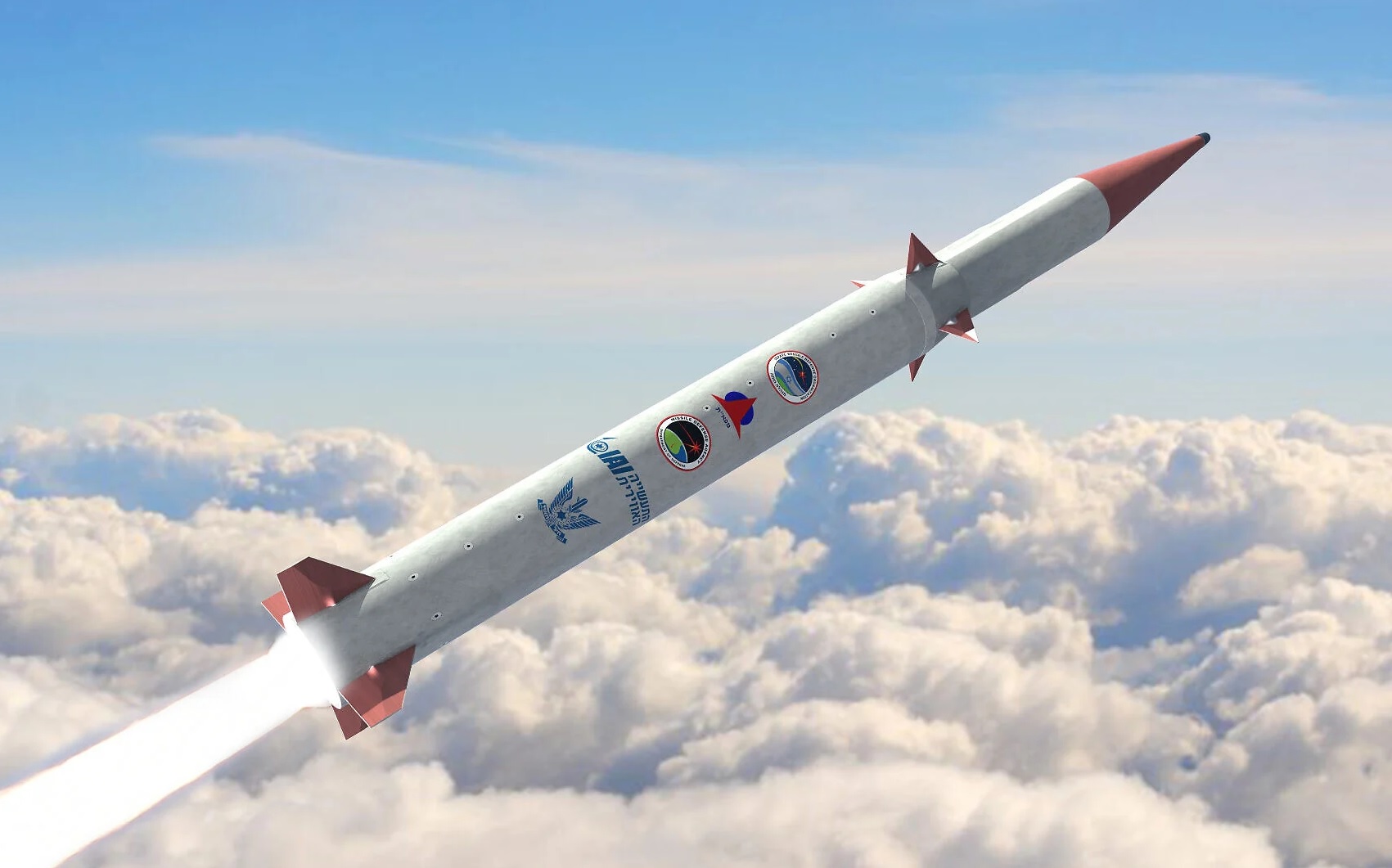
WASHINGTON / TEL AVIV : Israel, in close partnership with the United States, is accelerating work on a next-generation air and missile defense system known as Arrow-4, amid intensifying global competition over the ability to detect, track, and intercept nuclear-armed ballistic missiles. Recent reports and defense briefings describe Arrow-4 as the most ambitious evolution yet of Israel’s missile-defense architecture, intended to outperform existing U.S. systems such as upgraded THAAD and Patriot, and to counter increasingly sophisticated threats being developed by Russia and China.
The program has drawn global attention because of claims circulating in defense circles that Arrow-4 could, once operational, be capable of engaging the largest and fastest intercontinental ballistic missiles (ICBMs), including Russia’s RS-28 Sarmat and China’s DF-41. While officials have not publicly confirmed such specific capabilities, the assertions underscore how missile defense has become a central arena in strategic rivalry among the world’s major military powers.
A New Phase in Missile Defense Competition
The Arrow program is jointly developed by Israel and the United States and represents the top tier of Israel’s multi-layered missile shield. Earlier generations—Arrow-2 and the exo-atmospheric Arrow-3—were designed primarily to counter long-range ballistic missiles from regional adversaries, particularly Iran. Arrow-3 has been operational since around 2017 and has demonstrated intercepts outside the Earth’s atmosphere, a critical capability against nuclear-capable missiles.
Arrow-4 is envisioned as a next-generation interceptor that builds on these foundations with improved sensors, faster reaction times, and enhanced discrimination against decoys and countermeasures. Defense analysts describe it as a system optimized for the most demanding scenarios: high-speed, long-range ballistic missiles and potentially maneuvering or hypersonic threats.
Supporters of the program argue that Arrow-4 will represent a qualitative leap beyond existing systems. They point to limitations in current defenses—both Western and Russian—when faced with large salvos, complex countermeasures, or advanced hypersonic vehicles. In this context, Arrow-4 is frequently compared not only with U.S. THAAD upgrades but also with Russia’s S-400 and S-500 systems, which Moscow promotes as capable of intercepting ballistic and hypersonic targets.
Global Landscape of Nuclear Missile Defense
The push behind Arrow-4 comes as several major powers expand or modernize anti-ballistic missile (ABM) defenses, despite longstanding debates over their effectiveness and strategic consequences.
The United States operates the Ground-Based Midcourse Defense (GMD) system, with interceptors based in Alaska and California to counter limited ICBM threats, particularly from North Korea. The U.S. relies on non-nuclear “hit-to-kill” interceptors and continues to invest heavily in upgrades, including the planned Next-Generation Interceptor. Additional layers include sea-based Aegis Ballistic Missile Defense using SM-3 interceptors—tested against ICBM-class targets—and THAAD for terminal-phase defense. Even so, U.S. experts caution that no existing system has proven reliable against large-scale or highly sophisticated nuclear attacks.
Russia maintains the A-135, now evolving into the A-235, missile defense system protecting Moscow—the only operational national-level ICBM defense fielded anywhere in the world. Russia also promotes the S-500 as a next-generation platform capable of intercepting ballistic missiles and hypersonic weapons. These systems form part of Moscow’s broader effort to modernize strategic defenses alongside its offensive nuclear forces.
China has been steadily developing its own missile defense capabilities, conducting multiple tests of midcourse and terminal interceptors believed to be part of the HQ and KT families. While details remain opaque, Beijing’s efforts are widely seen as aimed at protecting key strategic sites against limited ICBM attacks and countering U.S. and regional missile defenses.
India has also emerged as a significant player, testing the PDV Mk-I and enhanced PDV Mk-II interceptors—systems that underpin its anti-satellite (ASAT) capability—as part of its indigenous ballistic missile defense program to replace older Prithvi Air Defence components, while simultaneously developing Project Kusha to complement imported Russian S-400 batteries and strengthen India’s layered defenses against nuclear-capable missiles from neighboring rivals.
Against this backdrop, Israel stands out as the only country with an operational, combat-tested, multi-layered missile defense network integrating short-, medium-, and long-range interceptors. Arrow-4 is designed to sit at the very top of this architecture.
Strategic Motives and Regional Tensions
Israeli officials frame Arrow-4 primarily as a defensive response to regional threats, particularly Iran’s expanding ballistic and potential nuclear capabilities. Tehran has invested heavily in long-range missiles and hypersonic glide vehicles, raising concerns in Jerusalem about the survivability of Israel’s defenses in future conflicts.
However, some recent reports and commentary have gone further, speculating that Arrow-4 could eventually be relevant in a far broader strategic context, potentially capable of countering missiles from major powers such as Russia and China by the latter part of the decade. These claims remain unverified and are viewed skeptically by many experts, who note that intercepting advanced ICBMs like Sarmat or DF-41—designed with multiple warheads, decoys, and extreme speeds—is among the most difficult challenges in modern warfare.
At the same time, rhetoric surrounding the system has fueled controversy. Assertions that Arrow-4 could enable offensive strategies, or be linked to hypothetical future strikes involving Iran, Russia, or China, have not been supported by official statements. Defense analysts emphasize that missile defense systems are fundamentally designed to intercept incoming threats, not to “bomb cities,” and warn that exaggerating capabilities risks misunderstanding and escalation.
A Crowded and Uncertain Future
What is clear is that missile defense is entering a new phase. The United States, Russia, Israel, India, and China are all investing heavily in systems meant to counter nuclear-armed ballistic missiles, even as critics argue that no defense can guarantee protection against a determined, technologically advanced adversary.
Arrow-4, still under development, symbolizes both the ambition and the uncertainty of this race. If successful, it could further cement Israel’s role as a global leader in missile defense technology and deepen U.S.-Israeli strategic cooperation. If not, it will join a long list of costly systems that highlight the enduring difficulty of stopping nuclear missiles once they are launched.
As testing continues and details remain classified, Arrow-4 has become a focal point of global debate—less as a finished weapon, and more as a sign of how rapidly the balance between offense and defense is evolving in an increasingly multipolar world.
About the Author
Aditya Kumar:
Defense & Geopolitics Analyst
Aditya Kumar tracks military developments in South Asia, specializing in Indian missile technology and naval strategy.