JERUSALEM / WASHINGTON : Israeli officials have told United States counterparts that Israel believes it could withstand a worst-case retaliatory strike of roughly 700 Iranian ballistic missiles if such an attack followed actions that resulted in the collapse of Iran’s leadership, according to sources familiar with the discussions. While acknowledging that the damage and economic cost would be severe, Israeli officials reportedly described the scenario as “costly but acceptable” in pursuit of long-term strategic objectives.
The assessment is said to be grounded in Israel’s experience during the June 2025 Israel–Iran fighting, when Israel’s multilayered air-defence network intercepted a large proportion of incoming threats. Israeli authorities and several independent assessments at the time cited interception rates in the 80–90% range for ballistic missiles, reinforcing confidence in the country’s defensive architecture.
Origins Of The 700-Missile Estimate
The figure of approximately 700 missiles has circulated in recent months in a combination of media reporting, defence think-tank analyses and open-source commentary linked to intelligence briefings Israel shared with the United States and other allies. According to those assessments, Israeli planners have worked with a range of Iranian strike scenarios involving several hundred to nearly 1,000 ballistic missiles launched in a coordinated salvo.
Officials familiar with the exchanges say the mid-range estimate of around 700 missiles emerged as a commonly referenced planning assumption in bilateral and allied consultations. In those discussions, Israeli and U.S. officials reportedly examined whether absorbing such a strike — even with significant losses and disruption — would fundamentally prevent Israel from achieving its military or political aims.
A Layered Missile-Defence Shield
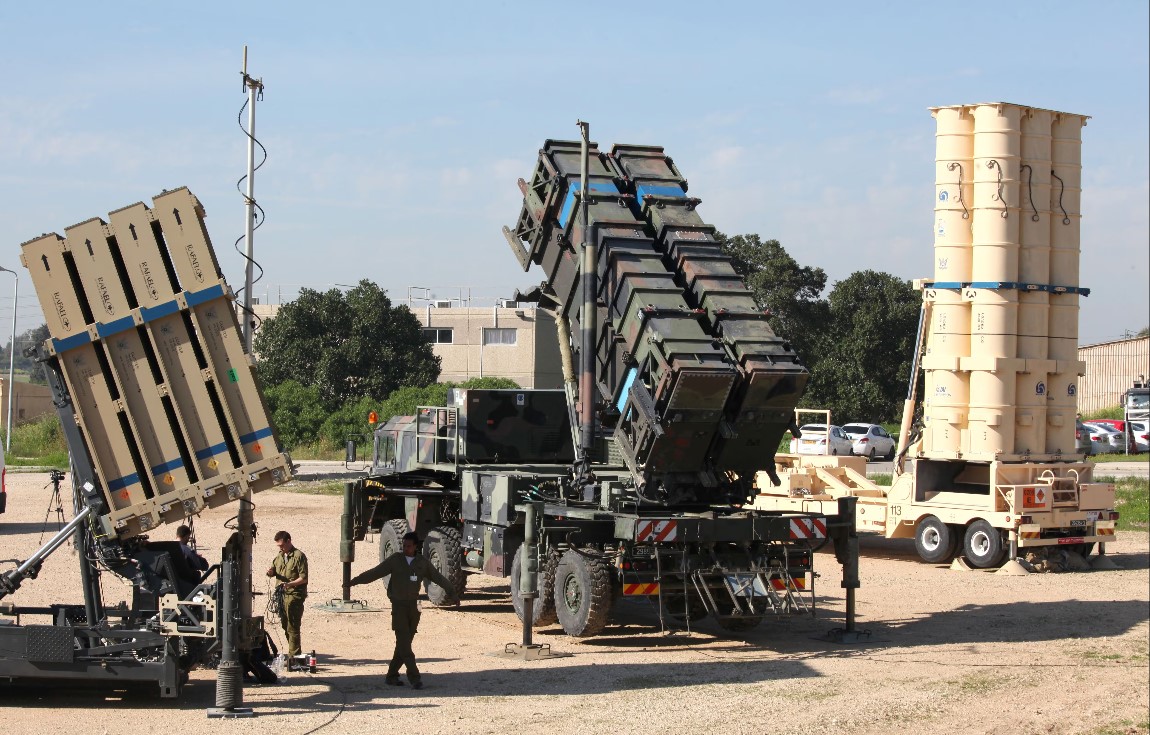
Israel’s confidence rests on a tiered missile-defence system designed to counter different threats at varying altitudes and ranges.
At the top tier is the Arrow missile defense system, including Arrow-2 and Arrow-3 interceptors, built to destroy long-range ballistic missiles, including exo-atmospheric threats. The system is jointly developed by Israel Aerospace Industries and the U.S. Missile Defense Agency.
The mid-layer, David’s Sling, is intended to counter medium- to long-range rockets and cruise missiles that fall outside the Iron Dome’s envelope.
At the lower tier, Iron Dome protects population centers from short-range rockets and artillery. It has become the most visible component of Israel’s defences due to its frequent use in conflicts with Gaza-based groups and Hezbollah.
During the June 2025 exchanges with Iran, Israeli officials said these systems worked in concert, supported by early-warning sensors and U.S. intelligence cooperation, to blunt the majority of incoming fire. Analysts caution, however, that interception success varies depending on missile type, salvo density, use of decoys and the geographic distribution of targets.
High Confidence, High Cost
Defence officials and analysts stress that “withstanding” a 700-missile barrage would not be without profound consequences.
Interceptor availability remains a critical constraint. While Iron Dome’s Tamir interceptors are relatively inexpensive, interceptors for David’s Sling and Arrow are far costlier, and sustained barrages risk depleting stockpiles faster than they can be replenished. Since late 2024, Israel has accelerated interceptor production and procurement, anticipating prolonged high demand.
Even with high interception rates, infrastructure damage and economic disruption would be unavoidable. Missiles that evade defences, as well as debris and near-miss blast effects, could strike power grids, transport hubs and industrial facilities. Analysts note that the 2025 fighting, despite strong defensive performance, still produced localized but significant damage.
Israeli planners also emphasize the importance of U.S. cooperation, including shared early-warning data, sensor integration and, potentially, regional missile-defence assets. Offensive operations aimed at degrading launch capabilities before missiles are fired are seen as a key complement to defensive measures.
Experts Urge Caution
Independent analysts warn against treating the 700-missile figure as a firm guarantee of survivability. Estimates of Iran’s missile inventory and launch capacity vary widely, and a campaign combining ballistic missiles, cruise missiles, drones and loitering munitions could strain even advanced defences.
Sustained exchanges, experts add, would erode interceptor stocks, complicate command-and-control and magnify humanitarian and political pressures — particularly if a collapse of Iran’s regime led to internal chaos or uncontrolled escalation involving regional proxies.
Strategic And Diplomatic Stakes
The notion that Israel could “accept” the consequences of a massive missile retaliation in exchange for the fall of Iran’s leadership carries significant diplomatic weight. United States officials, according to public reporting, continue to balance military feasibility assessments against concerns that such a scenario could destabilize the wider Middle East and draw in multiple state and non-state actors.
While Washington remains closely engaged with Israel on contingency planning and air-defence cooperation, U.S. officials are also reported to be wary of actions that could trigger a broader regional war with unpredictable outcomes.