Israel Plans $110 Billion Investment To Build Independent Domestic Arms Industry
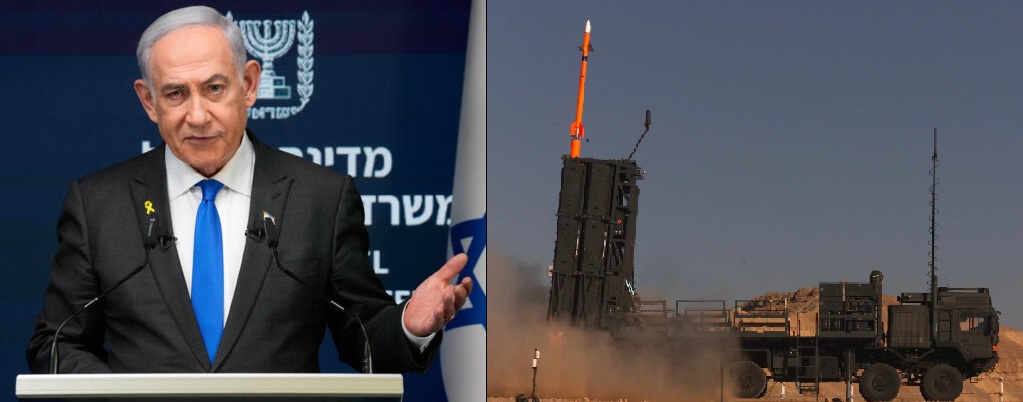
Israeli Prime Minister Benjamin Netanyahu said on Wednesday that Israel will invest 350 billion shekels (about $110 billion) over the next decade to develop a more independent arms industry, a sweeping pledge aimed at reducing dependence on overseas suppliers, including allies, according to Reuters.
Speaking at a ceremony for newly qualified Air Force pilots, Netanyahu said Israel would continue purchasing critical military equipment from abroad while expanding domestic weapons production. “I don’t know if a country can be completely independent,” he said, “but we will strive to ensure our arms are produced as much as possible in Israel,” Reuters reported.
Decade-Long Program Set Against War-Driven Spending Pressures
The announcement comes as Israel’s defense spending has surged since the October 7, 2023 Hamas attack and the subsequent regional escalation. War spending in Gaza and Lebanon topped 112 billion shekels in 2024, while overall defense expenditure rose sharply as a share of the economy, according to a Finance Ministry report cited by Reuters.
At the budget level, the government has already shifted toward much higher baseline defense funding. On December 5, 2025, Reuters reported that Israel’s cabinet approved a 2026 defense budget of 112 billion shekels (about $35 billion), underscoring the scale of resources being directed toward national security despite ongoing political and fiscal pressures.
Netanyahu’s 350-billion-shekel plan, spread over 10 years, would average about 35 billion shekels annually, placing it on par with an entire annual defense budget line item. However, the government has not yet released detailed breakdowns covering factories, stockpiles, research and development, or workforce expansion, Reuters said.
Supply-Chain Shocks And U.S Leverage Sharpen The Drive For Self-Reliance
Israel’s push to manufacture more weapons at home has been underway for years but gained urgency during the Gaza war, amid heightened global scrutiny and periodic friction with key partners. In May 2024, the United States paused shipments of certain heavy bombs, citing concerns over their use in densely populated areas. Reuters later reported that U.S. officials weighed “end-use” risks and withheld high-payload munitions over fears of civilian harm.
At the same time, Israel remains closely tied to U.S. security assistance. A 10-year U.S.–Israel Memorandum of Understanding, signed in 2016, allocated $38 billion in military aid for fiscal years 2019–2028, helping finance major weapons procurements and joint missile-defense programs.
Israeli defense officials and industry executives say wartime demand exposed vulnerabilities in ammunition and raw-material supply chains, reinforcing the need for greater domestic production capacity.
Early Building Blocks: Domestic Bomb Production And Industrial Expansion
Concrete steps toward greater self-sufficiency have already begun. In January 2025, Israel’s Defense Ministry signed agreements worth about $275 million with Elbit Systems to expand domestic production of heavy aerial munitions and establish local manufacturing of key raw materials previously sourced from abroad, according to Reuters and official statements.
These moves align with Netanyahu’s stated goal of maintaining access to foreign supplies where necessary, while ensuring Israel can sustain military operations with locally produced weapons during prolonged conflicts or diplomatic disruptions.
Strong Export Sector Raises Balancing Challenge
Israel’s defense industry is already a major global exporter of missiles, air-defense systems, drones, and electronic-warfare technology. According to Reuters, defense exports rose 13% in 2024 to nearly $15 billion, with Europe accounting for the largest share as demand surged for air defense and precision-strike systems.
Israel has also continued securing high-value international contracts. Last week, Reuters reported that Israel and Germany signed a $3.1 billion expansion deal for the Arrow-3 missile defense system, described by Israeli officials as part of the country’s largest-ever defense export package.
The renewed focus on domestic production presents a key challenge: scaling factories and supply chains quickly enough to meet rising local military demand while maintaining lucrative export commitments, particularly for systems co-developed with foreign partners.
What Happens Next
Netanyahu framed Wednesday’s announcement as a long-term national strategic project, not a single procurement decision. However, the government has yet to publish an implementation plan, legislative framework, or detailed funding timetable.
With defense spending already dominating fiscal debates, decisions on how the program will be financed and which weapons systems will be prioritized for “Made in Israel” production are expected to play a central role in political and economic discussions in the months ahead.
✍️ This article is written by the team of The Defense News.