Israel Launches $1.5 Billion Program To Accelerate Merkava Mk. 4 Barak main battle tank Production
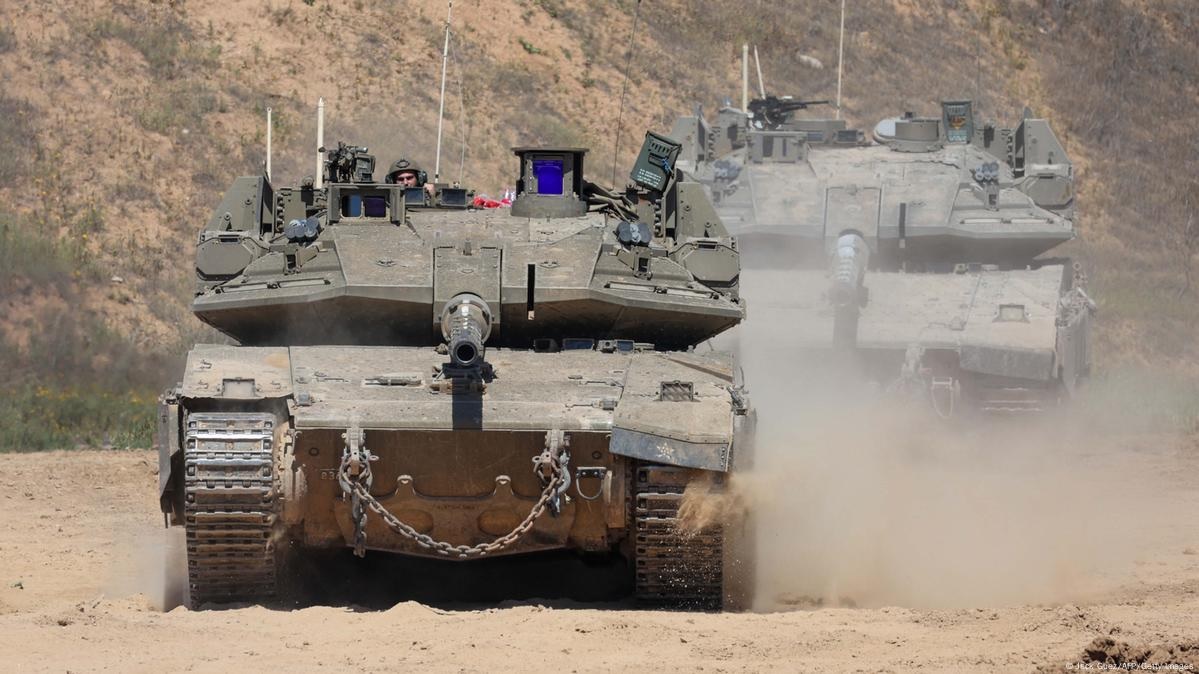
Tel Aviv, August 20, 2025 — Israel’s Ministry of Defense has approved a sweeping $1.5 billion program to accelerate production of its most advanced armored vehicles, marking one of the largest investments in ground forces in recent years. The move comes in the aftermath of the Swords of Iron War, where months of high-intensity combat in Gaza placed unprecedented strain on the Israel Defense Forces’ (IDF) armored formations.
At the heart of this initiative lies a commitment to rapidly expand production of three cornerstone platforms: the Merkava Mk. 4 Barak main battle tank, the Namer armored personnel carrier (APC), and the Eitan wheeled APC. Collectively, these vehicles form the backbone of Israel’s maneuver capability, having already proven their worth in urban combat and cross-border operations.
The Core Platforms
-
Merkava Mk. 4 Barak: Israel’s latest and most advanced tank variant, equipped with the Trophy active protection system, next-generation sensors, and a digitized battle management suite. The Barak is designed to detect, classify, and neutralize threats faster than its predecessors, ensuring survivability in environments saturated with anti-tank guided missiles.
-
Namer APC: Built on the Merkava chassis, the Namer is considered one of the heaviest and most secure APCs in the world. Its design prioritizes troop protection in dense, urban combat zones—conditions faced repeatedly in Gaza. Namers have been instrumental in transporting infantry under fire while maintaining resilience against improvised explosive devices (IEDs) and rocket-propelled grenades.
-
Eitan 8×8 APC: Israel’s first wheeled armored combat vehicle, the Eitan provides mobility and versatility unmatched by tracked systems. It has been increasingly outfitted with remote-controlled 30mm cannons, transforming it into both a reconnaissance and fire-support asset. Its wheeled design allows faster deployment across Israel’s road network, making it a flexible complement to the heavier Merkava and Namer.
Together, these vehicles have accumulated over one million kilometers of operational use during the recent Gaza campaign, underscoring their reliability and necessity for sustained operations.
Lessons from Recent Conflicts
Israel’s armored corps has been in a constant state of evolution since the 2006 Lebanon War, where Hezbollah’s widespread use of anti-tank weapons exposed vulnerabilities in older IDF systems. The response was rapid modernization: integration of active protection systems, enhanced situational awareness technologies, and urban-combat adaptations.
By comparison, while Western equivalents such as the U.S. Abrams or German Puma emphasize armor and firepower, the Israeli approach blends combat experience with innovation cycles tailored to hybrid warfare. The Merkava and Namer, for instance, combine heavy protection with adaptability, while the Eitan represents an Israeli-built alternative to vehicles like the American Stryker or German Boxer.
Strategic and Economic Dimensions
From a military perspective, the program is intended to restore armored readiness after exhaustive deployment in Gaza, while preparing for potential northern escalations with Hezbollah. The expansion ensures the IDF can sustain long-term, high-intensity ground operations without depleting reserves.
On a geopolitical level, the decision highlights Israel’s reliance on its domestic defense industry. With defense autonomy at the forefront of policy, producing Merkavas, Namers, and Eitans at scale reduces exposure to external supply chain risks—critical at a time of regional volatility.
Economically, the plan is expected to bolster Israel’s defense-industrial base, particularly through the Tank Production Plant (MANTAK), which oversees Merkava and Namer production. The Eitan program, meanwhile, taps into a wider network of Israeli defense contractors, creating spillover benefits for local suppliers and technology developers.
Budgetary Significance
The $1.5 billion allocation, still subject to final budget approval by the Knesset’s defense finance committee, stands as one of Israel’s largest recent armored procurement efforts. It follows earlier emergency contracts signed after the October 7 Hamas attacks, which forced Israel into rapid replenishment of frontline ground assets. This latest approval, however, moves beyond emergency acquisition—it represents a deliberate, long-term scaling up of IDF armored capacity.
A Defining Moment for the IDF
This program underscores a strategic choice: despite the growing role of drones, precision strikes, and cyberwarfare, the IDF continues to place heavy armor at the center of its warfighting doctrine. The decision to boost production of Merkavas, Namers, and Eitans reflects the belief that survivability, mobility, and sustained firepower remain irreplaceable in protracted, high-intensity conflicts.
By expanding its armored fleet, Israel is not only restoring strength after Gaza but also sending a clear message to its adversaries: the IDF remains ready and capable of prevailing in large-scale ground warfare.
✍️ This article is written by the team of The Defense News.