Israel Advises U.S. to Hold Fire on Iran as Intelligence Warns of Backfire
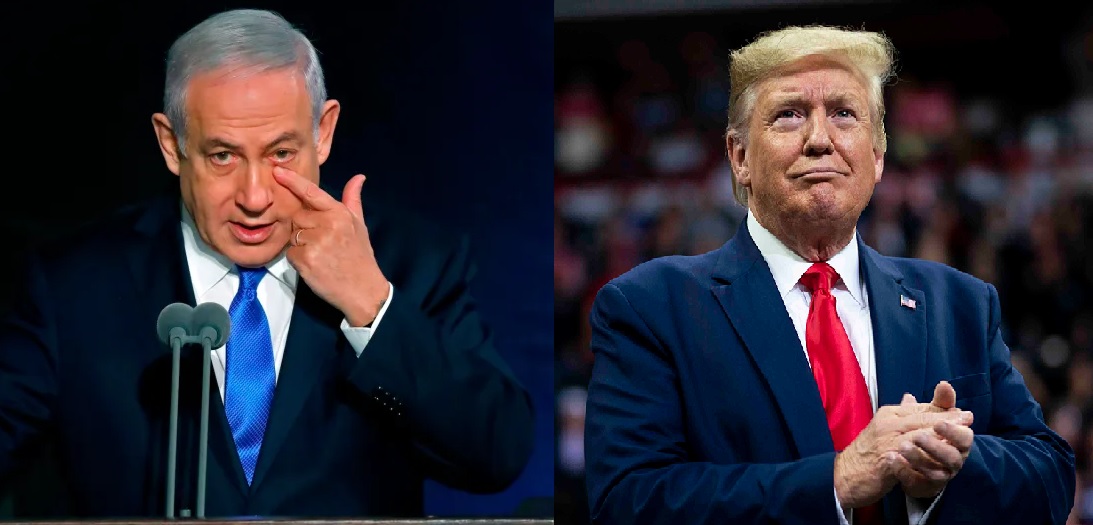
Jerusalem / Washington : Israel has quietly urged U.S. President Donald Trump to delay any immediate military strike against Iran, according to assessments circulating within Israeli and American security circles. Far from signaling hesitation or political division, Israeli officials say the recommendation reflects a hard-nosed intelligence judgment that the current moment is strategically unfavorable and could ultimately strengthen, rather than weaken, Tehran’s ruling system.
An in-depth analysis released by the Jerusalem Center for Security and Foreign Affairs sheds light on the reasoning behind Israel’s position. The report argues that while Iran faces deep economic distress, social anger, and recurring unrest, these pressures have not yet translated into the kind of internal fracture required to topple an entrenched authoritarian regime.
Intelligence Over Impulse
Israeli intelligence assessments emphasize that regime change in Iran does not hinge solely on popular dissatisfaction. Instead, it depends on the loyalty of the state’s coercive institutions—most critically the regular armed forces and the Islamic Revolutionary Guard Corps (IRGC). Despite waves of protests in recent years, including demonstrations that openly challenged the legitimacy of the Islamic Republic, these institutions have remained intact and obedient.
According to Israeli analysts, the regime has demonstrated a consistent willingness to deploy overwhelming force to suppress dissent. Protest movements have receded not because grievances have been resolved, but because the security apparatus has proven both cohesive and ruthless. As long as soldiers and IRGC units continue to follow orders to confront civilians, the likelihood of near-term regime collapse remains low.
History, Israeli officials argue, offers a clear lesson. Authoritarian governments rarely fall at the height of street protests. They fall when security forces splinter, refuse to fire, or shift allegiance. At present, there is no credible intelligence suggesting such a rupture is imminent inside Iran’s power structure.
The Case for Waiting
Advocates of an immediate strike warn that delay carries serious risks. Iran continues to advance its missile programs, deepen its regional footprint through proxy forces, and expand sensitive nuclear-related capabilities. From this perspective, striking sooner could degrade military infrastructure, reassert deterrence, and potentially expose vulnerabilities within the regime.
Israeli intelligence, however, judges that these potential gains are outweighed by strategic downsides under current conditions. A military attack launched while the regime maintains firm internal control could hand Tehran a powerful national resistance narrative. External pressure, analysts warn, often allows authoritarian leaders to rally public sentiment, silence opposition, and tighten elite unity under the banner of national defense.
Rather than triggering collapse, a strike now could marginalize opposition groups and legitimize harsher repression, reinforcing the very structures of power Israel and its allies seek to weaken.
Timing and Regional Risk
Another central concern is timing. While the most recent protest wave in Iran has been blunted, Israeli officials believe underlying social and economic tensions remain unresolved. These pressures are viewed as cyclical, not extinguished. Acting during a period of relative calm—when security forces are alert, coordinated, and prepared—would squander the chance to synchronize external pressure with internal instability at a later stage.
There is also the risk of regional escalation. Iran retains extensive retaliatory capabilities through allied militias and proxy networks across the Middle East. An attack absent a realistic pathway to regime collapse could ignite a prolonged confrontation, destabilizing the region without delivering a decisive strategic outcome.
Patience as Strategy
For these reasons, Israel’s message to Washington has been one of restraint. Israeli officials believe a more favorable opportunity would emerge during a renewed phase of internal unrest—one marked by eroding legitimacy, overstretched security forces, and the first signs of dissent within the military hierarchy. Only under such circumstances, they argue, could external military pressure meaningfully alter Iran’s internal balance of power.
The core conclusion of Israel’s intelligence community is stark: the Iranian regime will endure as long as the army and the IRGC remain willing and able to fire on their own population. Until that reality changes, patience is viewed not as weakness, but as strategic prudence aimed at avoiding a costly conflict that could entrench the very regime it seeks to undermine.
About the Author
Aditya Kumar:
Defense & Geopolitics Analyst
Aditya Kumar tracks military developments in South Asia, specializing in Indian missile technology and naval strategy.