Iran's Nuclear Program Escalation Sparks Condemnation from European Allies
France, Germany, and Britain condemn Iran's recent nuclear expansion, citing violations of the 2015 nuclear agreement and increased risks of weaponization.
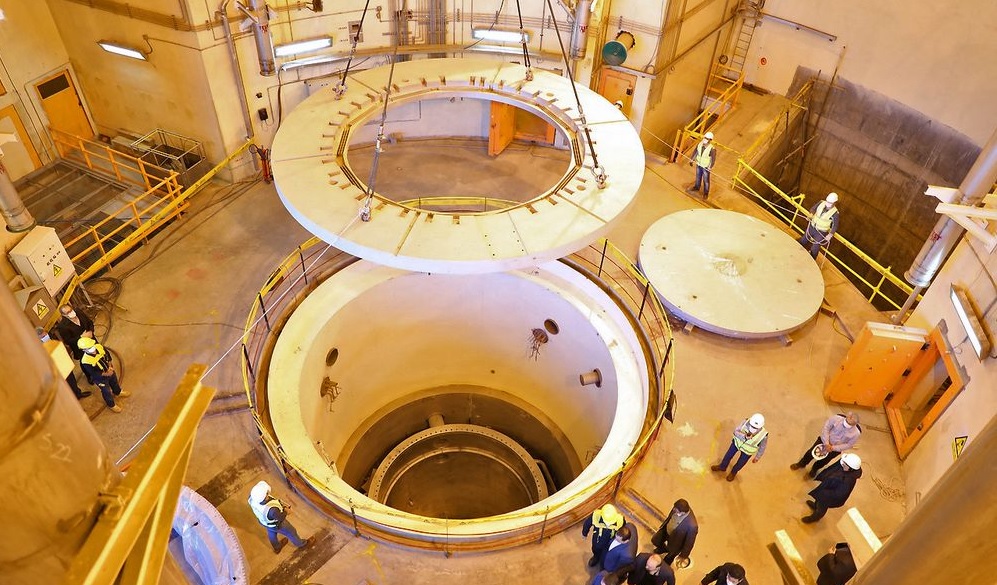
France, Germany, and Britain have strongly condemned Iran's recent actions to expand its nuclear capabilities. This comes after the International Atomic Energy Agency (IAEA) reported on Thursday that Iran is bolstering its enrichment facilities at two sites, a move seen as undermining the landmark 2015 nuclear deal.
The three European countries expressed their concerns in a joint statement, highlighting that Iran's measures are increasing its stock of enriched uranium and its enrichment capacity, both of which have already exceeded the limits set by the 2015 agreement. This deal, known as the Joint Comprehensive Plan of Action (JCPOA), was designed to curb Iran's nuclear activities in exchange for lifting economic sanctions.
The IAEA's report indicated that Iran is the only non-nuclear weapon state enriching uranium to a high level of 60%, which is just short of weapons-grade. The agency also noted that Iran has accumulated enough material to potentially build several atomic bombs. Tehran, however, maintains that its nuclear program is intended for peaceful and civilian purposes and denies any ambitions to develop nuclear weapons.
The condemnation from France, Germany, and Britain followed their recent resolution at an IAEA board of governors meeting, criticizing Iran for its lack of cooperation with the nuclear watchdog. This was the first such resolution since November 2022. In response, Iran denounced the resolution as "hasty and unwise" and defended its actions as a reaction to the perceived unfair treatment.
Despite the escalating tensions, the European nations reiterated their commitment to a diplomatic solution to prevent Iran from developing a nuclear weapon. They emphasized the importance of reviving the 2015 deal, which fell apart after the United States' unilateral withdrawal under then-President Donald Trump in 2018. Efforts to revive the accord have thus far been unsuccessful.
In addition to the current developments, it's important to understand the broader context of the JCPOA. The agreement originally involved Iran and six major world powers: the United States, United Kingdom, France, Germany, Russia, and China. It aimed to ensure that Iran's nuclear program would be exclusively peaceful. However, following the U.S. withdrawal, Iran gradually ceased to comply with its commitments, leading to a cycle of escalating actions and retaliations.
The international community remains concerned about the potential for a nuclear-armed Iran, which could destabilize the already volatile Middle East region. The ongoing efforts to bring Iran back into compliance with the JCPOA are crucial for maintaining global non-proliferation norms and ensuring regional security.
✍️ This article is written by the team of The Defense News.