Iran Analyst Claims Latest Missile Test Was 10,000-km ICBM, Conducted With Russian Consent
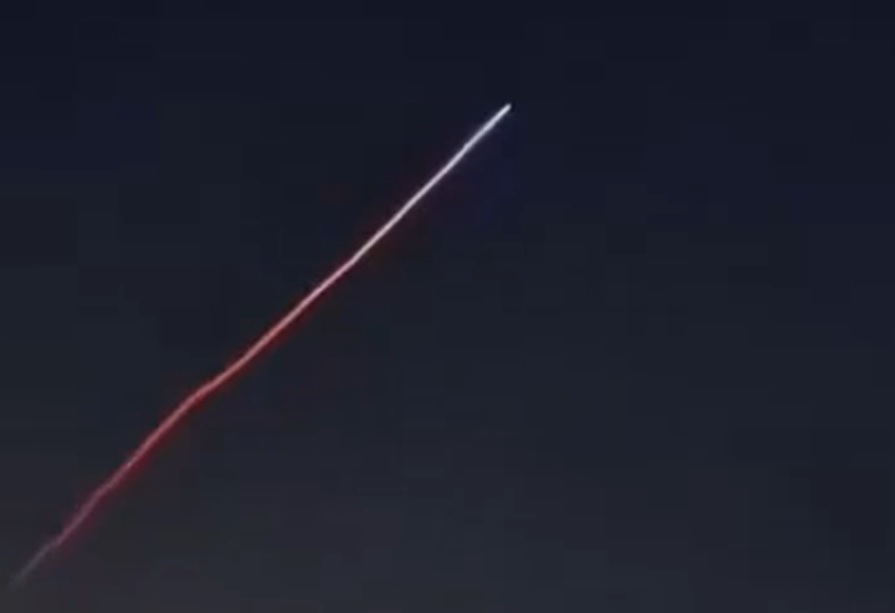
Tehran / Moscow : Unverified claims circulating in Iranian strategic circles have triggered fresh international scrutiny after an analyst asserted that Iran has conducted what would be its first-ever test of an intercontinental ballistic missile (ICBM), allegedly with the consent and involvement of Russia.
According to Prof. Mehdi Seif Tabrizi, an Iranian analyst whose remarks were shared on regional media platforms, the missile test reportedly achieved an estimated range of around 10,000 kilometers. The launch is said to have been conducted toward Siberia, a direction that—if accurate—would strongly suggest coordination with Moscow due to the airspace and impact-zone implications.
Iranian authorities have not publicly acknowledged any such test, and there has been no confirmation from Russian officials. Western governments and independent monitoring organizations have likewise issued no verification as of now.
A Claim That Crosses a Strategic Threshold
By international definition, an intercontinental ballistic missile is any ballistic missile with a range exceeding 5,500 kilometers. A system approaching 10,000 kilometers would mark a dramatic leap beyond Iran’s currently acknowledged missile capabilities, which are generally assessed to top out at roughly 2,000 kilometers.
Such a range would theoretically place most of Europe, large portions of North America, and significant areas of Asia within reach. ICBMs are also closely associated with nuclear delivery roles, even if not explicitly declared as such, making the allegation especially sensitive amid ongoing disputes over Iran’s nuclear intentions.
Russian Dimension Raises Alarm
The assertion that the test was conducted with Moscow’s consent has amplified concerns in Western capitals. Since 2023, Iran and Russia have steadily deepened military and technological cooperation, particularly in areas such as drones, missile components, satellite access, and air defense coordination.
If Russia allowed Iranian testing toward Siberian territory—or provided technical assistance—it would suggest a qualitative shift from transactional cooperation to strategic weapons collaboration. Analysts note that such cooperation would carry major implications for arms control regimes, including the Missile Technology Control Regime (MTCR), which seeks to limit the spread of long-range delivery systems.
Verification Gaps and Strategic Messaging
No satellite imagery, infrared launch-detection data, or maritime and airspace warnings have surfaced publicly to corroborate the claim. Defense analysts caution that the announcement may serve a strategic signaling function rather than reflect a fully successful ICBM test.
Iran has previously unveiled missiles with exaggerated performance claims, later revised downward by independent experts. At the same time, Tehran has demonstrated steady progress in solid-fuel motors, guidance systems, and space-launch vehicles—technologies that overlap with long-range missile development.
Regional and Global Implications
If independently verified, the test would represent a fundamental escalation in Iran’s strategic posture, potentially prompting accelerated missile defense deployments by NATO states and renewed pressure at the United Nations Security Council.
For Russia, any confirmed role would deepen its confrontation with the West and raise questions about whether Moscow is deliberately enabling new long-range missile powers as a form of geopolitical leverage.
Until independent confirmation emerges, the alleged test remains unproven. Still, the claim alone underscores how rapidly the Iran–Russia axis has become a focal point of global security anxiety—and how even unverified reports can reverberate across diplomatic and military planning rooms worldwide.
About the Author
Aditya Kumar:
Defense & Geopolitics Analyst
Aditya Kumar tracks military developments in South Asia, specializing in Indian missile technology and naval strategy.