Indonesia to Buy 42 Chinese J-10C Fighter Jets in $9 Billion Deal
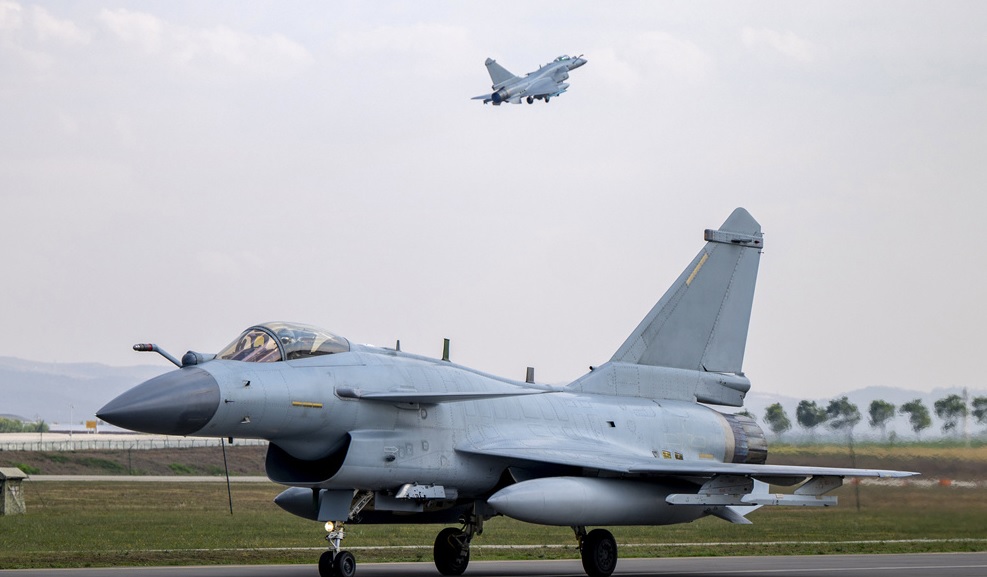
Indonesia has made a significant move to strengthen its air combat capability by confirming the acquisition of 42 Chinese Chengdu J-10C multirole fighter jets in a deal valued at over $9 billion. The announcement, confirmed by Defence Minister Sjafrie Sjamsoeddin, marks a major milestone in Jakarta’s defense modernization program and a shift toward a more diversified procurement strategy that extends beyond its traditional Western partners.
The J-10C, built by Chengdu Aircraft Industry Group, represents one of China’s most advanced 4.5-generation fighters. It is equipped with an AESA (Active Electronically Scanned Array) radar, fly-by-wire flight controls, and an integrated electronic warfare suite, allowing for both air-superiority and precision strike missions. The J-10C can carry PL-15 beyond-visual-range missiles and precision-guided munitions, giving Indonesia a substantial boost in its aerial combat potential.
Indonesia’s Current Fleet Strength
The Indonesian Air Force (TNI-AU) operates a mixed fleet sourced from multiple countries, totaling around 240–250 aircraft, of which roughly 100–120 are combat-ready fighter jets. This includes 33 F-16 Fighting Falcons, 16 Su-27/30 Flankers, 24 Hawk 209s, and T-50i Golden Eagles for training and light attack roles. Indonesia has also signed an earlier deal to acquire 42 Dassault Rafale fighters from France, alongside ongoing negotiations for F-15EX jets from the United States and participation in Turkey’s KAAN fighter project.
With the arrival of the J-10C, Indonesia’s combat aircraft inventory will see one of its largest expansions since the post-Suharto modernization period, effectively positioning the TNI-AU among the most capable air forces in Southeast Asia.
Strategic Reasoning Behind the Deal
The decision to buy from China reflects Indonesia’s desire to diversify defense suppliers, reduce dependency on Western weapon systems, and ensure delivery certainty amid global supply chain disruptions. Chinese defense firms offered an attractive package that includes competitive pricing, training, and possible industrial cooperation for local maintenance and component production.
However, experts note that integrating Chinese, Western, and Russian aircraft into a single force poses logistical and technical challenges. Differences in avionics architecture, maintenance requirements, and weapons compatibility may complicate operations and supply chains. Despite this, Indonesia views the mix as a form of strategic hedging, allowing it to maintain autonomy in defense decisions while balancing relationships with multiple powers.
Financial and Delivery Details
Reports indicate that the $9 billion figure covers not just the aircraft but also spares, training, munitions, and logistical support. Deliveries are expected to begin within the next few years, though neither Chengdu Aerospace nor the Indonesian Ministry of Defence has released detailed batch schedules. Sources suggest that initial aircraft could be delivered directly from China, followed by potential assembly or servicing in Indonesia under a technology-sharing framework.
Other contenders and parallel deals
This procurement did not happen in isolation. In recent years Jakarta has negotiated or signed agreements with several suppliers:
-
Dassault Rafale (France): Indonesia finalised a 42-aircraft Rafale order earlier and has started receiving aircraft and training activities.
-
Boeing F-15EX (USA): Jakarta has discussed a potential buy of F-15EXs (a reported 24 aircraft in past negotiations), which remains a competing American option.
-
Turkey’s KAAN: Separately, Turkey has announced plans to export as many as 48 KAAN fighters to Indonesia under a production/co-operation arrangement — another home-grown contender.
Those parallel lines of negotiation have been part of Jakarta’s explicit strategy: diversify suppliers while building local industrial partnerships and achieving a faster refresh of airpower.
Tender or direct purchase?
So far, officials’ statements and media reporting indicate this is not the result of a wide, public open tender in the way some Western procurements are run. Coverage describes government-to-government talks and internal ministry evaluations culminating in budget approval rather than a competitive multilateral tender published on an open procurement portal. Indonesian officials had been publicly evaluating offers — and the recent budget sign-off suggests a direct G2G (government-to-government) negotiation path rather than a prolonged, open international tender.
Operational Impact and Industrial Benefits
The introduction of the J-10C will provide Indonesia with faster access to modern radar, networked communications, and long-range missile capabilities comparable to other advanced regional air forces such as Singapore and Australia. The deal may also open pathways for industrial cooperation, enhancing Indonesia’s domestic aerospace capabilities under its Defense Industry Independence Program (Kemandirian Industri Pertahanan).
Regional and Strategic Outlook
Indonesia’s decision will likely attract attention from regional neighbors and global powers alike. While France and the U.S. remain key defense partners, this Chinese deal demonstrates Jakarta’s intent to pursue a multi-vector defense policy — one that leverages opportunities from both East and West. The move could subtly shift the regional balance by introducing a Chinese-made advanced platform into the ASEAN defense ecosystem.
Observers will be watching for formal contract finalization, exact delivery schedules, and confirmation of local participation terms. Indonesia’s ability to manage this increasingly complex fleet — comprising Rafales, F-16s, Sukhois, and now J-10Cs — will test its logistics, training, and command integration capabilities.
If executed effectively, the J-10C acquisition could mark a turning point in Indonesia’s path toward building a balanced, modern, and self-reliant air force, reinforcing its role as a central power in Southeast Asia’s evolving defense landscape.
✍️ This article is written by the team of The Defense News.