Indonesia Moves Fast On KF-21 Block-2 Purchase To Lock In Production Priority
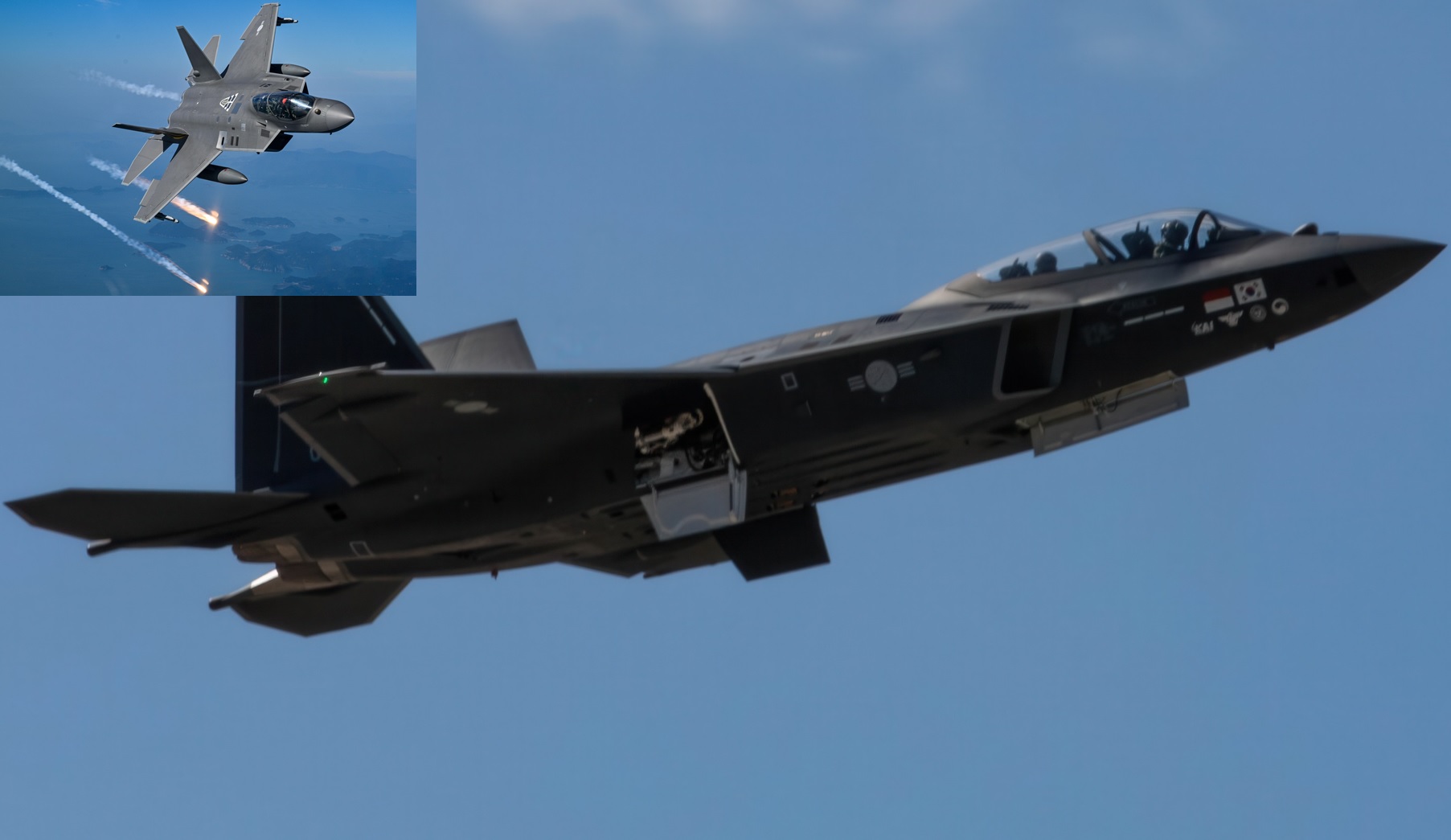
Jakarta / Seoul : Indonesia has urgently reopened negotiations with South Korea to acquire KF-21 Block-2 fighter jets, as fears grow in Jakarta that it could lose priority access to production slots if it delays further. According to reports by Korean media outlet Global e-News, Indonesia is seeking to finalize talks for the purchase of 16 aircraft, a move driven as much by strategic timing as by military necessity.
The renewed negotiations are being propelled by an external regional factor: the Philippines’ growing interest in the KF-21 Boramae. Manila has identified the aircraft as a leading candidate in its future multi-role fighter acquisition program, triggering concern in Indonesia that new customers could be placed ahead of it in the production queue if contracts are signed first.
Strategic Push Beyond Capability Gaps
Indonesian defense planners view the move as more than a simple effort to fill gaps in air combat capability. It is increasingly seen as a race to lock in production priority at a time when KF-21 serial manufacturing is accelerating and regional demand is expanding.
Despite ongoing difficulties in paying its agreed share of the program’s development costs, Jakarta’s current approach is to sign a purchase contract for operational aircraft already entering production. Officials believe such a step would safeguard Indonesia’s position in the delivery schedule while broader financial and industrial issues are addressed through continued negotiations.
Air Force Modernization And Industrial Cooperation
The push to secure the KF-21 Block-2 aligns with Indonesia’s broader Air Force modernization strategy, which has already seen progress through the acquisition of Rafale fighter jets from France. Rather than relying on a single supplier, Jakarta aims to diversify its combat fleet and ensure long-term operational resilience.
Equally important is Indonesia’s desire to preserve defense-industrial cooperation with South Korea. The KF-21 program has long been viewed in Jakarta as a pathway to advanced aerospace technology, local industrial participation, and future domestic production capabilities.
Block-2 Variant Marks Major Capability Upgrade
The Block-2 configuration represents the next evolutionary step for the KF-21 after the Block-1 variant, which is currently being introduced into service with the South Korean Air Force. While Block-1 focuses primarily on air-to-air missions, Block-2 is designed as a fully multirole platform.
Planned upgrades include the integration of precision-guided munitions, enhanced radar systems, improved electronic warfare suites, and expanded mission software. These changes are intended to give the aircraft robust air-to-ground strike capability, placing it firmly in the category of advanced fourth-plus generation fighters.
A Joint Program With A Turbulent History
The KF-21 Boramae is a twin-engine supersonic fighter measuring approximately 13 meters in length, 4.5 meters in height, and 14 meters in wingspan. Both single-seat and two-seat variants are planned to support combat operations and advanced training.
The program itself is a joint initiative between South Korea and Indonesia, structured around an 80:20 partnership. Indonesia originally committed to funding 20 percent of development costs in exchange for prototype access and technology transfer to support future aircraft production at home. However, repeated payment delays led to temporary withdrawals and renegotiations, testing the resilience of the partnership.
Jakarta formally reaffirmed its interest in remaining part of the program during high-level defense discussions in January 2023, signaling a political commitment to the project despite unresolved financial challenges.
Production Plans And Long-Term Vision
In June 2024, South Korea’s Defense Acquisition Program Administration signed a $1.4 billion production contract with Korea Aerospace Industries for 20 KF-21 aircraft, marking the transition from development to full-scale manufacturing.
Current plans call for the production of 40 aircraft by 2028 and approximately 120 aircraft by 2032. Looking further ahead, South Korea intends to evolve the KF-21 into a true fifth-generation fighter, incorporating advanced stealth features, next-generation sensors, improved electronic warfare systems, and the integration of weapons into internal bays.
Regional Competition Intensifies
Indonesia’s urgency has been heightened by developments in the Philippines, which formally expressed interest in the KF-21 in May 2024. While no purchase decision has yet been announced, the aircraft is competing against the F-16V from Lockheed Martin and the Saab Gripen in Manila’s evaluation process.
For Jakarta, the prospect of another Southeast Asian air force securing early KF-21 deliveries has become a strategic concern. By moving quickly to restart negotiations, Indonesia aims to protect its modernization roadmap, maintain its industrial foothold in the program, and ensure it does not fall behind in what is rapidly becoming one of Asia’s most competitive fighter aircraft markets.
About the Author
Aditya Kumar:
Defense & Geopolitics Analyst
Aditya Kumar tracks military developments in South Asia, specializing in Indian missile technology and naval strategy.