India’s LCH ‘Prachand’ May Get 300 km Strike Capability with Israeli Ice Breaker Missile
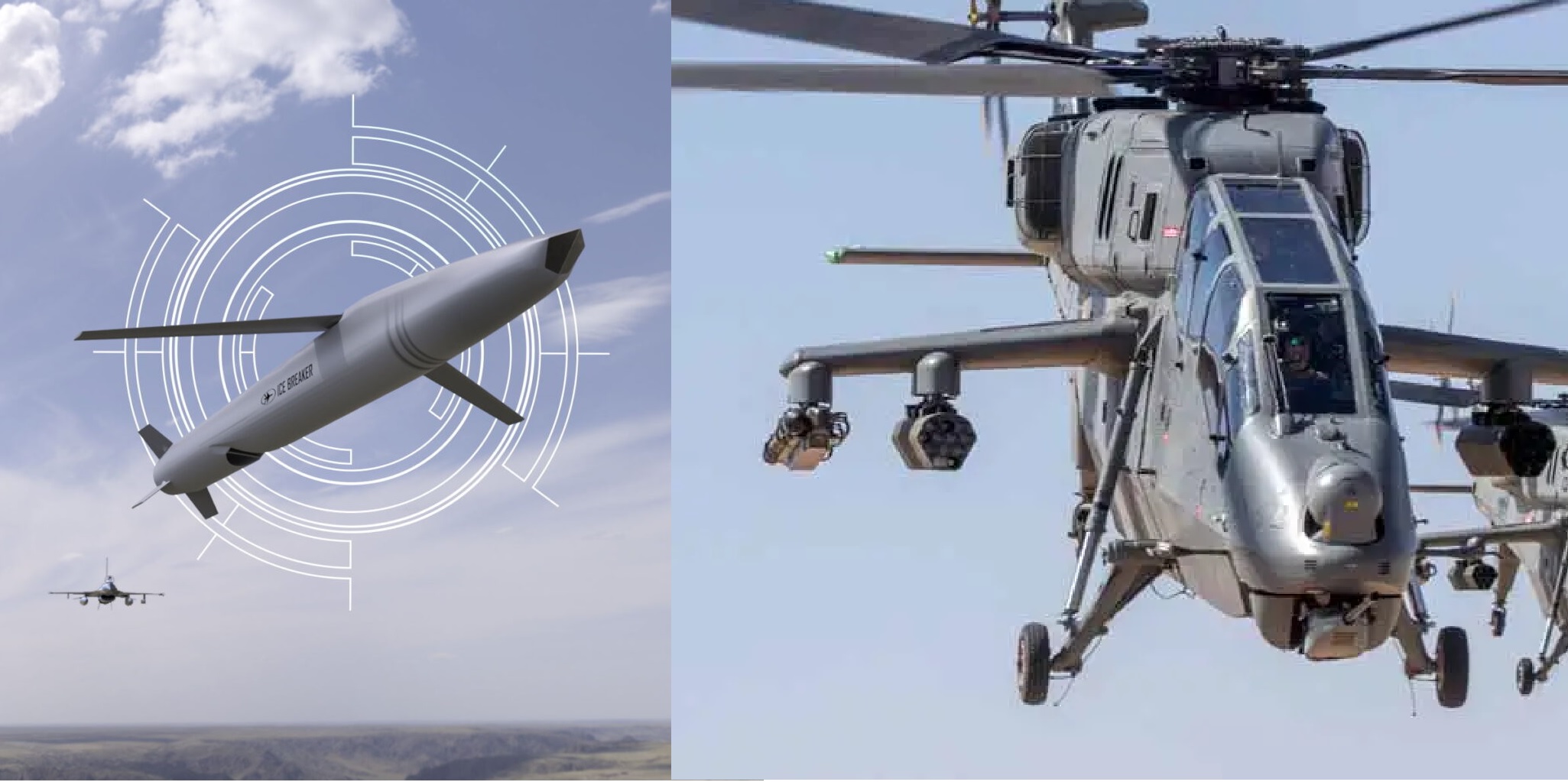
India’s indigenous Light Combat Helicopter (LCH) ‘Prachand’ could soon gain the ability to strike targets as far as 300 kilometres away, thanks to an integration proposal from Israel’s RAFAEL Advanced Defence Systems. The upgrade, if approved, would transform the high-altitude attack helicopter into a long-range precision strike platform—a role typically reserved for advanced fighter jets.
The missile in question, RAFAEL’s Ice Breaker, is a fifth-generation, multi-domain precision missile designed for both land and sea attack. Originally pitched for the Indian Air Force’s fighter fleet, RAFAEL has now confirmed that it can also be mounted on the LCH without major performance compromises. A feasibility study conducted with Indian defence engineers has already determined that integration is technically achievable.
Missile Specifications – Ice Breaker
-
Type: 5th-generation autonomous standoff missile
-
Length: ~4 meters
-
Weight: ~400 kg
-
Range: Up to 300 km
-
Speed: High subsonic
-
Warhead: ~250 kg multi-purpose warhead capable of penetrating fortified structures or striking naval vessels
-
Guidance: Advanced electro-optical seeker with artificial intelligence, GPS/INS navigation, anti-jamming capability
-
Attack Profile: Capable of low-altitude sea-skimming, pop-up terminal manoeuvres, and multi-directional approaches
Given that the LCH Prachand can carry up to 920 kg of weapons, it could be fitted with one or two Ice Breakers depending on mission requirements. This would grant the helicopter a “standoff” strike ability, enabling it to destroy high-value targets from beyond the reach of most short-range air defence systems—critical for operations along contested areas such as the Line of Actual Control (LAC) with China.
The missile’s autonomous guidance allows it to operate even in GPS-denied environments, using AI-driven image recognition to identify and hit targets with extreme accuracy. Its versatility makes it effective against fortified bunkers, command centres, radar installations, and even moving warships.
For the Indian Air Force, this would mean that a platform traditionally designed for close air support and anti-armour roles could now perform deep-strike missions, bridging the gap between helicopter gunships and strike aircraft. Military planners note that this could significantly increase India’s tactical flexibility in high-altitude warfare, where Prachand’s ability to operate at altitudes above 15,000 feet already gives it an advantage over most foreign attack helicopters.
The Ice Breaker has also been offered to the Indian Navy for use on MiG-29K and Rafale M fighters, raising the prospect of a shared long-range strike weapon across the Air Force, Navy, and potentially Army Aviation. This interoperability could streamline logistics, reduce training time, and create a unified munitions inventory.
If approved, this would mark one of the most significant upgrades to an Indian-made combat helicopter to date, turning the LCH into a formidable force multiplier capable of conducting precision strikes far behind enemy lines—without ever crossing into hostile airspace.
✍️ This article is written by the team of The Defense News.