India’s 130kN Jet Engine Test Facility Almost Ready
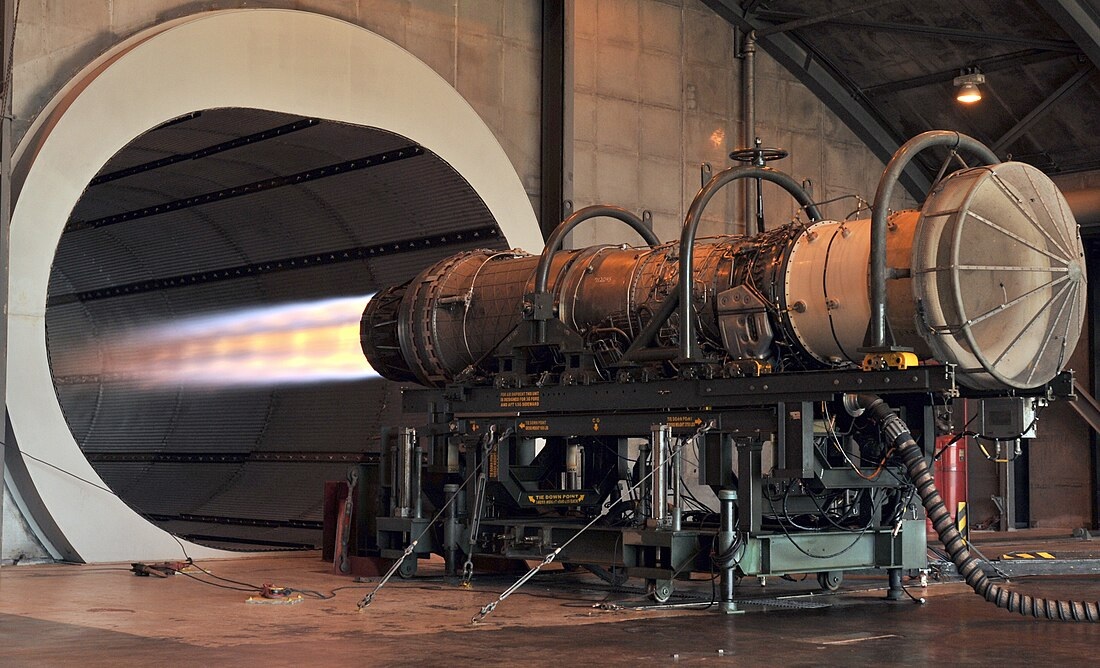
India is moving closer to a major milestone in its aerospace development, with the Gas Turbine Research Establishment (GTRE) nearly completing its new 130-kilonewton (kN) Twin Engine Test Bed near Rajanukunte, Bengaluru. The advanced test facility, which began construction in September 2023, is expected to be fully operational by October 2025, and will play a crucial role in testing and validating indigenous military jet engines.
At the heart of the project is India's push to achieve self-reliance in critical engine technology, an area that has historically depended on foreign suppliers. This upcoming facility will help change that, enabling high-endurance and performance trials of both existing and next-generation engines.
Among the main beneficiaries of the new site is the Kaveri Derivative Engine (KDE), more commonly known as the ‘Dry Kaveri’. This is a non-afterburning version of the original GTX-35VS Kaveri engine, tailored to produce around 46-52 kN of thrust, and is intended for India’s 13-ton stealth Unmanned Combat Aerial Vehicle (UCAV) Ghatak. The Ghatak is designed for precision strikes and surveillance, and engine reliability is critical to its success.
So far, the Dry Kaveri engine has demonstrated stable performance of 49-51 kN during ground and high-altitude simulations in Russia. Now, with this domestic test bed, GTRE will be able to conduct similar tests at home, speeding up development and reducing reliance on foreign testing infrastructure.
The engine is expected to undergo in-flight trials aboard a modified Ilyushin Il-76 aircraft in Russia by late 2025, aiming for certification in 2026. However, with this new test setup in India, GTRE could even begin limited series production of the engine by 2025-26, provided trials proceed as planned.
Satellite imagery has already confirmed the twin test cell configuration at Rajanukunte, allowing simultaneous testing of two engines under varied conditions—critical for high-fidelity performance evaluation and long-duration trials. Sources suggest first engine tests could begin by mid-2026.
In addition to the Dry Kaveri, the Rajanukunte facility is set to support future engine programs, including the Kaveri 2.0, an upgraded engine that adds an afterburner to reach wet thrust levels of 80-85 kN. If weight and other design challenges are overcome, this could become an option for aircraft like the LCA Tejas Mk1A.
Most significantly, the new test bed is expected to be a cornerstone for the development of a 120kN-class engine for India’s Advanced Medium Combat Aircraft (AMCA), a stealth fighter currently in the design and prototype phase. The test bed's ability to simulate high-altitude and supersonic conditions will be vital for refining engine stealth features, fuel efficiency, and thrust vectoring capabilities.
According to GTRE’s roadmap, the AMCA engine core is expected by 2029, with a full technology demonstrator targeted for the early 2030s. This long-term vision underscores the importance of the Rajanukunte facility, not just for present needs, but for India's next-generation air combat capability.
Once operational, the test site will mark a significant leap forward in India’s aerospace independence, offering a reliable platform for homegrown jet engine development and positioning the country among the few globally with such testing infrastructure.
✍️ This article is written by the team of The Defense News.