Indian Navy’s Next-Gen Project-18 Destroyers to Feature 144 VLS Cells for Superior Firepower
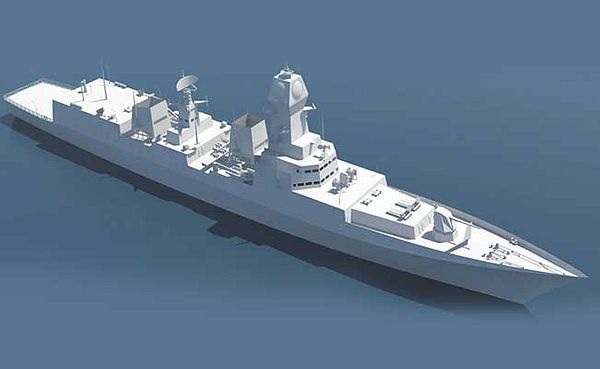
The Indian Navy is preparing to significantly boost its surface combat capabilities with the development of the Next Generation Destroyers (NGDs) under the ambitious Project-18. These new destroyers, projected to displace between 10,000 to 13,000 tonnes, will be the most heavily armed surface warships ever built in India, featuring a cutting-edge Vertical Launch System (VLS) configuration totaling 144 missile cells.
According to preliminary design layouts and publicly available concept models, each Project-18 class vessel will house:
-
32 VLS cells for long-range surface-to-air missiles (LRSAM).
-
48 universal VLS cells for launching supersonic or hypersonic cruise missiles like BrahMos-ER or future BrahMos-II variants, and
-
64 smaller VLS cells for short- and medium-range air defense missiles.
This three-tier VLS configuration, spread across forward and aft sections of the ship, is supplemented by 8 inclined launchers for larger, canisterized missiles, allowing the destroyer to engage aerial, surface, and sub-surface threats across vast distances.
The VLS units will be based on Universal Vertical Launch Module (UVLM) technology, providing the flexibility to house a variety of missile types — from anti-air and anti-ship to land-attack and anti-submarine weapons. The ships are also expected to be compatible with future indigenous anti-ballistic missile systems, such as the XR-SAM or Project Kusha, greatly enhancing area denial and layered defense capabilities.
High-End Specs with Strategic Focus
The Project-18 destroyers will be equipped with advanced integrated masts, stealthy design features, and a full suite of sensors and combat management systems. They are expected to incorporate:
-
Electric propulsion systems, enabling reduced acoustic signatures,
-
Integrated mast systems with multifunction AESA radars,
-
Space for unmanned systems, including UAVs and USVs.
The Warship Design Bureau (WDB) is spearheading the design process, while Mazagon Dock Shipbuilders Ltd (MDL) and Garden Reach Shipbuilders and Engineers (GRSE) are likely to be considered for construction. The total cost of the program is estimated to be around ₹80,000 crore (~US$10 billion).
Timeline and Fleet Expansion
The Indian Navy aims to acquire 8 to 10 destroyers under Project-18. The Defence Acquisition Council (DAC) is expected to clear the proposal by 2025–26, with the Request for Proposal (RFP) and construction kickoff likely in the late 2020s. The first vessel is anticipated to enter service by the early to mid-2030s.
At present, the Navy operates 13 destroyers across the Delhi, Kolkata, and Visakhapatnam classes. The induction of Project-18 will significantly expand and modernize India’s destroyer fleet, narrowing the quantitative and qualitative gap with naval powers such as China and the United States.
Strategic Implication
With this configuration, Project-18 destroyers will rival the world's most powerful surface combatants, including the US Navy’s Arleigh Burke-class and China’s Type-055 class. The sheer number of VLS cells, combined with indigenous weapons and sensor suites, positions these warships as central to India’s future blue-water naval doctrine, capable of leading carrier strike groups and defending strategic interests across the Indian Ocean Region (IOR).
✍️ This article is written by the team of The Defense News.