Indian Navy Unveils Next-Generation Capability Roadmap: IAC-2, MQ-9B Timeline, P-8I Expansion and TEDBF Progress Confirmed

New Delhi: Admiral Dinesh K Tripathi, Chief of the Naval Staff (CNS), has outlined significant developments and future plans shaping the Indian Navy’s force structure, surveillance reach, and indigenous aviation ambitions. The updates provide a clear snapshot of how the Indian Navy is aligning lessons from current platforms with emerging operational requirements across the Indian Ocean Region.
IAC-2: Second Indigenous Aircraft Carrier Takes Shape
On the Navy’s second indigenous aircraft carrier, IAC-2, Admiral Tripathi confirmed that a repeat order of IAC-1—with carefully calibrated modifications—is under active consideration. The design approach is intended to internalize operational lessons from INS Vikrant, India’s first indigenous carrier, while also embedding future-ready capabilities.
These refinements are expected to address areas such as aircraft handling efficiency, enhanced survivability, improved aviation support systems, and compatibility with next-generation carrier-borne aircraft. The move reflects a cost-effective and time-efficient pathway, leveraging an already mature industrial ecosystem while strengthening India’s blue-water carrier operations.
MQ-9B: Long-Range Maritime Surveillance Timeline Confirmed
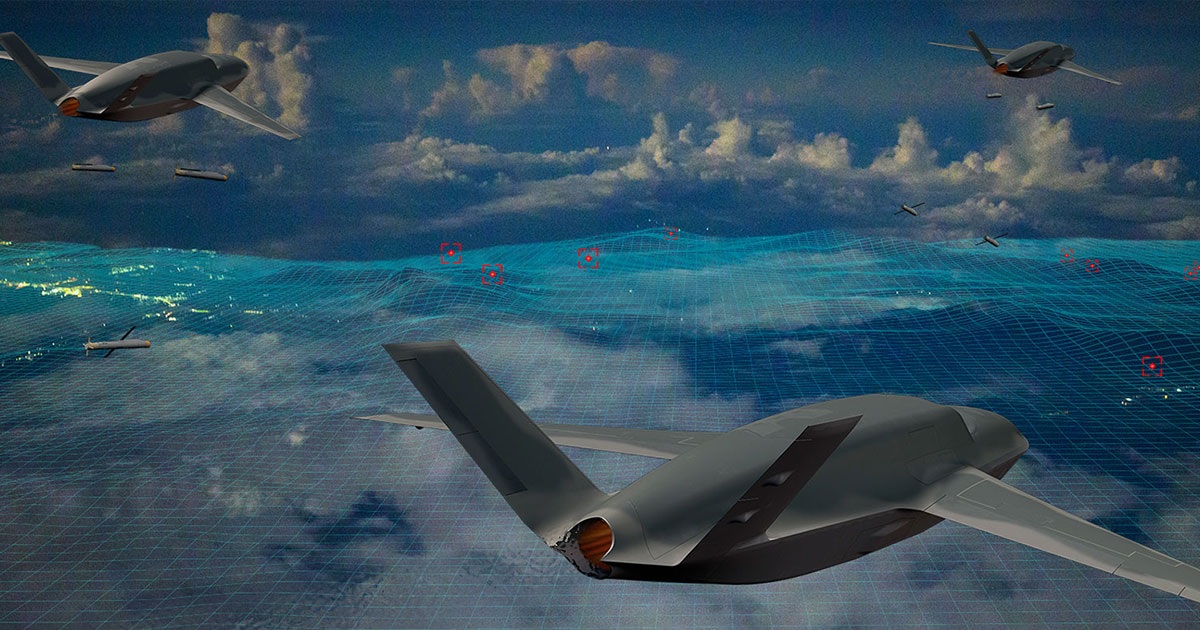
Providing clarity on long-endurance unmanned surveillance, Admiral Tripathi stated that delivery of the first two MQ-9B Remotely Piloted Aircraft is scheduled to commence from Q1 2029. The MQ-9B acquisition is seen as a transformational step for persistent ISR (Intelligence, Surveillance and Reconnaissance) across vast maritime spaces.
Once inducted, the platform will significantly enhance maritime domain awareness, anti-surface and anti-submarine cueing, and joint operations with other Indian armed services, particularly in high-interest sea lanes.
Drishti MALE RPAs Enter Operational Phase
On indigenous unmanned systems, the CNS confirmed that 10 Drishti MALE RPAs are currently under induction into naval service. Importantly, one Drishti RPA has already been operationalised and is being flown by Indian Navy crews.
The aircraft is presently engaged in consolidation flights and ISR missions, marking a critical milestone in India’s push for self-reliance in unmanned aerial capabilities. The Drishti program is expected to gradually reduce dependence on foreign ISR assets while creating a domestic knowledge base for future UAV development.
P-8I Fleet Expansion Under FMS Route
Admiral Tripathi also disclosed that the Navy has been progressing a case for the procurement of six additional P-8I LRMRASW aircraft from the United States. The acquisition is being pursued under the Buy (Global) category through the Foreign Military Sales (FMS) route.
The Boeing P-8I fleet has become the backbone of India’s long-range maritime reconnaissance and anti-submarine warfare posture. An expanded fleet would substantially strengthen coverage across the Indian Ocean, especially in tracking submarines and surface combatants over extended ranges.
TEDBF: Leveraging LCA (Navy) Experience to Meet Timelines
On the indigenous Twin Engine Deck Based Fighter (TEDBF) program, the CNS emphasized that niche technologies mastered during the development of the LCA (Navy) prototypes are now being actively reused. The industrial base established through that effort is playing a crucial role in meeting the challenging timelines for the TEDBF’s first flight.
The TEDBF is envisioned as a cornerstone of future carrier air wings, offering higher payload, range, and survivability compared to current fighters. Admiral Tripathi’s remarks underline confidence in India’s aerospace ecosystem to deliver a complex naval fighter within projected schedules.
Strategic Signal
Taken together, the updates signal a deliberate balance between indigenisation and selective global procurement, with the Indian Navy focusing on operational continuity, technological depth, and long-term self-reliance. From aircraft carriers and maritime patrol aircraft to unmanned systems and next-generation fighters, the Navy’s roadmap reflects a clear intent to maintain credible deterrence and sustained presence across the maritime domain in the coming decades.
About the Author
Aditya Kumar:
Defense & Geopolitics Analyst
Aditya Kumar tracks military developments in South Asia, specializing in Indian missile technology and naval strategy.